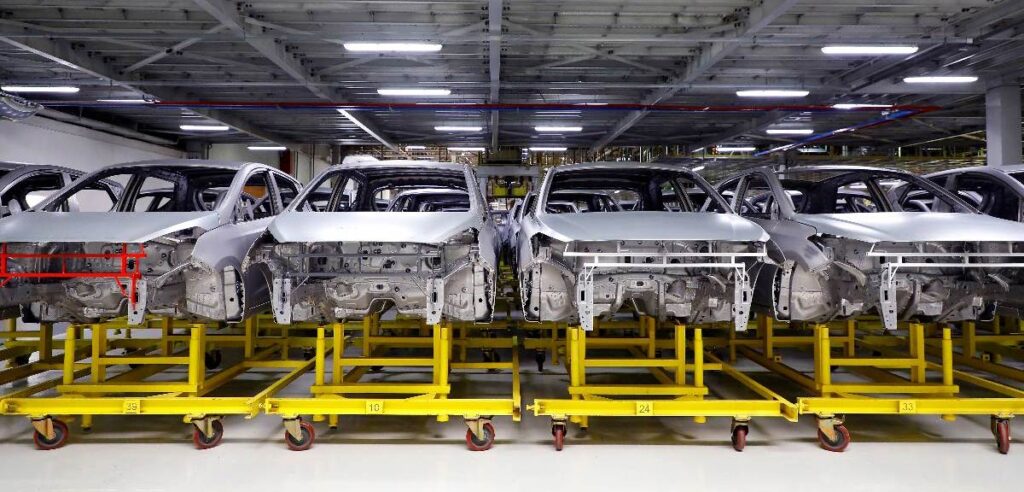
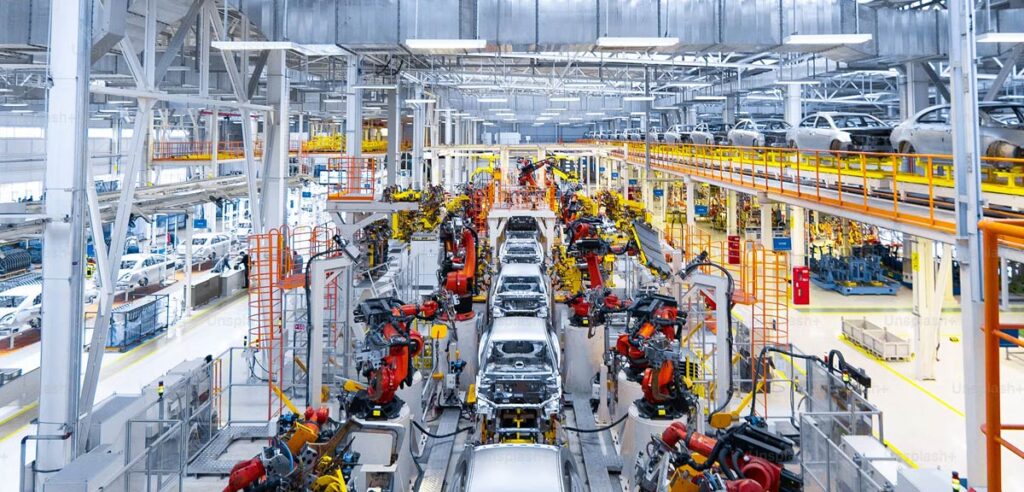
The transmission system is one of the most important components in automotive manufacturing, responsible for transferring power from the engine or electric motor to the vehicle wheels.
Producing a reliable transmission requires highly precise manufacturing processes, advanced assembly technologies, and strict quality control systems.
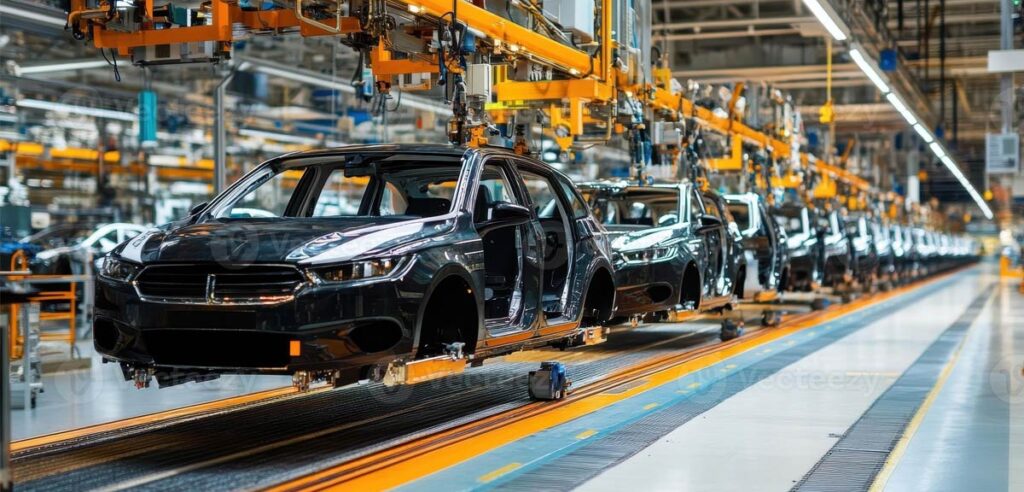
A transmission assembly line is a specialized production system designed to assemble transmission components into complete gearbox units through a series of automated and controlled operations.
Modern transmission manufacturing requires precise control of:
- Component positioning
- Gear assembly accuracy
- Bearing installation
- Fastening torque
- Lubrication systems
- Functional testing
Advanced transmission assembly lines integrate:
- Automated conveyor systems
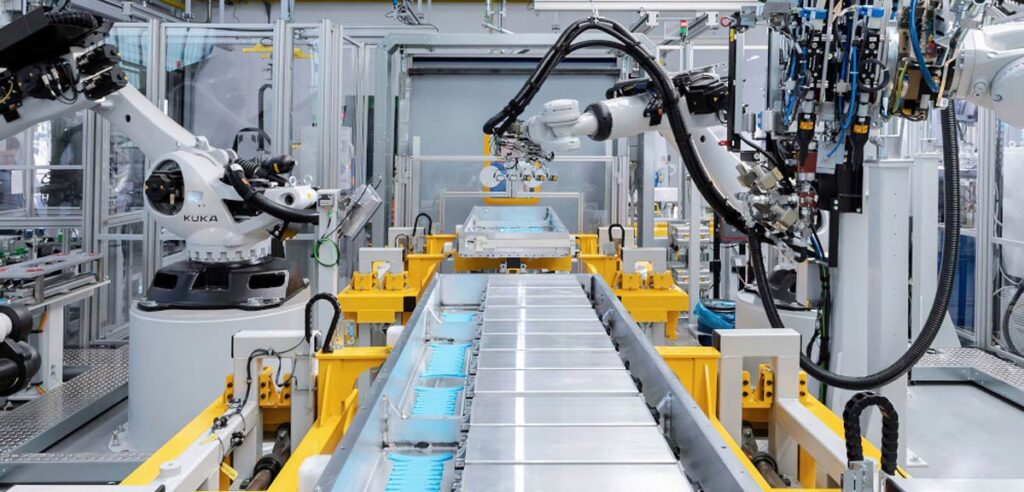
- Industrial robots
- Torque tightening equipment
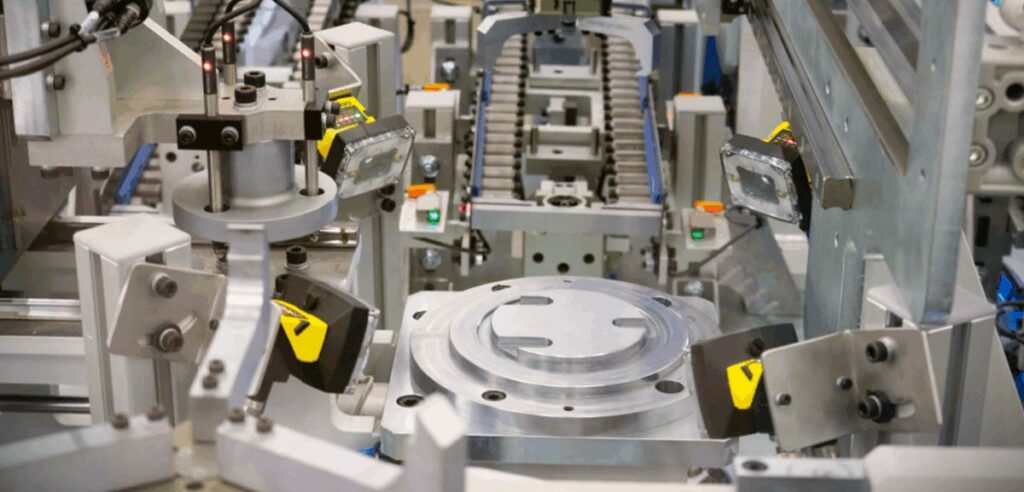
- Vision inspection systems
- Leak testing systems
- End-of-line testing equipment
- PLC control systems
- MES traceability platforms
This article explains the complete transmission assembly process, key production equipment, automation technologies, and important considerations when designing a modern automotive transmission assembly line.
Overview of Automotive Transmission Assembly Process
A transmission consists of many precision components, including:
- Transmission housing
- Shafts
- Gears
- Bearings
- Synchronizers
- Clutches
- Hydraulic components
- Electronic control modules
The assembly process requires accurate positioning and strict quality control because even small assembly deviations can affect:
- Driving performance
- Noise and vibration
- Energy efficiency
- Transmission lifespan
A typical transmission assembly process includes:
- Housing preparation
- Bearing installation
- Shaft assembly
- Gear installation
- Differential assembly
- Clutch assembly
- Electronic component installation
- Oil filling
- Functional testing
Each process is carefully controlled to ensure the final transmission meets automotive performance requirements.
What Is a Transmission Assembly Line?
A transmission assembly line is an automated manufacturing system used to assemble gearbox components into complete transmission units.
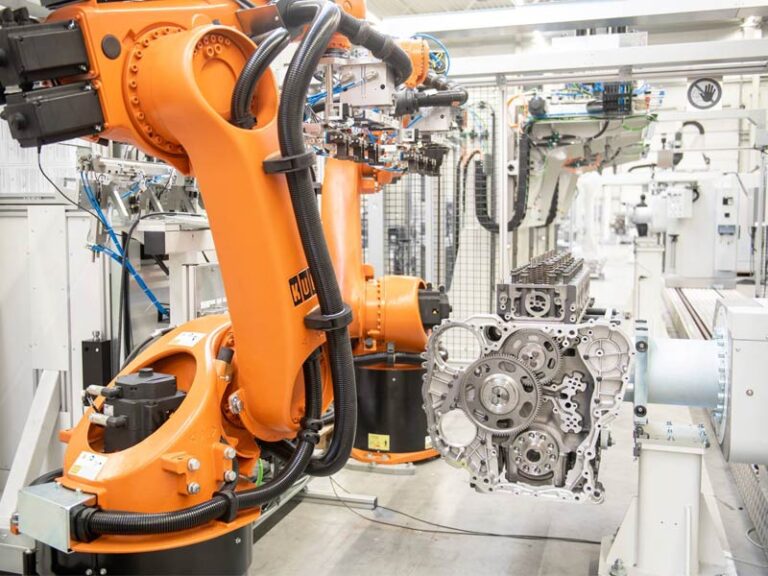
Compared with general automotive assembly lines, transmission production requires higher precision because internal components must operate with very small mechanical tolerances.
A complete transmission assembly line usually includes:
- Pallet conveyor systems
- Automatic loading systems
- Robotic handling stations
- Press-fitting equipment
- Torque tightening systems
- Vision inspection stations
- Oil filling equipment
- Leak testing systems
- Functional test benches
- MES production tracking systems
The production line design depends on:
- Transmission type
- Manual or automatic transmission
- Electric vehicle gearbox requirements
- Production capacity
- Automation level
- Factory layout
Main Processes in a Transmission Assembly Line
Transmission Housing Preparation
The transmission housing provides structural support and protection for internal components.
Before assembly begins, the housing normally undergoes:
- Cleaning
- Surface inspection
- Dimensional verification
- Barcode identification
Automated systems ensure that the correct housing model enters the appropriate assembly process.
Product identification systems such as barcode or RFID tracking help maintain production traceability.
Bearing Installation Process
Bearings are critical components that support rotating shafts inside the transmission.
The installation process requires precise control of:
- Pressing force
- Installation position
- Alignment accuracy
Common equipment includes:
- Servo presses
- Automatic feeding systems
- Force-displacement monitoring systems
Real-time monitoring helps detect abnormal conditions such as:
- Incorrect installation
- Excessive force
- Component damage
Shaft and Gear Assembly
Gear and shaft assembly is one of the most precision-sensitive processes in transmission manufacturing.
Typical operations include:
- Shaft positioning
- Gear installation
- Synchronizer assembly
- Clearance adjustment
Automation systems ensure:
- Correct component sequence
- Accurate positioning
- Stable assembly quality
High precision is essential because gear alignment directly affects:
- Transmission efficiency
- Noise level
- Operating smoothness
Clutch Assembly
For automatic and dual-clutch transmissions, clutch assembly is a key manufacturing process.
Typical operations include:
- Clutch component installation
- Spring installation
- Hydraulic component assembly
- Functional verification
Assembly equipment must provide accurate control to ensure reliable clutch operation.
Torque Tightening Process
Many transmission components require precise fastening control.
Typical applications include:
- Housing bolts
- Bearing covers
- Gear components
- Hydraulic system fasteners
Modern torque tightening systems provide:
- Accurate torque control
- Angle monitoring
- Automatic parameter management
- Production data recording
Each tightening result can be stored in the MES system to achieve complete traceability.
Torque Tightening Systems in Automotive Assembly Lines
Oil Filling and Sealing Inspection
After mechanical assembly, the transmission requires lubrication system preparation.
The process includes:
- Oil filling
- Oil level verification
- Sealing inspection
Leak prevention is essential because transmission oil leakage can affect performance and reliability.
Automated leak testing systems are commonly integrated into transmission production lines.
Leak Testing Equipment in Automotive Manufacturing
Transmission End-of-Line Testing
Before final delivery, every transmission unit requires functional testing.
Typical tests include:
- Rotation testing
- Noise testing
- Vibration testing
- Shift performance testing
- Oil pressure testing
End-of-line testing ensures that each transmission meets design and quality requirements.
Test results are recorded through manufacturing data systems for future analysis.
Main Equipment Used in Transmission Assembly Lines
A modern transmission assembly line combines precision mechanical equipment, automation systems, and digital manufacturing technologies to achieve stable and efficient production.
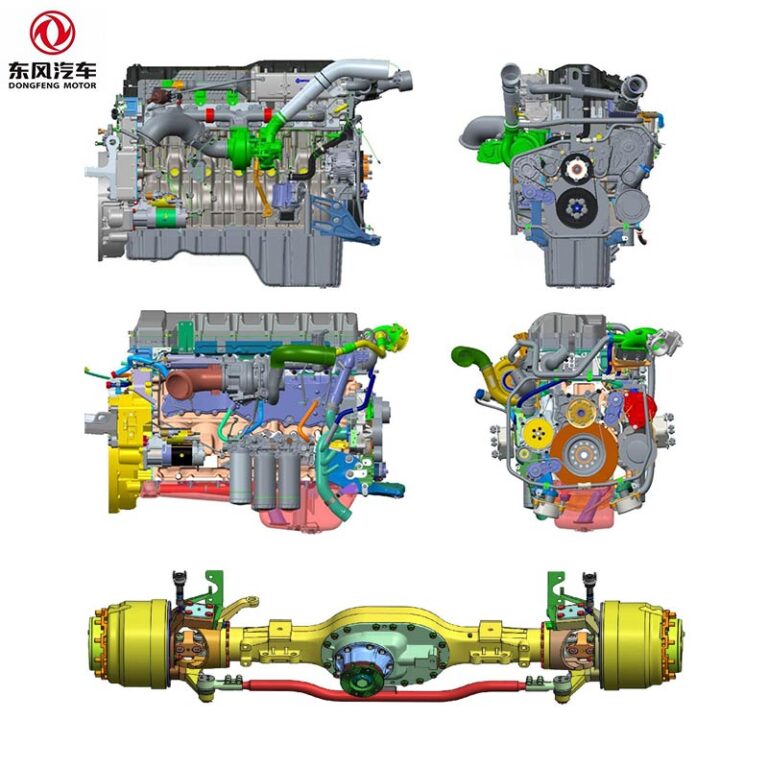
Because transmission components require extremely high assembly accuracy, production equipment must provide:
- Precise positioning
- Controlled assembly force
- Repeatable operation
- Real-time quality monitoring
- Complete production traceability
The following equipment is commonly used in automotive transmission manufacturing.
Automatic Press-Fitting Systems
Press-fitting is one of the most important processes in transmission assembly.
Many transmission components require controlled pressing operations, including:
- Bearings
- Shafts
- Gears
- Bushings
- Sealing rings
Modern press-fitting systems commonly use servo presses with force-displacement monitoring.
These systems can monitor:
- Pressing force
- Pressing distance
- Assembly position
- Process curves
If abnormal conditions occur, such as insufficient force or incorrect positioning, the system can automatically identify the issue and prevent defective products from continuing through production.
Servo press technology improves:
- Assembly accuracy
- Process stability
- Quality consistency
Robotic Assembly Systems
Industrial robots are increasingly used in transmission manufacturing to improve automation levels and production efficiency.
Typical robot applications include:
- Component loading
- Gear handling
- Housing transfer
- Assembly assistance
- Pallet loading and unloading
Robots provide several advantages:
- High repeatability
- Stable production speed
- Improved worker safety
- Reduced manual handling
For large transmission components, robotic handling systems significantly reduce operator workload while improving production consistency.
Industrial Robots in Automotive Manufacturing
Automated Vision Inspection Systems
Transmission assembly requires strict control of component presence and assembly accuracy.
Vision inspection systems are used to automatically verify:
- Correct component installation
- Gear positioning
- Fastener presence
- Label and barcode information
- Surface defects
Machine vision technology helps manufacturers detect assembly errors at an early stage.
Compared with manual inspection, automated vision systems provide:
- Higher accuracy
- Faster inspection speed
- Digital quality records
- Reduced human error
Vision Inspection Systems in Automotive Manufacturing
Conveyor and Material Handling Systems
The conveyor system plays a key role in maintaining efficient production flow.
Transmission assembly lines commonly use:
- Pallet conveyors
- Chain conveyors
- Roller conveyors
- Lift transfer systems
- Automatic storage systems
A well-designed material handling system ensures:
- Smooth product transfer
- Accurate workstation positioning
- Reduced production waiting time
- Flexible line layout
Transmission assembly pallets are usually designed according to product characteristics to ensure stable positioning during automated operations.
Automotive Conveyor Systems: Types, Design & Applications
Automatic Lubrication and Oil Filling Equipment
Lubrication is essential for transmission performance and durability.
Automated oil filling systems control:
- Oil quantity
- Filling pressure
- Filling speed
- Leakage detection
The system records filling parameters to ensure every transmission receives the correct lubrication level.
Automatic lubrication equipment improves:
- Process consistency
- Production efficiency
- Quality traceability
Transmission Testing Equipment
End-of-line testing is a critical quality control step.
Transmission test systems verify whether assembled units meet performance requirements.
Common testing equipment includes:
- Rotation test benches
- Noise and vibration analysis systems
- Hydraulic pressure testers
- Functional simulation systems
Testing results are automatically recorded and linked with the transmission serial number.
This provides manufacturers with complete quality documentation.
Automation Technologies in Transmission Manufacturing
Modern transmission assembly lines rely on integrated automation technologies to achieve efficient and intelligent production.
PLC Control Systems
PLC systems control the operation of the complete production line.
Typical PLC functions include:
- Conveyor control
- Robot coordination
- Sensor monitoring
- Safety management
- Process sequencing
- Equipment communication
A well-designed PLC system ensures stable production operation and minimizes downtime.
MES Integration and Production Traceability
Manufacturers increasingly require complete production data management.
MES systems collect information from different production stations, including:
- Component identification
- Press-fitting data
- Torque values
- Inspection results
- Testing parameters
- Operator records
This enables manufacturers to:
- Track every transmission unit
- Analyze quality issues
- Improve production processes
- Support warranty investigations
For automotive suppliers, traceability is becoming an essential requirement rather than an optional feature.
PLC & MES Integration in Automotive Manufacturing
Smart Manufacturing and Data Analysis
Industry 4.0 technologies are transforming traditional transmission factories into intelligent manufacturing environments.
Production data can be analyzed to improve:
- Equipment utilization
- Process stability
- Quality performance
- Maintenance planning
Advanced systems can identify abnormal production trends and support predictive maintenance.
Transmission Assembly Line Design Considerations
Designing a transmission assembly line requires careful consideration of production requirements, manufacturing processes, and future expansion needs.
Production Volume and Cycle Time
Production capacity is one of the most important factors during line design.
Manufacturers should evaluate:
- Annual production demand
- Required takt time
- Shift schedule
- Product variation
- Future market growth
The assembly line must provide sufficient capacity while maintaining stable quality.
Flexible Production Capability
Automotive manufacturers increasingly require flexible production systems due to changing market demands.
A flexible transmission assembly line can support:
- Multiple transmission models
- Different product variants
- Hybrid powertrain components
- EV reduction gear production
Flexible solutions may include:
- Modular workstations
- Programmable robots
- Adjustable fixtures
- Automatic tool switching systems
Quality Control Integration
Quality control should be integrated into every stage of production.
Modern transmission assembly lines include:
- Automatic inspection stations
- Torque monitoring systems
- Force measurement systems
- Leak testing
- Functional testing
This approach allows manufacturers to identify problems immediately during production instead of discovering defects later.
Factory Layout Optimization
A good production layout improves:
- Material flow
- Operator efficiency
- Maintenance accessibility
- Production scalability
Common layout considerations include:
- Component supply routes
- Equipment arrangement
- Workstation balance
- Logistics efficiency
Professional assembly line suppliers usually perform detailed simulation and process analysis before equipment manufacturing.
EV Reduction Gear Assembly Line Trends
With the rapid growth of electric vehicles, automotive powertrain manufacturing is undergoing significant changes.
Unlike traditional internal combustion engine vehicles, electric vehicles use electric motors and reduction gears instead of conventional multi-speed transmissions in many applications.
Although the structure of EV reduction gears is simpler than traditional transmissions, manufacturing still requires:
- High precision assembly
- Accurate gear positioning
- Strict noise control
- Reliable sealing performance
- Complete production traceability
Modern EV reduction gear assembly lines share many automation technologies with traditional transmission production, including:
- Automatic press-fitting
- Torque tightening
- Vision inspection
- Leak testing
- Functional testing
- MES integration
Precision Gear Assembly for EV Applications
Electric vehicle reduction gears operate at high rotational speeds, making manufacturing precision extremely important.
Key assembly requirements include:
- Gear alignment accuracy
- Bearing installation precision
- Shaft positioning accuracy
- Backlash control
Automated assembly equipment helps maintain consistent quality during mass production.
Noise and Vibration Control
Noise reduction is a major challenge for EV powertrain manufacturing.
Since electric motors operate quietly, abnormal gear noise becomes easier to detect.
Manufacturers use advanced testing equipment to analyze:
- Gear noise
- Vibration levels
- Rotational performance
- Mechanical irregularities
End-of-line testing systems help ensure every reduction gear meets acoustic performance requirements.
Integration with Electric Motor Assembly
In many EV manufacturing facilities, reduction gear production is integrated with electric motor assembly.
A complete electric powertrain production line may include:
- Motor assembly line
- Rotor assembly equipment
- Stator assembly equipment
- Reduction gear assembly line
- Final powertrain testing
This integrated approach improves:
- Production efficiency
- Process coordination
- Quality management
Future Development of Transmission Manufacturing Automation
The future of transmission and powertrain manufacturing will be shaped by automation, digitalization, and intelligent production technologies.
Higher Automation Levels
Automotive manufacturers are continuously increasing automation levels to improve production efficiency.
Future transmission assembly lines will include more:
- Industrial robots
- Automated logistics systems
- Intelligent inspection equipment
- Self-adjusting production stations
Higher automation helps manufacturers achieve:
- Stable production output
- Reduced labor dependency
- Improved product consistency
Artificial Intelligence in Quality Control
Artificial intelligence is becoming an important tool in automotive manufacturing.
AI-based systems can analyze production data from:
- Torque tightening
- Press-fitting operations
- Vision inspection
- Functional testing
Applications include:
- Defect prediction
- Process optimization
- Equipment condition monitoring
AI enables manufacturers to move from traditional quality inspection toward predictive quality management.
Digital Twin Technology
Digital twin technology allows engineers to create a virtual model of a transmission assembly line.
Manufacturers can use digital twins to:
- Optimize production layouts
- Simulate manufacturing processes
- Evaluate equipment performance
- Reduce commissioning time
This technology helps improve project planning and reduce production risks.
Connected Smart Factories
Future automotive factories will become increasingly connected.
Transmission assembly lines will communicate with:
- MES systems
- ERP platforms
- Quality management systems
- Data analytics platforms
This creates a complete digital manufacturing ecosystem.
How to Select a Transmission Assembly Line Manufacturer
Choosing the right assembly line supplier is essential for successful automotive production projects.
A professional supplier should provide not only equipment but also complete manufacturing solutions.
Important evaluation criteria include:
Strong Automotive Manufacturing Experience
Transmission production requires deep knowledge of automotive processes.
An experienced supplier should understand:
- Powertrain manufacturing
- Precision assembly requirements
- Quality control standards
- Automation engineering
Automotive experience helps suppliers design practical and reliable production solutions.
Complete Turnkey Project Capability
A transmission assembly line involves multiple technical areas.
A capable supplier should provide:
- Process planning
- Mechanical design
- Electrical engineering
- Automation programming
- Robot integration
- Testing system integration
Turnkey capability reduces project complexity and improves implementation efficiency.
Advanced Engineering Capability
Professional assembly line manufacturers should have strong engineering teams capable of handling:
- 3D layout design
- Production simulation
- Cycle time analysis
- Fixture development
- Automation programming
Engineering capability directly affects production line performance.
Installation and Commissioning Support
Equipment delivery is only one part of an assembly line project.
A reliable supplier should support:
- Equipment installation
- Production debugging
- Process optimization
- Operator training
- After-sales service
Proper commissioning ensures the production line reaches expected performance.
Why Choose Hongbo Automation for Automotive Assembly Solutions
Hongbo Automation focuses on providing complete automotive manufacturing solutions, including:
- Automotive assembly lines
- Engine assembly lines
- Transmission assembly lines
- EV battery pack assembly lines
- Automotive component production lines
With integrated capabilities in mechanical design, automation control, and production line engineering, Hongbo supports customers from initial process planning to final production launch.
A complete automotive assembly solution includes:
- Production process analysis
- Equipment design and manufacturing
- Automation system integration
- Installation and commissioning
- Technical support
For automotive manufacturers and component suppliers, partnering with an experienced automation company helps reduce project risks and improve production efficiency.
Conclusion
A transmission assembly line is a highly sophisticated manufacturing system that requires precision engineering, advanced automation, and comprehensive quality management.
From housing preparation and gear assembly to final performance testing, every production stage must be carefully controlled to ensure transmission reliability.
Modern transmission assembly lines integrate:
- Automated conveyors
- Servo press systems
- Industrial robots
- Torque tightening equipment
- Vision inspection systems
- Leak testing solutions
- PLC control systems
- MES traceability platforms
As automotive technology continues to evolve, transmission and EV reduction gear manufacturing will become increasingly intelligent, flexible, and data-driven.
For automotive OEMs and Tier 1 suppliers, selecting the right assembly line partner is essential for achieving efficient, reliable, and future-ready production.
Frequently Asked Questions
What is a transmission assembly line?
A transmission assembly line is an automated production system used to assemble gearbox components into complete transmission units through controlled manufacturing processes.
What equipment is used in transmission assembly lines?
Common equipment includes pallet conveyors, servo presses, robotic handling systems, torque tightening machines, leak testing systems, vision inspection equipment, and functional testing stations.
Why is automation important in transmission manufacturing?
Automation improves assembly accuracy, production efficiency, quality consistency, and manufacturing traceability.
What are the main processes in transmission assembly?
Main processes include housing preparation, bearing installation, shaft assembly, gear installation, clutch assembly, tightening, oil filling, inspection, and final testing.
How does MES improve transmission production?
MES systems record production parameters, track individual transmission units, and provide complete manufacturing history for quality management.
What is the difference between engine assembly and transmission assembly lines?
Engine assembly focuses on combustion power generation components, while transmission assembly focuses on power transfer components such as gears, shafts, and clutches.
Are EV reduction gear assembly lines different from traditional transmission lines?
Yes. EV reduction gear lines are optimized for electric powertrain requirements, including high-speed operation, precision gear manufacturing, and noise reduction.
How do manufacturers choose a transmission assembly line supplier?
Manufacturers should consider automotive experience, engineering capability, automation expertise, turnkey project ability, and technical support services.