Introduction
The automotive industry is one of the most advanced manufacturing sectors in the world, where product quality, production efficiency, and process consistency are critical to long-term competitiveness. As vehicle technologies continue to evolve and customer expectations increase, manufacturers are under growing pressure to produce more complex products while maintaining high quality standards and shorter delivery times.
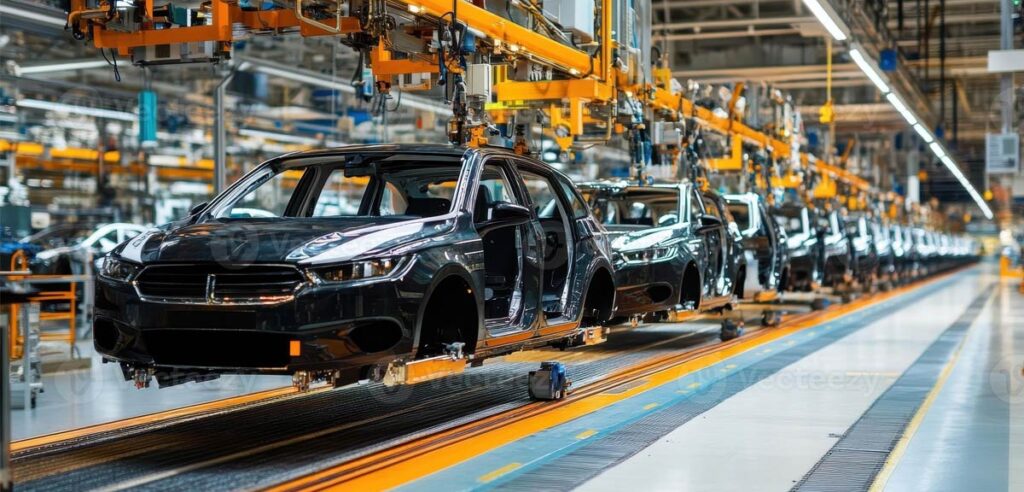
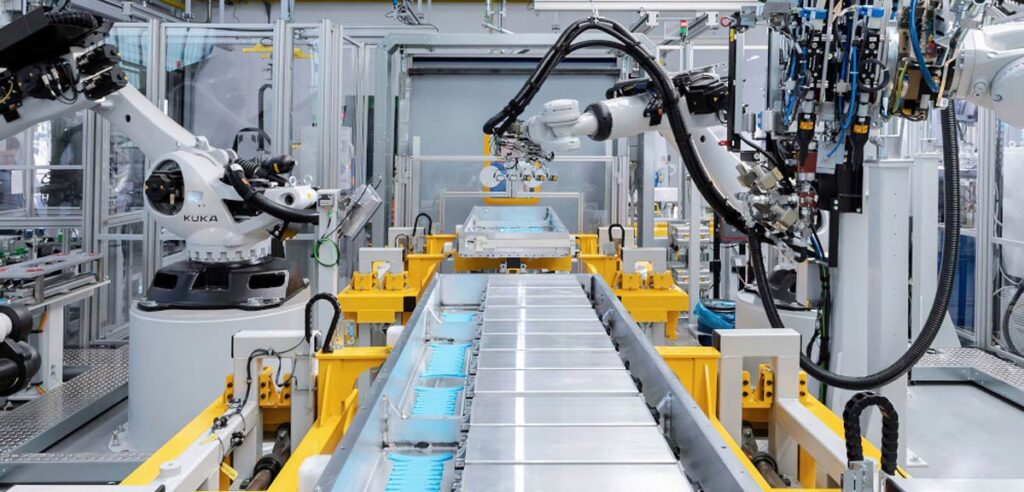
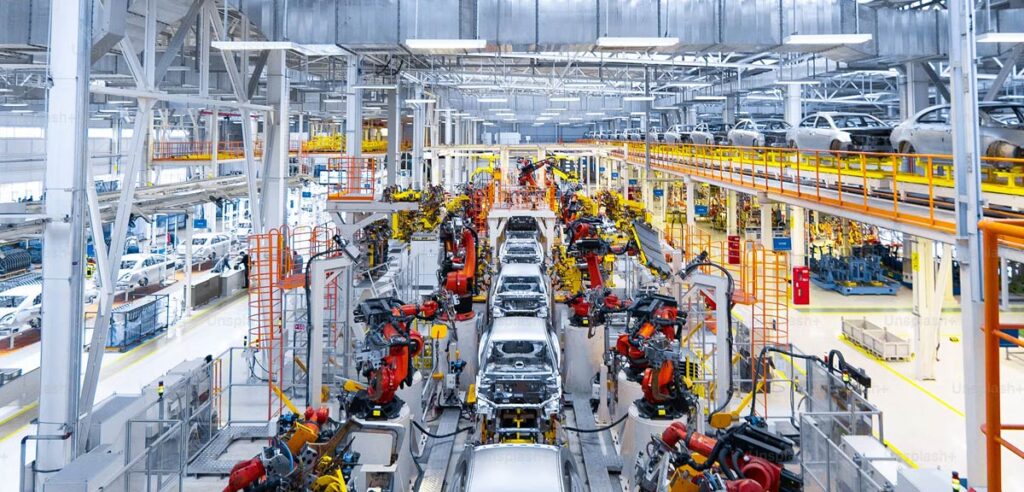
An automotive assembly line is the foundation of modern automotive manufacturing. It combines intelligent automation, precision engineering, industrial robotics, quality inspection, and digital manufacturing technologies into a coordinated production system capable of producing vehicles and automotive components efficiently and consistently.
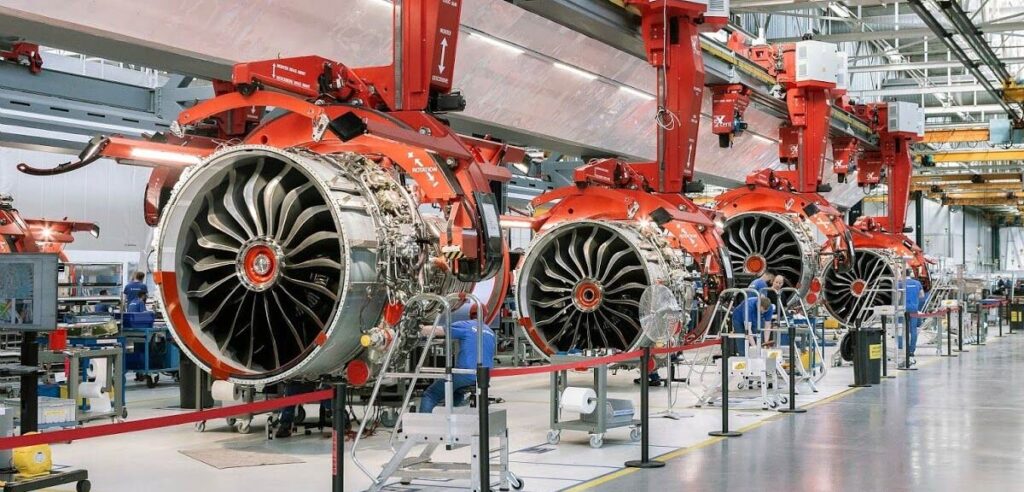
From conventional engines and transmissions to electric drive systems and battery packs, almost every automotive product today is manufactured using specialized assembly lines designed to optimize productivity, improve quality, and ensure complete production traceability.
This guide explains the basic principles of automotive assembly lines, introduces their core equipment and technologies, and provides an overview of how modern production systems are designed to meet the demands of today’s automotive industry.
What Is an Automotive Assembly Line?
An automotive assembly line is an integrated manufacturing system that assembles vehicles or automotive components through a sequence of standardized production operations.
Instead of relying on manual assembly, modern production lines coordinate automated equipment, industrial robots, intelligent control systems, testing stations, and material handling technologies to perform highly repeatable manufacturing processes with exceptional accuracy.
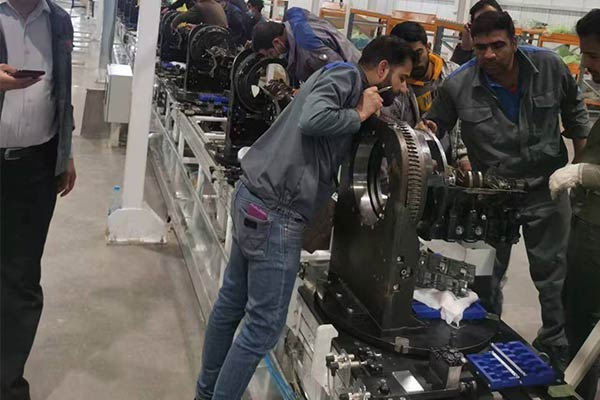
Each workstation completes a predefined operation before the product moves automatically to the next station. This synchronized workflow ensures stable production quality, predictable cycle times, and high manufacturing efficiency.
Automotive assembly lines are widely used to manufacture:
- Passenger vehicles
- Commercial vehicles
- Engines
- Transmissions
- Electric drive units
- Battery packs
- Starter motors
- Alternators
- Steering systems
- Brake components
- Automotive electronic modules
Depending on production volume and product complexity, assembly lines may be fully automated, semi-automated, or designed as flexible manufacturing systems capable of producing multiple product variants.
Why Automotive Assembly Lines Matter
Modern automotive manufacturing requires more than simply assembling parts together. Every production process must achieve consistent quality, high productivity, complete traceability, and long-term operational stability.
A professionally engineered assembly line delivers several important advantages:
Higher Productivity
Automated production reduces manual handling, balances workstation cycle times, and enables continuous manufacturing with minimal interruptions.
Consistent Product Quality
Integrated inspection systems ensure that every critical manufacturing process is verified before products move to the next workstation.
Lower Manufacturing Costs
Automation minimizes labor requirements, reduces scrap, and improves equipment utilization over the entire production lifecycle.
Production Traceability
Manufacturers can record every important production parameter, supporting quality management and compliance with automotive industry standards.
Flexible Manufacturing
Modern assembly lines are increasingly designed to accommodate future product upgrades, model changes, and capacity expansion.
The Main Components of an Automotive Assembly Line
Although every production line is customized according to product requirements, most automotive assembly systems consist of several core technologies working together.
Rather than discussing every technology in detail here, the following sections provide an overview. Each topic is covered in greater depth in dedicated technical guides within the Hongbo Knowledge Center.
Conveyor Systems
Conveyor systems transport products between workstations while maintaining stable production flow and takt time.
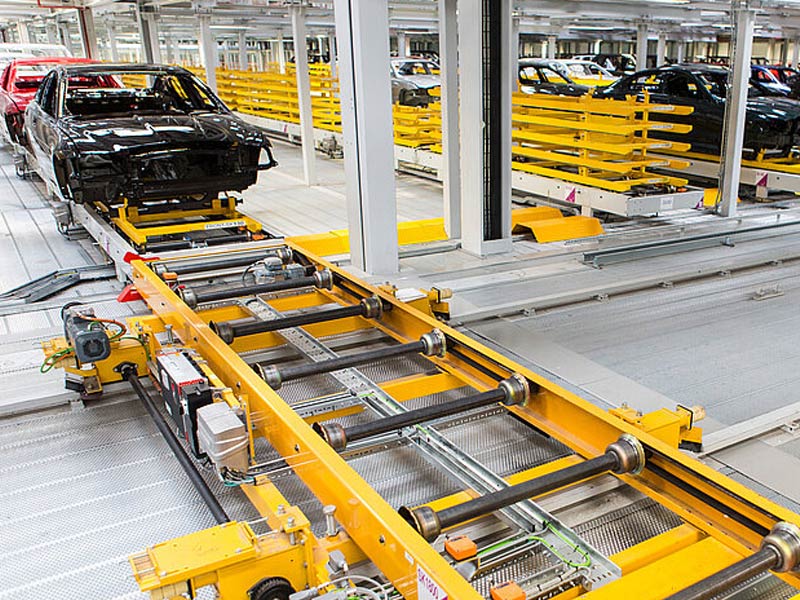
Depending on the application, manufacturers may use pallet conveyors, chain conveyors, roller conveyors, power-and-free systems, or skid conveyors.
A well-designed conveyor system improves material flow, reduces handling time, and supports lean manufacturing principles.
Related Guide:
Conveyor Systems for Automotive Assembly Lines →
Industrial Robots
Industrial robots perform repetitive, high-precision assembly tasks such as component handling, screw tightening, adhesive dispensing, press fitting, and palletizing.
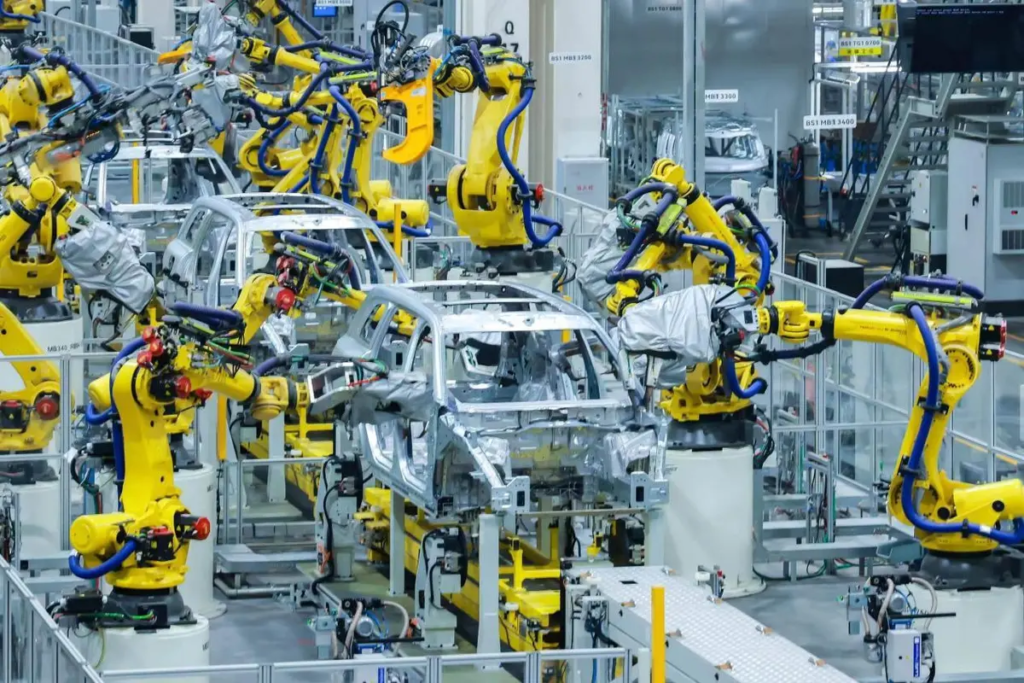
Robot integration improves production consistency while reducing ergonomic risks for operators.
Related Guide:
Industrial Robots in Automotive Manufacturing →
Torque Tightening Systems
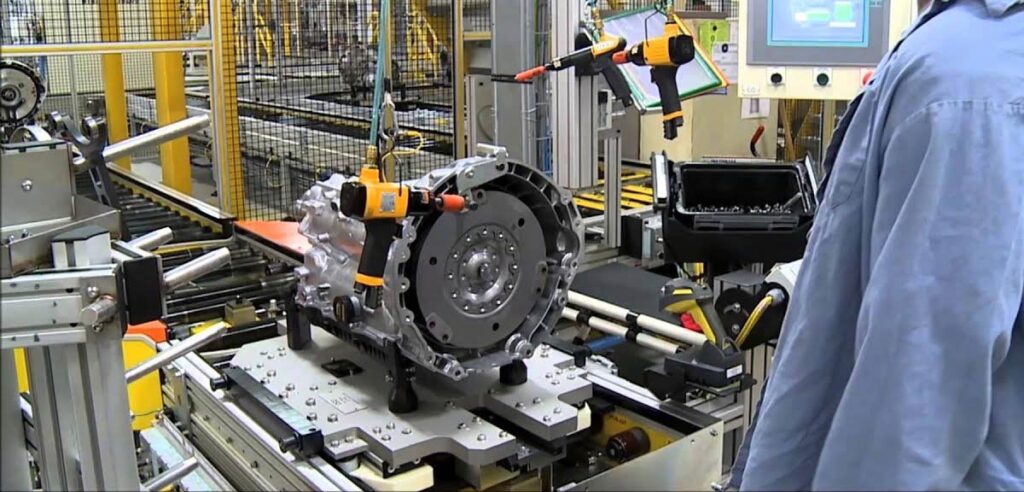
Intelligent electric tightening systems ensure that every fastening operation meets specified torque and angle requirements.
Digital torque records provide complete traceability and support quality management throughout the manufacturing process.
Related Guide:
Torque Tightening Systems in Automotive Assembly Lines →
Vision Inspection Systems
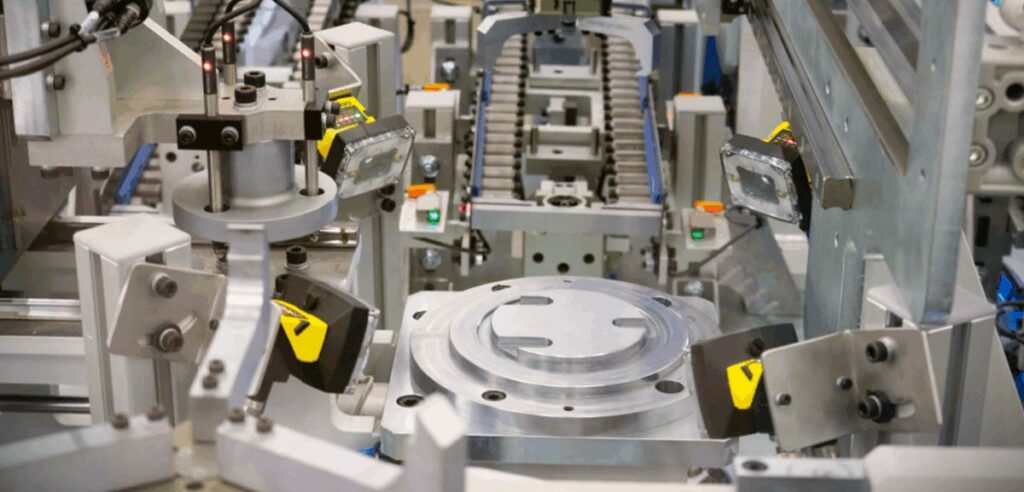
Machine vision systems automatically verify component presence, orientation, dimensions, labels, and assembly quality.
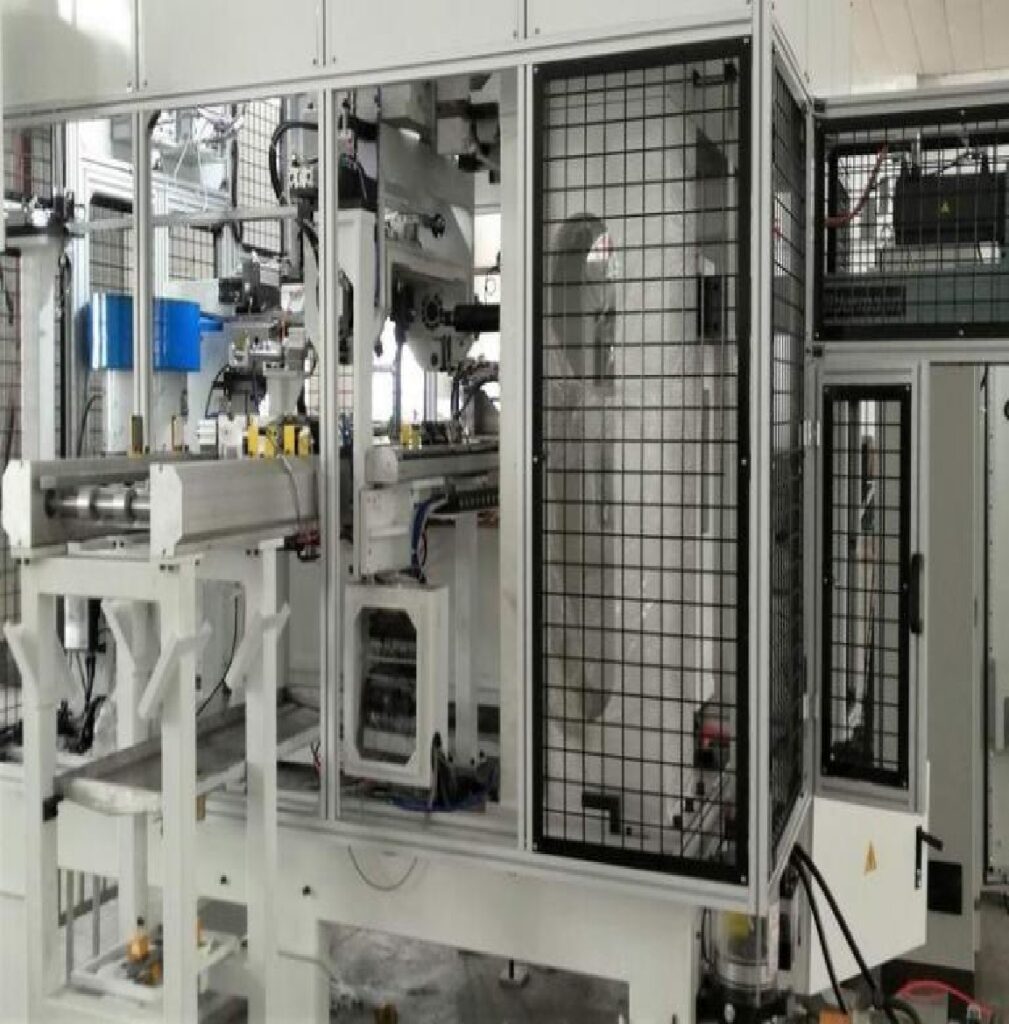
Compared with manual inspection, automated vision systems provide significantly higher inspection speed and consistency.
Related Guide:
Vision Inspection Systems Guide →
Leak Testing Equipment
Many automotive products require leak testing before shipment.
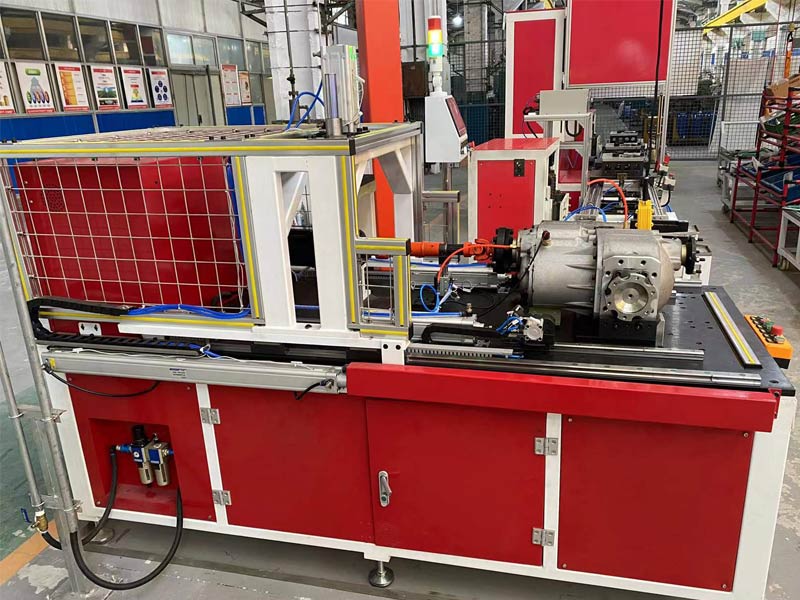
Typical applications include engine housings, transmissions, battery cooling plates, electric motor housings, and air-conditioning components.
Different technologies—including pressure decay, differential pressure, and helium leak detection—are selected according to product requirements.
Related Guide:
Leak Testing Equipment Explained →
PLC & Manufacturing Execution Systems (MES)
PLCs coordinate machine operations, while MES platforms collect production data, manage traceability, and monitor factory performance.
Together, they form the digital backbone of modern automotive manufacturing.
Related Guide:
PLC & MES Integration in Automotive Manufacturing →
How an Automotive Assembly Line Works
Although production processes differ among products, most automotive assembly lines follow a similar workflow:
- Incoming material inspection
- Component feeding and preparation
- Automated assembly operations
- In-process quality inspection
- Functional and end-of-line testing
- Product identification and traceability
- Packaging and logistics
Each stage is carefully engineered to ensure that every product meets predefined quality standards before progressing to the next operation.
Types of Automotive Assembly Lines
Automotive assembly lines are designed according to the characteristics of the products being manufactured. While their production principles are similar, the equipment configuration, automation level, and testing requirements vary considerably between different applications.
Complete Vehicle Assembly Lines
Vehicle assembly lines integrate multiple manufacturing processes into one continuous production system, including chassis assembly, powertrain installation, interior assembly, wheel installation, fluid filling, software programming, and final inspection.
These lines are typically used by automotive OEMs and require highly synchronized logistics, flexible automation, and comprehensive quality management.
Powertrain Assembly Lines
Powertrain production covers engines, transmissions, transfer cases, differentials, and electric drive systems.
Compared with complete vehicle assembly, powertrain manufacturing places greater emphasis on machining accuracy, precision assembly, leak testing, torque control, and functional testing.
Electric Vehicle (EV) Assembly Lines
As the global automotive industry transitions toward electrification, EV production lines are becoming increasingly important.
Typical EV assembly applications include:
- Battery module assembly
- Battery pack assembly
- Electric motor assembly
- E-axle assembly
- Inverter assembly
- High-voltage testing
These production systems require advanced insulation testing, laser marking, intelligent traceability, and strict safety management.
Automotive Component Assembly Lines
Automotive suppliers often operate dedicated production lines for specific products, including:
- Starter motors
- Alternators
- Water pumps
- Oil pumps
- Steering systems
- Brake calipers
- HVAC components
- Electronic control modules
These assembly lines are designed for high-volume production while maintaining flexibility for future product updates.
Key Technologies Driving Modern Automotive Assembly
The rapid development of smart manufacturing has transformed conventional production lines into intelligent manufacturing systems.
Several technologies are becoming standard across modern automotive factories.
Industrial Automation
Automation minimizes manual intervention while improving production consistency and equipment utilization.
Industrial robots, servo systems, automated feeding devices, and intelligent control systems work together to achieve stable, repeatable manufacturing processes.
Machine Vision
Machine vision systems automatically verify component presence, orientation, dimensions, labels, and assembly quality.
Compared with manual inspection, vision technology offers higher inspection speed, greater accuracy, and improved consistency.
Digital Traceability
Every critical manufacturing parameter—including torque values, press force curves, inspection results, and operator information—can be digitally recorded.
This complete production history enables manufacturers to improve quality management, simplify warranty analysis, and comply with customer traceability requirements.
Smart Factory Integration
Modern production lines are increasingly connected through Manufacturing Execution Systems (MES), Industrial Internet of Things (IIoT) platforms, and cloud-based analytics.
These technologies provide real-time production visibility, predictive maintenance capabilities, and data-driven decision support.
Common Challenges in Automotive Assembly
Although automation delivers significant advantages, manufacturers often encounter challenges when designing or upgrading production lines.
Some of the most common issues include:
- Unbalanced production cycle times
- Poor material flow planning
- Limited flexibility for future product changes
- Inadequate production traceability
- High equipment downtime
- Inefficient workstation layouts
- Insufficient quality inspection coverage
- Difficulty integrating equipment from multiple suppliers
Addressing these challenges requires careful engineering planning, standardized manufacturing processes, and close collaboration between equipment suppliers and production teams.
Choosing the Right Assembly Line Partner
Investing in an automotive assembly line is a strategic decision that directly influences production efficiency, product quality, and long-term manufacturing competitiveness.
Rather than evaluating suppliers solely on equipment price, manufacturers should consider the supplier’s overall engineering capability and project delivery experience.
Important evaluation criteria include:
- Experience in automotive manufacturing projects
- Mechanical and electrical engineering capabilities
- Automation system integration expertise
- Robot application experience
- Testing and inspection technologies
- Digital manufacturing integration
- Project management capability
- Installation and commissioning support
- Global after-sales service
- Long-term technical partnership
A supplier capable of delivering complete turnkey solutions often provides greater long-term value than one supplying individual machines alone.
Explore More Technical Guides
This article provides an overview of modern automotive assembly lines. To help engineers and manufacturing professionals gain deeper technical knowledge, the Hongbo Knowledge Center includes dedicated guides covering each major technology in detail.
Recommended reading:
- Conveyor Systems for Automotive Assembly Lines
- Industrial Robots in Automotive Manufacturing
- Torque Tightening Systems in Automotive Assembly Lines
- Vision Inspection Systems Guide
- Leak Testing Equipment Explained
- PLC & MES Integration in Automotive Manufacturing
- End-of-Line Testing for Automotive Components
- Lean Manufacturing in Automotive Assembly
- Production Traceability Systems
- How to Choose an Automotive Assembly Line Manufacturer
Conclusion
Automotive assembly lines are the foundation of modern vehicle and automotive component manufacturing. By integrating intelligent automation, precision engineering, digital control, and comprehensive quality assurance into a unified production system, manufacturers can achieve higher productivity, consistent product quality, and greater manufacturing flexibility.
As the industry continues to evolve toward electrification, digitalization, and smart manufacturing, assembly lines must also become more intelligent, connected, and adaptable. Technologies such as industrial robots, machine vision, intelligent torque control, leak testing, and MES integration are no longer optional—they are essential elements of competitive manufacturing.
Whether you are planning a new production facility, upgrading an existing line, or evaluating automation technologies, understanding the fundamentals of automotive assembly lines is the first step toward making informed engineering and investment decisions.
The articles throughout the Hongbo Knowledge Center are designed to provide practical technical insights into each aspect of automotive assembly. Together, they form a comprehensive resource for manufacturers seeking to improve production efficiency, product quality, and long-term operational performance.
About Hongbo Automation
Hongbo Automation is a professional manufacturer of automotive assembly lines and intelligent production equipment. We provide customized turnkey automation solutions for automotive OEMs and Tier 1 & Tier 2 suppliers worldwide.
Our expertise includes:
- Automotive assembly line engineering
- Powertrain production systems
- EV motor and battery assembly lines
- Precision testing equipment
- Conveyor and material handling systems
- Intelligent manufacturing solutions
- Factory automation integration
From concept design and engineering to manufacturing, installation, commissioning, and technical support, Hongbo Automation helps manufacturers build efficient, reliable, and future-ready production facilities.