Introduction
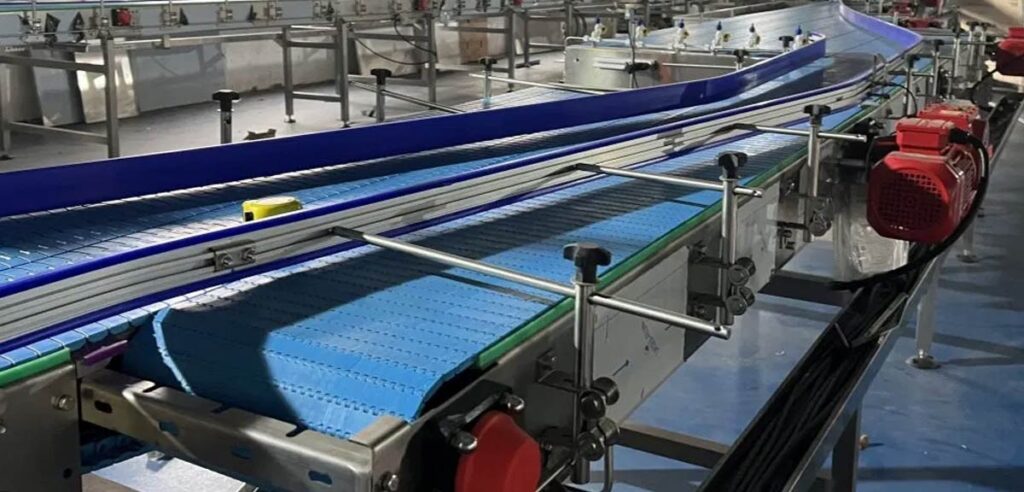
Modern automotive manufacturing depends on far more than robots and automated assembly equipment. Behind every efficient production line is a well-engineered material handling system that keeps components, subassemblies, and finished products moving safely and efficiently between workstations.
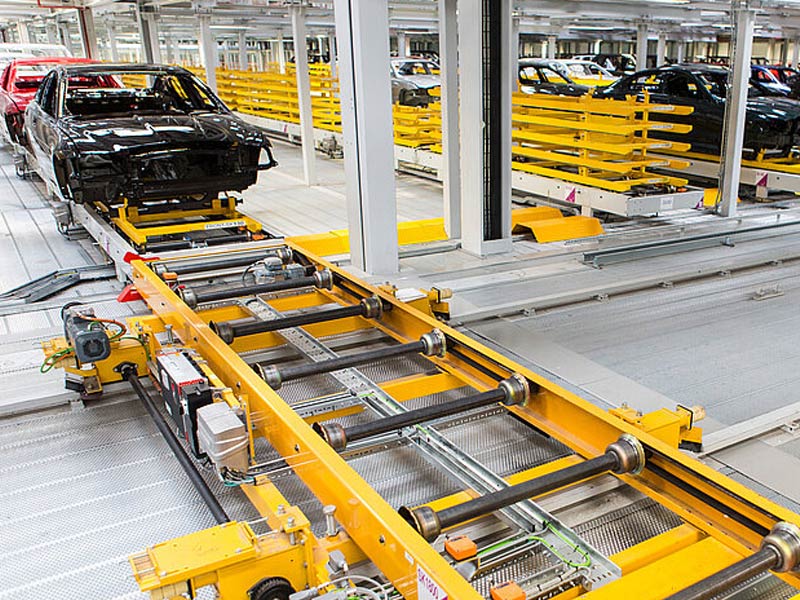
An automotive conveyor system is one of the most critical elements of an automotive production line. It ensures a continuous production flow, reduces unnecessary manual handling, minimizes bottlenecks, and supports consistent takt times across the entire manufacturing process. Whether assembling complete vehicles, engines, transmissions, battery packs, or electric drive units, conveyor systems provide the backbone that connects every stage of production.
As automotive manufacturers face increasing pressure to improve productivity, reduce operating costs, and introduce new vehicle models more quickly, conveyor systems have evolved from simple transport equipment into intelligent manufacturing platforms. Today’s solutions integrate servo drives, RFID identification, sensors, industrial networks, and Manufacturing Execution Systems (MES) to provide real-time production visibility and flexible manufacturing capabilities.
This guide explains the different types of automotive conveyor systems, their applications, key design considerations, and best practices for selecting the right solution for modern automotive manufacturing.
Quick Summary
| Item | Details |
| Industry | Automotive Manufacturing |
| Equipment | Conveyor Systems |
| Primary Function | Material Handling & Product Transfer |
| Applications | Vehicle Assembly, Engine, Transmission, EV Battery, E-Axle, Auto Parts |
| Automation Level | Manual, Semi-Automatic, Fully Automatic |
| Typical Users | Automotive OEMs, Tier 1 & Tier 2 Suppliers |
What Are Automotive Conveyor Systems?
Automotive conveyor systems are integrated material handling solutions designed to transport products, components, pallets, or vehicle bodies through a sequence of manufacturing operations. Unlike general-purpose conveyors used in warehouses or logistics centers, automotive conveyor systems are engineered to operate with high precision, synchronized cycle times, and exceptional reliability.
Each conveyor is designed to move products between dedicated workstations while maintaining accurate positioning for assembly, inspection, testing, or packaging. Depending on the manufacturing process, conveyors may transport lightweight electronic modules weighing only a few kilograms or complete vehicle bodies weighing several tons.
Modern conveyor systems also communicate with robots, automatic tightening stations, machine vision systems, and factory control software. This integration enables real-time production tracking, automatic routing, and seamless coordination across the entire production line.
Why Conveyor Systems Are Critical in Automotive Manufacturing
A conveyor system does much more than transport products from one station to another. It directly influences production efficiency, product quality, operator safety, and the overall performance of an automotive factory.
Stable Production Flow
One of the primary objectives of a conveyor system is to maintain a continuous and balanced production flow. By synchronizing the movement of products with workstation cycle times, conveyors help eliminate unnecessary waiting and reduce production bottlenecks.
Consistent product flow is particularly important in high-volume manufacturing environments, where even minor interruptions can significantly affect daily output.
Improved Manufacturing Efficiency
Automated conveyors reduce manual transportation and repetitive handling tasks, allowing operators to focus on value-added assembly operations.
Compared with manual material movement, conveyor systems offer several advantages:
- Reduced labor requirements
- Higher production throughput
- Lower risk of product damage
- Consistent production rhythm
- Improved workplace ergonomics
These benefits contribute to higher Overall Equipment Effectiveness (OEE) and lower manufacturing costs.
Enhanced Product Quality
Uncontrolled product movement can result in scratches, impacts, or positioning errors that affect assembly accuracy.
Purpose-designed conveyor systems ensure stable product positioning throughout the production process, providing a reliable platform for precision assembly, robotic operations, and automated inspection.
Many systems incorporate locating pins, lifting units, indexing mechanisms, and precision positioning devices to guarantee repeatable accuracy at every workstation.
Better Production Flexibility
Today’s automotive manufacturers often produce multiple vehicle models or component variants on the same production line.
Modern conveyor systems support flexible manufacturing through programmable routing, pallet identification, and modular layouts, enabling manufacturers to switch between products with minimal downtime.
This flexibility is particularly valuable for electric vehicle production, where product designs continue to evolve rapidly.
Common Types of Automotive Conveyor Systems
Selecting the appropriate conveyor system depends on product size, weight, production capacity, factory layout, and automation requirements. The following conveyor types are commonly used in automotive manufacturing.
Roller Conveyor Systems
Roller conveyors are among the most widely used solutions for transporting pallets, fixtures, and lightweight automotive components.
Products move along a series of rollers that may be gravity-driven or powered by electric motors.
Typical applications include:
- Engine assembly
- Transmission assembly
- Electric motor production
- Component inspection
- Packaging lines
Advantages
- Simple structure
- Low maintenance requirements
- High reliability
- Cost-effective installation
- Suitable for modular expansion
However, roller conveyors are generally less suitable for transporting products with irregular bases or applications requiring precise positioning without additional locating devices.
Chain Conveyor Systems
Chain conveyors utilize one or more driven chains to transport heavy products securely through manufacturing processes.
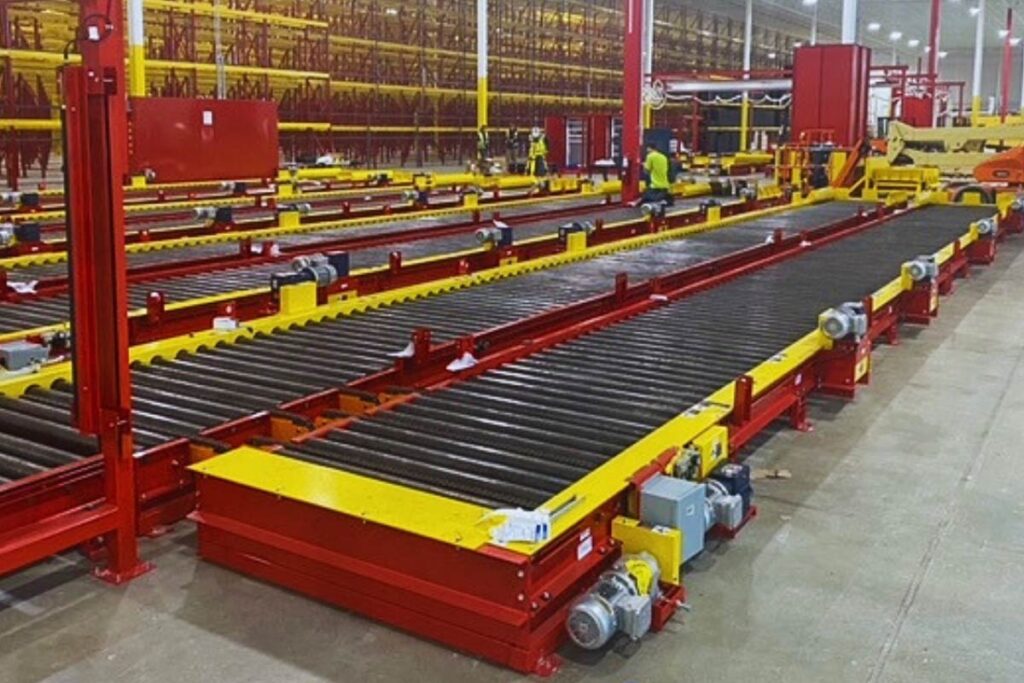
Because of their high load capacity and durability, chain conveyors are commonly used for vehicle bodies, engines, battery packs, and heavy automotive assemblies.
Compared with roller conveyors, chain conveyors provide greater stability for heavy loads and can operate reliably under demanding industrial conditions.
Typical applications include:
- Vehicle body transfer
- Battery pack assembly
- Engine manufacturing
- Heavy component assembly
Pallet Conveyor Systems
Pallet conveyor systems are widely used in automotive component manufacturing, particularly where products require precise positioning and repeatable transfer between workstations.
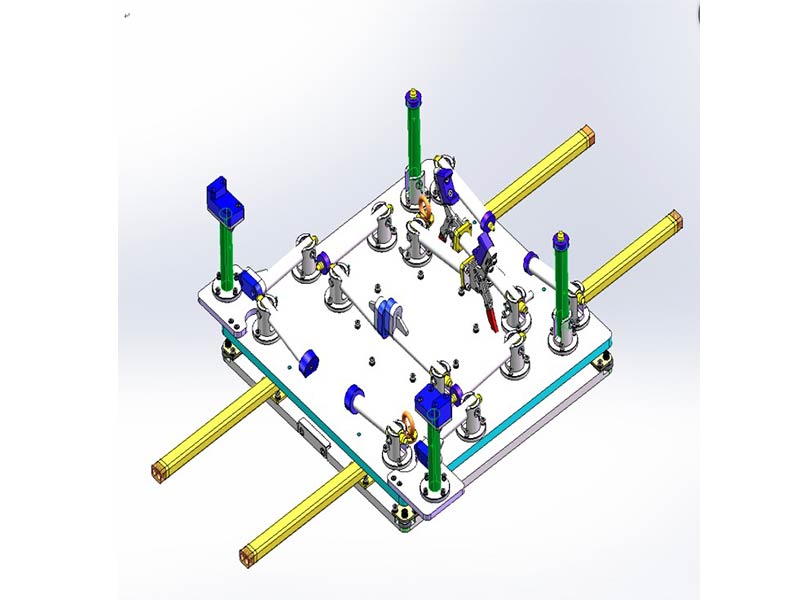
Instead of transporting the product directly, the workpiece is mounted on a dedicated pallet or fixture. The pallet ensures consistent positioning throughout the assembly process, allowing robots, vision systems, and testing equipment to operate with high accuracy.
Pallet conveyor systems are commonly used for:
- Starter motor assembly
- Alternator assembly
- Electric motor production
- Transmission subassembly
- Steering system assembly
- Brake component manufacturing
Advantages
- High positioning accuracy
- Excellent repeatability
- Easy product traceability using RFID or barcode identification
- Compatible with automated lifting and indexing stations
- Flexible for mixed-model production
For manufacturers producing multiple product variants, pallet systems provide an efficient platform for flexible manufacturing while maintaining consistent assembly quality.
Skid Conveyor Systems
Skid conveyor systems transport products mounted on steel skids rather than individual pallets.
These systems are typically applied in complete vehicle assembly plants where large and heavy assemblies must move through multiple production stages.
Typical applications include:
- Body-in-White (BIW)
- Chassis assembly
- Vehicle marriage stations
- Final vehicle assembly
Because skids provide a stable support structure, they are suitable for handling vehicle bodies while allowing ergonomic access for operators and robots.
Power & Free Conveyor Systems
Power & Free conveyors are among the most flexible material handling solutions used in automotive manufacturing.
Unlike conventional conveyors that move all products at the same speed, Power & Free systems allow each carrier to move independently.
This provides several operational advantages:
- Accumulation without stopping the entire line
- Automatic product buffering
- Parallel production routes
- Flexible workstation balancing
- Maintenance bypass capability
These features are particularly valuable in high-volume production environments where equipment downtime must be minimized.
Power & Free conveyors are frequently used for:
- Vehicle body transport
- Paint shop operations
- Heavy component assembly
- Buffer storage systems
Overhead Conveyor Systems
Overhead conveyors transport products above the factory floor, maximizing available production space and improving logistics efficiency.
Suspending products from the overhead structure also provides operators with better access during assembly.
Typical applications include:
- Vehicle painting
- Door assembly
- Interior trim installation
- Surface treatment processes
- Drying ovens
Overhead conveyor systems help manufacturers optimize factory layouts while reducing floor congestion and improving workplace safety.
Key Design Considerations for Automotive Conveyor Systems
Selecting a conveyor system involves much more than choosing a transport method. A properly engineered solution must support current production requirements while remaining adaptable to future manufacturing needs.
The following factors should be evaluated during the design phase.
Product Characteristics
Every conveyor design begins with a thorough analysis of the product being manufactured.
Key considerations include:
- Product dimensions
- Weight
- Center of gravity
- Surface finish
- Structural rigidity
- Handling orientation
For example, battery packs require extremely stable transportation to protect sensitive internal components, while lightweight electronic modules may require anti-static handling environments.
Production Capacity
Required production output directly influences conveyor speed, buffer capacity, workstation spacing, and overall system layout.
Engineers typically calculate:
- Daily production volume
- Shift patterns
- Annual production targets
- Peak production demand
- Future capacity expansion
A conveyor designed only for current production may quickly become a bottleneck if customer demand increases.
Takt Time
Takt Time represents the production pace required to meet customer demand.
It is one of the most important parameters when designing an automotive production line.
Every conveyor movement, indexing operation, and workstation cycle must be synchronized with the target takt time.
Failure to balance conveyor movement with workstation operations often results in:
- Waiting time
- Bottlenecks
- Equipment idle time
- Reduced OEE
- Increased operating costs
For this reason, conveyor layout and control logic should always be developed alongside process engineering rather than treated as separate disciplines.
Factory Layout
The physical layout of the manufacturing facility significantly influences conveyor selection.
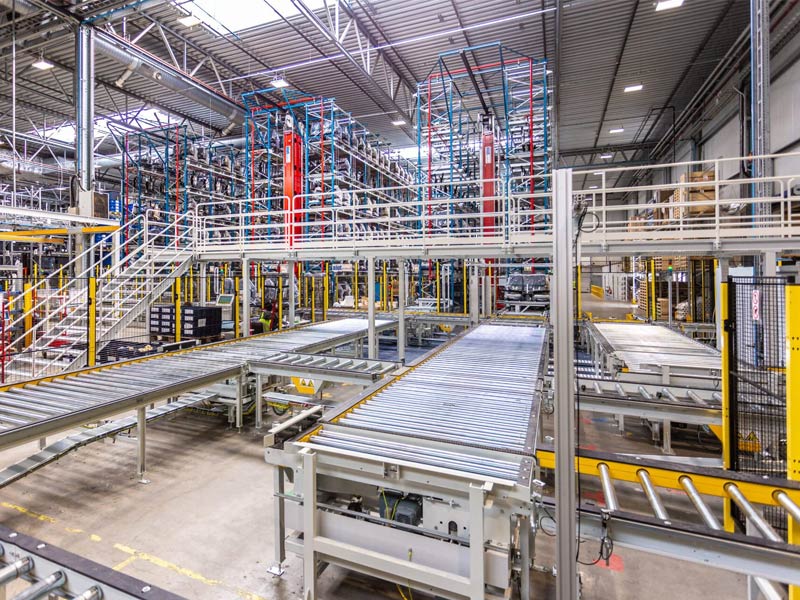
Engineers must consider:
- Building dimensions
- Column locations
- Ceiling height
- Material flow
- Maintenance access
- Emergency evacuation routes
- Future production expansion
A well-planned layout minimizes unnecessary transportation while supporting efficient logistics and operator movement.
Automation Integration
Modern conveyor systems rarely operate independently.
Instead, they are integrated with:
- Industrial robots
- Servo presses
- Automatic tightening stations
- Vision inspection systems
- Leak testing equipment
- Laser marking systems
- PLC control systems
- Manufacturing Execution Systems (MES)
This level of integration enables synchronized production, automated product routing, and complete manufacturing traceability.
Applications of Conveyor Systems in Automotive Manufacturing
Conveyor technology is used throughout almost every stage of automotive production.
Vehicle Assembly
Conveyors transport vehicle bodies between assembly stations while maintaining precise production sequencing.
Engine Manufacturing
Engine assembly lines commonly utilize pallet conveyors to transfer engine blocks between precision assembly operations.
Transmission Production
Heavy-duty chain conveyors support gearbox housings and completed transmission assemblies throughout the production process.
Electric Motor Assembly
Electric motor production typically requires clean, precise pallet conveyor systems integrated with robotic assembly and automated testing stations.
Battery Pack Assembly
Battery packs require stable transportation, precise positioning, and careful handling to protect high-value components.
Many battery production lines combine pallet conveyors with AGVs (Automated Guided Vehicles) or AMRs (Autonomous Mobile Robots) to increase manufacturing flexibility.
Automotive Parts Manufacturing
Automotive suppliers use conveyor systems for numerous products, including:
- Starter motors
- Alternators
- Water pumps
- Oil pumps
- Steering gears
- Brake systems
- Electronic modules
- HVAC assemblies
Different conveyor technologies may be combined within the same factory to accommodate varying product sizes, weights, and production processes.
Common Engineering Challenges
Even well-designed conveyor systems can experience performance issues if engineering considerations are overlooked.
Common challenges include:
- Poor production flow balancing
- Conveyor speed mismatches
- Excessive product accumulation
- Insufficient buffer capacity
- Premature component wear
- Inadequate maintenance access
- Difficult product changeovers
- Limited scalability
Addressing these challenges during the design phase reduces long-term operating costs and improves overall production efficiency.
How to Select the Right Automotive Conveyor System
Selecting an automotive conveyor system is a strategic engineering decision that directly impacts production efficiency, equipment reliability, and future manufacturing flexibility. The most suitable solution depends on product characteristics, production objectives, factory layout, and long-term business plans rather than on a single conveyor type.
The following factors should be evaluated before selecting a conveyor system.
Product Size and Weight
The dimensions, weight, and structural characteristics of the product determine the appropriate conveyor technology.
For example:
| Product | Recommended Conveyor Type |
| Electronic modules | Pallet Conveyor |
| Starter motors | Pallet Conveyor |
| Alternators | Pallet Conveyor |
| Engine blocks | Chain Conveyor or Pallet Conveyor |
| Transmissions | Heavy-duty Chain Conveyor |
| Battery packs | Chain Conveyor or Heavy-duty Pallet Conveyor |
| Vehicle bodies | Skid Conveyor or Power & Free Conveyor |
Selecting an under-rated conveyor may reduce equipment life, while an over-specified system can unnecessarily increase project costs.
Required Production Capacity
Production volume determines conveyor speed, buffer size, workstation spacing, and drive configuration.
During project planning, manufacturers should evaluate:
- Target annual output
- Daily production volume
- Number of shifts
- Peak production requirements
- Future expansion plans
Designing for moderate future growth is generally more cost-effective than replacing an entire conveyor system after capacity increases.
H3 Automation Level
Conveyor systems should be selected according to the desired level of automation.
Typical configurations include:
Manual Production
Suitable for low-volume manufacturing and prototype production.
Semi-Automatic Production
Combines conveyor transport with manual assembly operations.
Fully Automatic Production
Integrates conveyors with robots, servo presses, automatic tightening systems, machine vision, and End-of-Line testing equipment.
Most modern automotive plants adopt semi-automatic or fully automated production depending on product complexity and investment strategy.
Maintenance and Reliability
Conveyor systems are expected to operate continuously under demanding industrial conditions.
When evaluating equipment, manufacturers should consider:
- Ease of maintenance
- Spare parts availability
- Drive system reliability
- Lubrication requirements
- Diagnostic capabilities
- Remote monitoring support
Preventive maintenance planning can significantly reduce unplanned downtime and extend equipment service life.
Future Expansion
Vehicle platforms and automotive technologies continue to evolve.
A modular conveyor system allows manufacturers to:
- Add new workstations
- Increase production capacity
- Introduce new product variants
- Upgrade automation equipment
- Integrate additional testing stations
This flexibility reduces long-term investment risk and supports continuous production improvement.
Future Trends in Automotive Conveyor Systems
Material handling technology is evolving alongside the automotive industry. Modern conveyor systems are becoming more intelligent, connected, and adaptable to changing production requirements.
Several trends are shaping the next generation of automotive conveyor systems.
Smart Conveyor Systems
Advanced sensors and industrial communication networks enable conveyors to monitor their operating status in real time.
Manufacturers can track:
- Conveyor speed
- Motor load
- Cycle time
- Equipment availability
- Product location
- Maintenance status
Real-time monitoring improves production transparency and supports predictive maintenance.
Integration with AGVs and AMRs
Many manufacturers now combine fixed conveyor systems with Automated Guided Vehicles (AGVs) and Autonomous Mobile Robots (AMRs).
This hybrid approach offers several advantages:
- Flexible material delivery
- Reduced fixed infrastructure
- Easier production line modification
- Improved warehouse logistics
- Better scalability
AGVs and AMRs are particularly effective for transporting components between warehouses, supermarkets, and assembly lines.
Digital Twin Technology
Digital twin technology allows engineers to create virtual models of conveyor systems before physical installation.
Simulation helps validate:
- Material flow
- Production capacity
- Cycle times
- Buffer sizes
- Robot reach
- Maintenance access
Identifying design issues during the simulation stage reduces commissioning time and project risk.
Energy-Efficient Conveyor Systems
Manufacturers are increasingly focused on reducing energy consumption and operating costs.
Modern conveyor systems incorporate:
- High-efficiency motors
- Servo-driven positioning
- Variable frequency drives (VFDs)
- Intelligent power management
- Regenerative braking technologies
These improvements contribute to lower operating costs and support corporate sustainability goals.
Conclusion
Automotive conveyor systems are far more than simple transportation equipment. They form the backbone of modern automotive manufacturing by connecting production processes, synchronizing workstation operations, and enabling efficient material flow across the factory.
A properly engineered conveyor system improves productivity, supports consistent product quality, enhances workplace safety, and provides the flexibility required for future manufacturing developments. Whether producing engines, transmissions, battery packs, electric drive systems, or complete vehicles, selecting the right conveyor solution is essential to achieving long-term operational success.
As manufacturing technologies continue to evolve, conveyor systems are becoming increasingly intelligent through the integration of automation, digital monitoring, machine communication, and smart factory technologies. Manufacturers who invest in scalable and well-designed conveyor systems will be better positioned to respond to changing market demands and maintain a competitive advantage.
Frequently Asked Questions
What is an automotive conveyor system?
An automotive conveyor system is a material handling solution that transports vehicles, components, or pallets between manufacturing workstations while maintaining a continuous and synchronized production flow.
Which conveyor is most commonly used in automotive manufacturing?
There is no single solution for every application. Roller conveyors, pallet conveyors, chain conveyors, skid conveyors, and Power & Free conveyors are all widely used depending on the product, production volume, and automation level.
What is the difference between a pallet conveyor and a chain conveyor?
A pallet conveyor transports products mounted on precision pallets, making it ideal for component assembly. A chain conveyor moves heavy products directly and is commonly used for engines, transmissions, battery packs, and vehicle bodies.
Why are conveyor systems important in automotive production?
Conveyor systems improve production efficiency, reduce manual handling, maintain consistent takt times, protect products during transportation, and support automated manufacturing processes.
Can conveyor systems be integrated with robots?
Yes. Modern conveyor systems are commonly integrated with industrial robots, machine vision systems, intelligent tightening equipment, leak testing machines, and Manufacturing Execution Systems (MES).
How do conveyor systems improve production efficiency?
They reduce unnecessary material handling, balance production flow, minimize bottlenecks, and enable continuous manufacturing with predictable cycle times.
Are conveyor systems suitable for electric vehicle manufacturing?
Yes. Conveyor systems are extensively used in battery pack assembly, electric motor production, E-axle assembly, inverter manufacturing, and final EV assembly.
How can manufacturers choose the right conveyor supplier?
Manufacturers should evaluate engineering experience, automotive industry expertise, system integration capability, project management, after-sales service, and the supplier’s ability to deliver scalable turnkey solutions.
Related Technical Guides
To gain a deeper understanding of automotive automation technologies, readers may also be interested in:
- Automotive Assembly Line: Complete Guide for Manufacturers
- Industrial Robots in Automotive Manufacturing
- Torque Tightening Systems in Automotive Assembly Lines
- Vision Inspection Systems Guide
- Leak Testing Equipment Explained
- PLC & MES Integration in Automotive Manufacturing
- End-of-Line Testing for Automotive Components
- Lean Manufacturing in Automotive Assembly
- Production Traceability Systems