Introduction
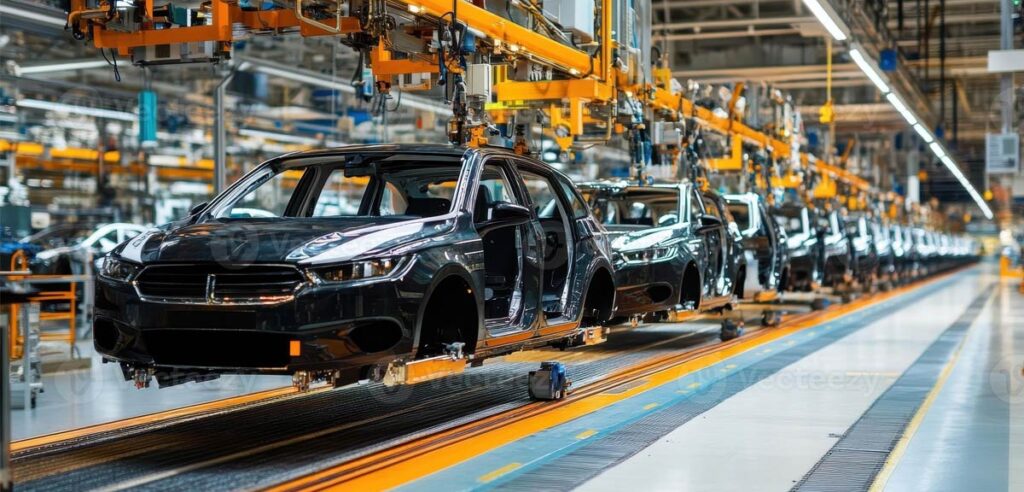
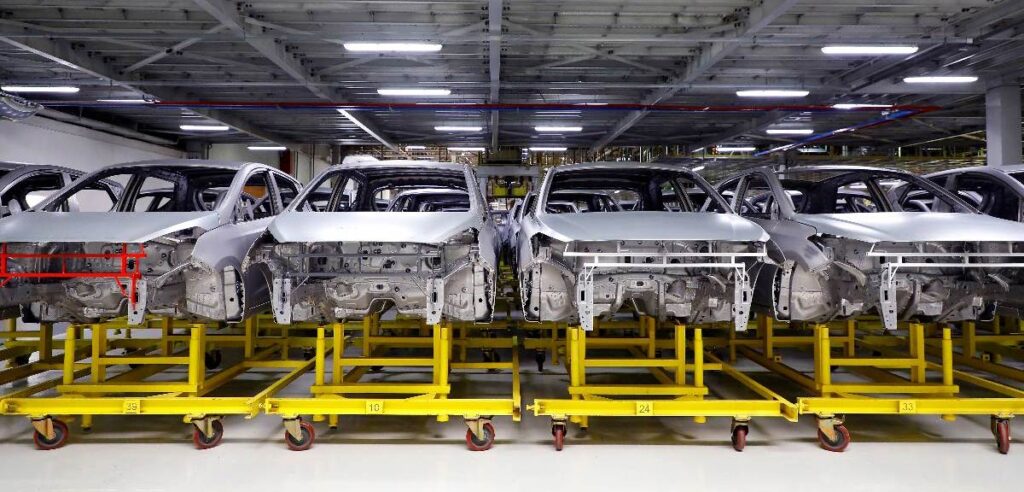
The automotive industry has become one of the most automated manufacturing sectors in the world. Modern vehicle production depends on highly integrated assembly lines capable of producing thousands of vehicles or automotive components with consistent quality, high efficiency, and minimal downtime.
Whether manufacturing complete vehicles, electric drive systems, engines, transmissions, or automotive components, every successful production facility relies on a carefully designed assembly line that combines automation equipment, industrial robots, intelligent conveying systems, precision testing stations, and digital production management.
This guide explains how an automotive assembly line works, introduces every major production stage, and explores the technologies that enable modern automotive manufacturing.
What Is an Automotive Assembly Line?
An automotive assembly line is a sequence of interconnected manufacturing stations where vehicle components or automotive parts are assembled into finished products through standardized and repeatable operations.
Unlike traditional manufacturing, an assembly line divides production into individual processes. Each workstation performs a specific task before transferring the product to the next station.
Typical assembly operations include:
- Component feeding
- Positioning
- Press fitting
- Fastening
- Welding
- Adhesive dispensing
- Leak testing
- Functional testing
- Vision inspection
- Final quality verification
This modular approach significantly increases production efficiency while ensuring stable product quality.
Step 1 – Material Preparation and Component Feeding
Every assembly process begins with properly prepared components.
Raw materials or semi-finished parts arrive from machining, stamping, injection molding, die casting, or external suppliers.
Before entering the production line, components undergo:
- Incoming quality inspection
- Barcode or QR code identification
- Automatic sorting
- Buffer storage
- Material traceability registration
Automated storage systems, AGVs (Automated Guided Vehicles), and intelligent logistics ensure that the correct parts arrive at the correct workstation without interrupting production.
Common equipment includes:
- Automatic feeders
- Vibratory bowl feeders
- Pallet systems
- Tray handling systems
- Automated warehouses
Step 2 – Component Positioning and Loading
Accurate positioning is essential for maintaining assembly precision.
Dedicated fixtures locate each component using precision locating pins, clamps, and servo-controlled positioning mechanisms.
Operators or robots load components into fixtures before the assembly cycle begins.
Typical positioning technologies include:
- Pneumatic clamping
- Servo positioning
- Vision-assisted alignment
- Laser positioning
- Precision fixtures
Repeatability at this stage directly influences downstream assembly accuracy.
Step 3 – Automated Assembly Operations
This is the core of the production line.
Depending on product requirements, assembly operations may include:
Press Fitting
Bearings, bushings, shafts, and gears are assembled using servo presses or hydraulic presses with force-displacement monitoring.
Benefits include:
- Controlled insertion force
- High repeatability
- Automatic quality monitoring
Screw Tightening
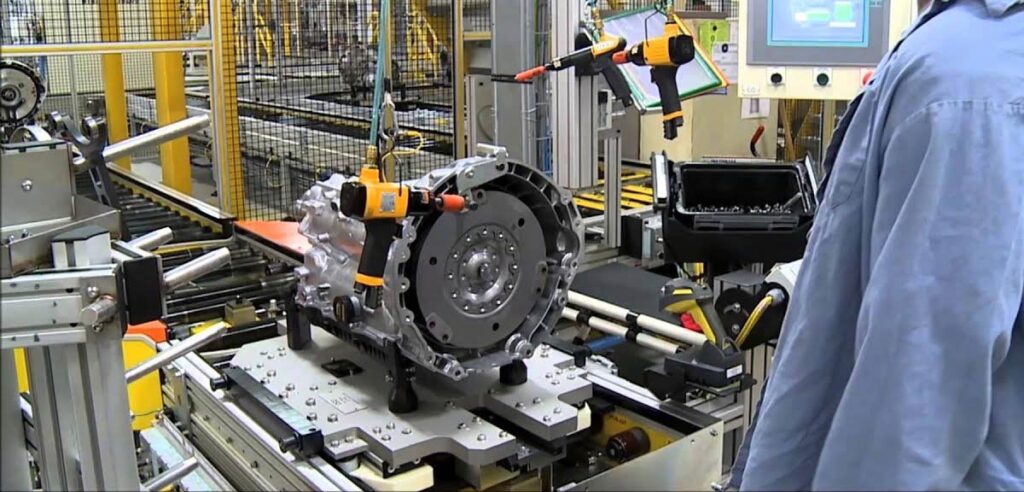
Servo electric screwdrivers apply precise torque and angle control.
Modern systems automatically record:
- Torque
- Angle
- Time
- Operator ID
- Product serial number
Every fastening result becomes part of the product’s digital traceability record.
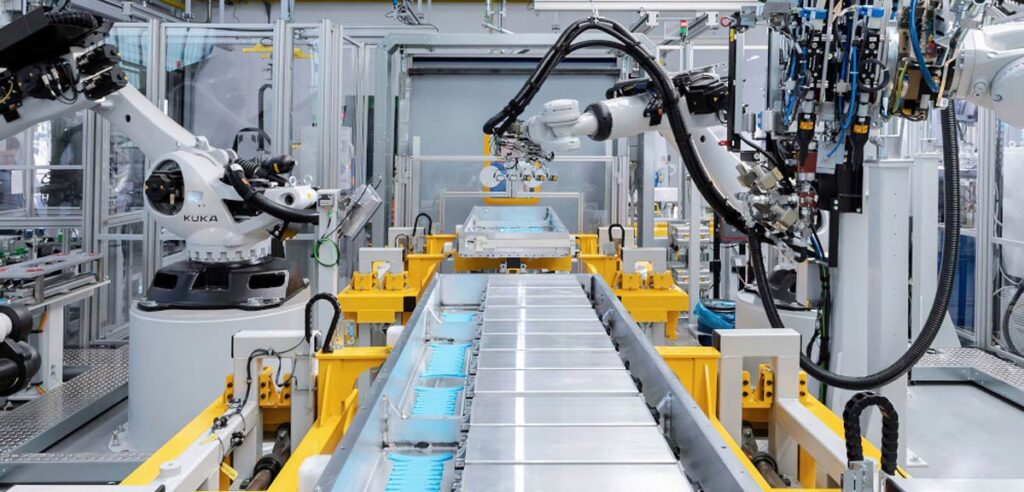
Robot Assembly
Industrial robots perform repetitive operations such as:
- Pick and place
- Sealant dispensing
- Component insertion
- Welding
- Handling
Robots improve consistency while reducing labor costs and production variation.
Step 4 – In-Process Quality Inspection
Quality control is integrated throughout the assembly line rather than performed only at the end.
Inline inspection stations monitor every critical parameter.
Typical inspection technologies include:
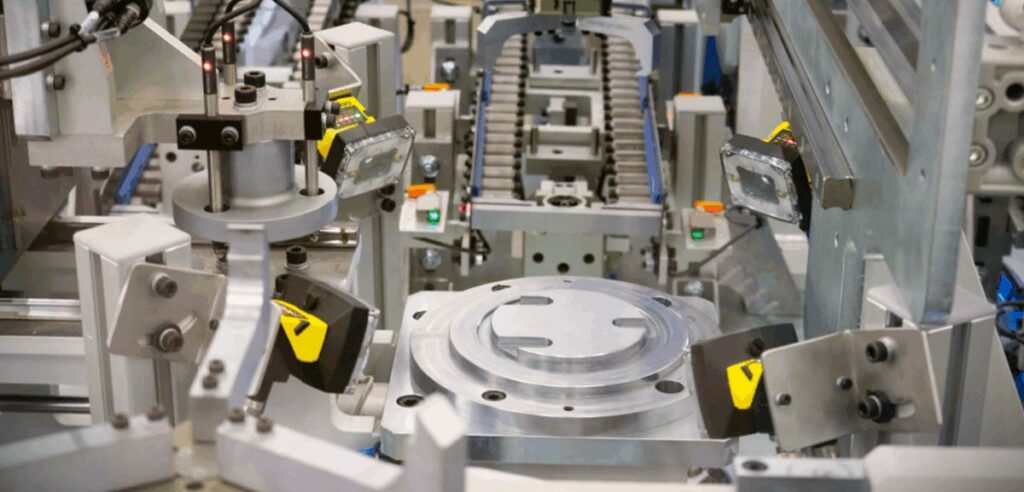
- Machine vision inspection
- Laser measurement
- Force monitoring
- Presence detection
- Dimensional measurement
Products that fail inspection are automatically rejected or diverted to rework stations.
This approach minimizes scrap and prevents defective products from moving downstream.
Step 5 – Functional Testing
Functional testing verifies that assembled products operate according to engineering specifications.
Depending on the product, testing may include:
- Leak testing
- Electrical testing
- Motor performance testing
- Noise testing
- Torque testing
- Current consumption testing
- Rotation testing
- Pressure testing
For example, an automotive starter motor assembly line typically performs:
- No-load speed test
- Current test
- Torque verification
- Noise analysis
- Final electrical inspection
Only qualified products proceed to packaging.
Step 6 – Product Traceability
Modern automotive manufacturing requires complete production traceability.
Each product receives a unique identification code linked to:
- Component batch numbers
- Assembly parameters
- Test results
- Operator information
- Production date
- Equipment ID
Traceability systems support quality management, warranty analysis, and continuous process improvement.
Step 7 – Final Inspection and Packaging
Before shipment, finished products undergo final verification.
Typical inspection items include:
- Visual appearance
- Label verification
- Barcode scanning
- Packaging inspection
- Final functional confirmation
Automatic packaging systems may include:
- Cartoning
- Palletizing
- Stretch wrapping
- Automatic labeling
Finished products are then transferred to the warehouse or shipped directly to customers.
Key Equipment Used in Automotive Assembly Lines
A modern automotive assembly line typically integrates multiple intelligent systems.
Common equipment includes:
- Conveyor systems
- Industrial robots
- Servo press machines
- Automatic screw fastening systems
- Vision inspection systems
- Leak testing equipment
- Laser marking machines
- Barcode readers
- PLC control systems
- MES manufacturing execution systems
- AGV logistics systems
Each subsystem contributes to higher production efficiency and improved product quality.
Benefits of Automotive Assembly Line Automation
Automated assembly lines provide significant operational advantages.
Higher Productivity
Continuous production minimizes idle time and increases output.
Improved Product Quality
Automation reduces human error and improves process consistency.
Lower Manufacturing Costs
Although initial investment is higher, automation reduces long-term labor costs and improves equipment utilization.
Better Traceability
Digital production records simplify quality management and regulatory compliance.
Flexible Manufacturing
Modern production lines can quickly switch between different product models with minimal downtime.
Future Trends in Automotive Assembly Lines
As the automotive industry transitions toward electric vehicles and intelligent manufacturing, assembly lines are becoming increasingly digital.
Emerging technologies include:
- Artificial Intelligence (AI)
- Digital Twins
- Industrial Internet of Things (IIoT)
- Predictive Maintenance
- Collaborative Robots (Cobots)
- Autonomous Mobile Robots (AMRs)
- Cloud-based Manufacturing Analytics
Future assembly lines will become more flexible, connected, and data-driven while reducing energy consumption and improving overall equipment effectiveness (OEE).
Conclusion
An automotive assembly line is far more than a series of machines connected by conveyors. It is a highly integrated manufacturing system combining mechanical engineering, industrial automation, robotics, intelligent inspection, and digital production management.
By optimizing every production stage—from material feeding and precision assembly to functional testing and traceability—manufacturers can achieve higher productivity, consistent product quality, and long-term operational efficiency.
For automotive manufacturers and Tier 1 or Tier 2 suppliers, investing in a professionally engineered assembly line is a critical step toward sustainable, competitive manufacturing.
About Hongbo Automation
Hongbo Automation specializes in the design and manufacture of automotive assembly lines, automated production systems, and turnkey intelligent manufacturing solutions.
Our engineering team provides customized assembly solutions for automotive components, electric drive systems, starter motors, alternators, transmissions, and other precision manufacturing applications.
Whether you are building a new production line or upgrading an existing factory, Hongbo Automation can help you improve efficiency, quality, and production flexibility.
Contact our engineering team today to discuss your next automation project.