
Introduction
Fastening technology is one of the most critical processes in automotive manufacturing. Thousands of threaded fasteners are tightened during the assembly of every vehicle, engine, transmission, battery pack, and chassis. Even a single improperly tightened bolt can lead to product failure, warranty claims, or serious safety risks.
To ensure consistent quality and complete production traceability, automotive manufacturers increasingly rely on intelligent torque tightening systems rather than conventional manual tools.
Modern tightening systems combine electric nutrunners, servo controllers, advanced sensors, industrial communication, and manufacturing software to deliver highly accurate tightening results while recording every fastening operation.
This guide explains the working principles, major components, tightening strategies, and applications of torque tightening systems in modern automotive assembly lines.
Quick Summary
| Item | Details |
| Industry | Automotive Manufacturing |
| Equipment | Intelligent Torque Tightening System |
| Primary Function | Precision Fastening |
| Applications | Vehicle Assembly, Engine, Transmission, Battery Pack |
| Quality Control | Torque, Angle, Traceability |
| Typical Users | Automotive OEMs & Tier 1 Suppliers |
What Is a Torque Tightening System?
A torque tightening system is an automated fastening solution that controls and verifies the tightening process of threaded fasteners according to predefined engineering specifications.
Unlike conventional pneumatic tools, intelligent tightening systems continuously monitor torque, rotation angle, tightening speed, and fastening sequence to ensure every bolt meets quality requirements.
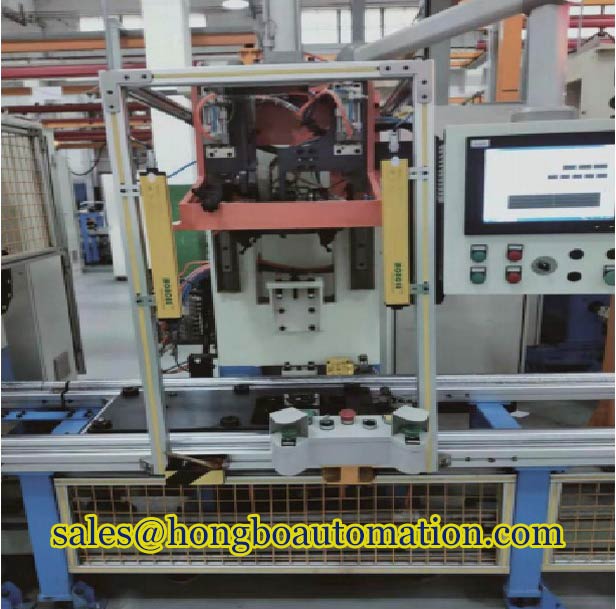
A complete tightening station typically includes:
- Electric nutrunner
- Servo tightening controller
- Reaction arm or robot
- Torque transducer
- Position detection system
- Barcode scanner
- PLC controller
- Human-Machine Interface (HMI)
- MES communication module
These components work together to ensure every fastening operation is completed accurately and recorded for future traceability.
Why Torque Tightening Systems Are Essential
Modern automotive products contain thousands of safety-critical fasteners.
Maintaining consistent tightening quality is essential for both product reliability and customer safety.
Intelligent tightening systems provide significant advantages over traditional fastening methods.
Improved Assembly Quality
Automatic torque control eliminates variations caused by manual tightening.
Every fastener is tightened according to programmed parameters, ensuring consistent clamping force and reducing assembly defects.
Complete Production Traceability
Each tightening cycle can automatically record:
- Torque value
- Tightening angle
- Date and time
- Product serial number
- Operator ID
- Tool ID
- Station number
- Tightening status
This information is stored in manufacturing databases and can be retrieved throughout the product lifecycle.
Reduced Human Error
Modern tightening systems guide operators through predefined fastening sequences.
The system prevents:
- Missing bolts
- Incorrect tightening order
- Under-tightening
- Over-tightening
- Wrong torque settings
This significantly improves First Pass Yield (FPY).
Higher Production Efficiency
Automatic tightening reduces cycle time while maintaining consistent assembly quality.
Combined with conveyors and industrial robots, tightening stations support continuous production with minimal operator intervention.
Industrial Robots in Automotive Manufacturing
Main Components of a Torque Tightening System
Electric Nutrunners
Electric nutrunners provide precise torque control using servo motors and digital controllers.
Compared with pneumatic tools, they offer:
- Higher accuracy
- Better repeatability
- Lower maintenance
- Energy efficiency
- Full data collection
They are widely used in automotive assembly because they support programmable tightening strategies and seamless integration with production control systems.
Servo Tightening Controller
The controller is the brain of the tightening system.
It monitors every fastening cycle and adjusts motor output in real time to achieve the required torque and angle values.
The controller also communicates with PLCs and MES platforms to exchange production data and report fastening results.
Torque Transducers
Torque transducers continuously measure applied torque during tightening.
These high-precision sensors ensure that every fastening operation remains within specified tolerances.
Accurate torque measurement is essential for safety-critical applications such as engine assembly, chassis assembly, and battery pack production.
Reaction Arms
Reaction arms absorb tightening reaction forces, reducing operator fatigue and improving tightening accuracy.
They also help position the nutrunner correctly, improving ergonomics and repeatability.
Human-Machine Interface (HMI)
Operators interact with the tightening station through an HMI.
The interface displays:
- Tightening instructions
- Torque values
- Cycle status
- Error messages
- Production information
Visual guidance helps reduce assembly mistakes and improves operator efficiency.
Tightening Strategies Used in Automotive Manufacturing
Not all threaded joints require the same tightening method. Different components have different functional and safety requirements, making the selection of an appropriate tightening strategy essential.
Modern intelligent tightening systems support multiple control strategies depending on the joint design, fastener characteristics, and engineering specifications.
Torque Control
Torque Control is the simplest and most widely used tightening strategy.
The tightening tool stops automatically when the programmed torque value is reached.
Typical applications include:
- Interior trim components
- Plastic covers
- Electrical brackets
- Non-safety-critical assemblies
Advantages
- Fast cycle time
- Easy programming
- Cost-effective
- Suitable for standard fastening applications
However, torque alone cannot accurately represent the actual clamping force because friction between threads and contact surfaces can vary.
Torque + Angle Control
Torque + Angle is one of the most common strategies in modern automotive assembly.
The system first reaches a predefined snug torque before rotating the fastener through a specified angle.
This method improves tightening consistency by reducing the influence of friction.
Typical applications include:
- Engine cylinder heads
- Connecting rods
- Main bearing caps
- Suspension components
- Steering systems
Advantages
- Higher tightening accuracy
- Better clamping force consistency
- Improved joint reliability
Because of its precision, Torque + Angle tightening is widely used for safety-critical assemblies.
Yield Control Tightening
Yield Control is applied when bolts are intentionally tightened into their elastic-plastic deformation zone.
This strategy provides highly consistent clamping force for critical joints.
Typical applications include:
- Cylinder head bolts
- Crankshaft bearing bolts
- Heavy-duty engine assemblies
Since these fasteners are permanently stretched during tightening, they are generally designed for one-time use and must be replaced during maintenance.
Multi-Stage Tightening
Some assemblies require several tightening stages rather than a single operation.
For example:
- Initial snug torque
- Intermediate torque
- Final torque
- Final angle rotation
Multi-stage tightening minimizes assembly distortion and ensures uniform load distribution.
It is commonly used for:
- Battery pack covers
- Large flange assemblies
- Engine blocks
- Transmission housings
Error Proofing (Poka-Yoke) in Tightening Systems
Modern automotive manufacturers aim for zero-defect production.
Torque tightening systems therefore incorporate Poka-Yoke (error-proofing) functions to prevent assembly mistakes before products leave the workstation.
Common error-proofing features include:
- Missing bolt detection
- Wrong bolt detection
- Incorrect tightening sequence prevention
- Incorrect torque setting prevention
- Double tightening prevention
- Tool authorization management
- Product recipe verification
If an error is detected, the system immediately alerts the operator and prevents the product from advancing to the next station until the issue is resolved.
This significantly improves product quality and reduces costly rework.
Typical Applications in Automotive Manufacturing
Torque tightening systems are used throughout the automotive production process.
Engine Assembly
Engine assembly requires extremely accurate fastening because many joints operate under high temperature and pressure.
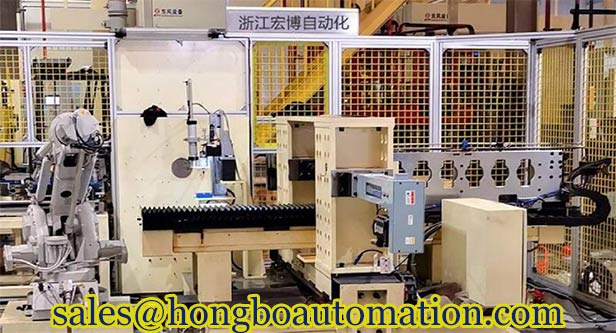
Typical tightening applications include:
- Cylinder head bolts
- Connecting rod bolts
- Flywheel bolts
- Oil pump assemblies
- Timing cover installation
- Intake manifold fastening
These applications often use Torque + Angle or Yield Control strategies.
Transmission Assembly
Transmission systems contain numerous precision fasteners.
Typical applications include:
- Gear housing assembly
- Bearing cap tightening
- Valve body installation
- Clutch assembly
- Differential assembly
High repeatability is essential to ensure transmission performance and durability.
Electric Vehicle Battery Pack Assembly
Battery pack production is one of the fastest-growing applications for intelligent tightening systems.
Critical fastening operations include:
- Module installation
- Busbar fastening
- Cooling plate assembly
- Battery cover installation
- High-voltage connector fastening
Because battery safety depends heavily on assembly quality, complete torque traceability is usually required.
Chassis Assembly
Many chassis components directly affect vehicle safety.
Typical tightening applications include:
- Suspension systems
- Steering systems
- Brake assemblies
- Subframe installation
- Wheel hub assembly
These joints require high tightening accuracy and complete quality documentation.
Final Vehicle Assembly
During final assembly, intelligent tightening systems are used for:
- Seats
- Instrument panels
- Doors
- Wheels
- Bumpers
- Steering wheels
- Interior trim
Operator guidance software helps ensure every fastening point is completed correctly before the vehicle leaves the station.
Robotic Torque Tightening Systems
As automotive factories become increasingly automated, many tightening operations are now performed by industrial robots.
Robot-mounted tightening systems combine:
- Six-axis industrial robots
- Servo electric nutrunners
- Automatic tool changers
- Vision guidance systems
- PLC controllers
- Production databases
Robotic tightening provides:
- High repeatability
- Consistent tightening quality
- Reduced operator workload
- Automatic process documentation
- Improved production flexibility
Robot-assisted fastening is particularly effective for heavy components, difficult-to-access bolts, and high-volume production lines.
→ Industrial Robots in Automotive Manufacturing
Quality Standards and Process Verification
Automotive manufacturers follow strict quality standards to ensure fastening reliability.
A typical tightening quality management process includes:
- Tool calibration
- Daily verification tests
- Torque capability studies
- Process validation
- Statistical process control (SPC)
- Preventive maintenance
- Audit reporting
Many manufacturers also define tightening acceptance windows for torque and angle values. If a result falls outside the specified limits, the product is automatically rejected or routed for rework.
These quality assurance practices help maintain consistent assembly performance throughout the production lifecycle.
How to Select the Right Torque Tightening System
Selecting a torque tightening system involves much more than choosing a tightening tool. Manufacturers should evaluate the complete production process, product requirements, quality standards, and future expansion plans.
The following considerations can help identify the most suitable solution.
Define the Joint Requirements
The first step is understanding the characteristics of the fastening application.
Important questions include:
- Is the joint safety-critical?
- What torque range is required?
- Is angle control necessary?
- Is bolt yield tightening specified?
- Is complete process traceability required?
Different applications may require different tightening strategies and tool configurations.
Evaluate Production Requirements
Production volume has a significant impact on system selection.
Manufacturers should consider:
- Annual production capacity
- Takt time
- Number of tightening points
- Product variants
- Shift patterns
- Future capacity expansion
For high-volume production, fully automated robotic tightening systems may provide the best return on investment, while lower-volume lines may benefit from intelligent manual workstations.
Consider System Integration
A tightening station should not operate as an isolated piece of equipment.
For maximum efficiency, it should integrate seamlessly with:
- Conveyor systems
- Industrial robots
- Vision inspection systems
- PLC controllers
- Manufacturing Execution Systems (MES)
- Production traceability databases
Integrated automation reduces manual intervention and improves overall production efficiency.
→ Automotive Conveyor Systems: Types, Design & Applications
Focus on Data Traceability
In modern automotive manufacturing, tightening data is just as valuable as the physical fastening operation.
Manufacturers should ensure the system can record:
- Torque values
- Angle values
- Tightening curves
- Product serial numbers
- Tool identification
- Operator information
- Time stamps
- Pass/Fail results
This information supports warranty analysis, quality audits, and continuous process improvement.
Future Trends in Intelligent Tightening Technology
The automotive industry is rapidly adopting digital manufacturing technologies, and tightening systems are evolving accordingly.
Several emerging trends are shaping the future of precision fastening.
Smart Connected Tightening Tools
Modern electric nutrunners are increasingly connected through Industrial Ethernet and wireless communication.
Real-time connectivity allows engineers to monitor:
- Tool status
- Tightening results
- Maintenance schedules
- Production statistics
This improves equipment utilization and reduces unexpected downtime.
AI-Assisted Process Optimization
Artificial intelligence is beginning to assist engineers in identifying abnormal tightening patterns and predicting equipment failures.
AI can analyze historical fastening data to detect:
- Tool wear
- Joint variation
- Process instability
- Quality trends
This supports predictive maintenance and continuous process optimization.
Digital Traceability
Manufacturers increasingly require complete digital records for every fastening operation.
Integrated tightening systems automatically synchronize data with MES and quality management systems, creating a digital history for each product.
This level of traceability is especially important for:
- Electric vehicle battery systems
- High-voltage assemblies
- Safety-critical chassis components
- Engine and transmission production
Flexible Manufacturing
Automotive production lines must support an increasing number of vehicle models and product variants.
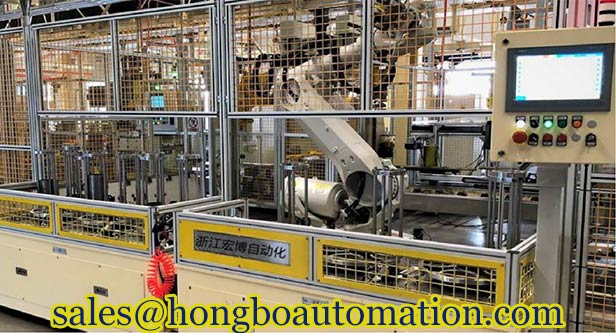
Modern tightening systems therefore provide:
- Automatic recipe switching
- Barcode-based product identification
- Tool parameter downloads
- Flexible workstation configuration
These features enable rapid changeovers while maintaining consistent quality.
Choosing an Automotive Automation Partner
Implementing a successful tightening system requires expertise beyond fastening technology.
Manufacturers should look for automation partners that understand the entire production process and can deliver integrated solutions.
Key evaluation criteria include:
- Proven experience in automotive manufacturing
- Mechanical and electrical engineering capabilities
- PLC programming expertise
- Robot integration experience
- Vision inspection integration
- Conveyor system design
- Project management capability
- Global installation and commissioning support
- Preventive maintenance and after-sales service
A qualified automation partner can optimize the entire assembly process, ensuring that tightening stations operate efficiently within the broader production line.
Conclusion
Torque tightening systems play a critical role in ensuring the safety, reliability, and quality of modern automotive products.
By combining intelligent electric nutrunners, advanced control strategies, real-time monitoring, and production traceability, these systems enable manufacturers to achieve highly consistent fastening performance while reducing assembly errors and improving productivity.
As automotive manufacturing continues to evolve toward electrification, digitalization, and Industry 4.0, intelligent tightening systems will become even more connected, data-driven, and flexible.
Whether assembling engines, transmissions, battery packs, chassis, or complete vehicles, selecting the right tightening solution is an essential step toward building efficient and future-ready production lines.
Frequently Asked Questions
What is a torque tightening system?
A torque tightening system is an intelligent fastening solution that controls and verifies bolt tightening using predefined torque, angle, and process parameters while recording production data for traceability.
Why are electric nutrunners preferred over pneumatic tools?
Electric nutrunners provide higher accuracy, programmable tightening strategies, better repeatability, lower maintenance requirements, and complete digital data collection.
What is the difference between Torque Control and Torque + Angle Control?
Torque Control stops tightening when a specified torque is reached, while Torque + Angle Control combines an initial torque value with a defined angle of rotation to achieve more consistent clamping force.
Why is tightening traceability important?
Traceability allows manufacturers to record and retrieve fastening data for quality assurance, warranty investigations, process optimization, and regulatory compliance.
Can torque tightening systems be integrated with robots?
Yes. Robot-mounted tightening systems are widely used for high-volume production, heavy components, and applications requiring excellent repeatability.
Can tightening systems communicate with MES?
Yes. Modern tightening controllers exchange data with PLCs and MES platforms to support real-time production monitoring and complete product traceability.
Which automotive components require intelligent tightening?
Typical applications include engine assemblies, transmissions, battery packs, chassis systems, steering systems, brake systems, wheels, and final vehicle assembly.
How should manufacturers select a tightening system supplier?
Manufacturers should evaluate engineering experience, system integration capability, automotive project references, technical support, lifecycle services, and the supplier’s ability to deliver complete turnkey solutions.