Introduction
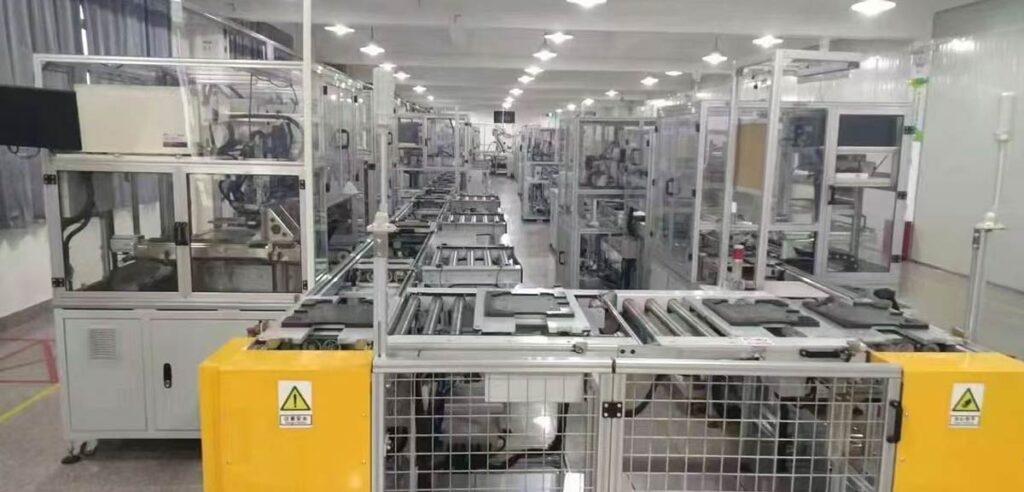
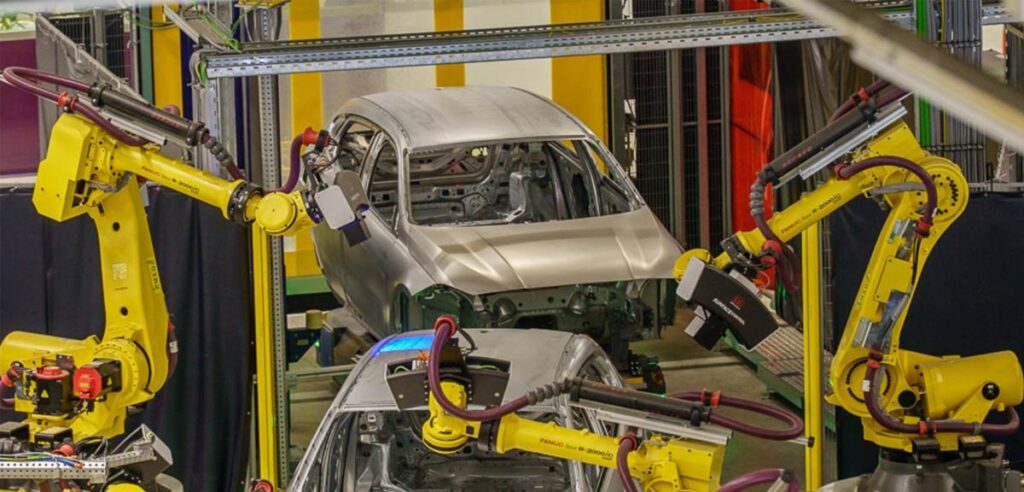
Modern automotive manufacturing relies on far more than advanced machinery and industrial robots. Behind every efficient production line is a digital control architecture that coordinates equipment, collects production data, manages workflows, and ensures complete traceability.
Programmable Logic Controllers (PLCs) and Manufacturing Execution Systems (MES) form the foundation of this architecture. While PLCs control machines and production equipment in real time, MES platforms manage production orders, quality data, material tracking, and manufacturing performance across the entire factory.
When these two systems are fully integrated, manufacturers gain real-time visibility into production, reduce manual data entry, improve equipment utilization, and create a connected manufacturing environment that supports Industry 4.0 initiatives.
This guide explains how PLC and MES integration works, its benefits, implementation considerations, and best practices for automotive manufacturers.
Key Takeaways
| Item | Description |
| Industry | Automotive Manufacturing |
| Core Technologies | PLC, MES |
| Primary Function | Equipment Control & Production Management |
| Typical Applications | Vehicle Assembly, Engine, Transmission, Battery Pack |
| Benefits | Traceability, Automation, Production Visibility |
| Typical Users | OEMs, Tier 1 & Tier 2 Suppliers |
What Are PLC and MES?
Although PLC and MES are closely connected, they serve different roles within an automotive manufacturing environment.
A PLC is an industrial controller responsible for executing machine-level operations. It receives signals from sensors, controls actuators, communicates with robots, conveyors, vision systems, tightening equipment, and testing stations, and ensures production equipment operates safely and reliably.
An MES operates at the production management level. Rather than controlling individual machines, it coordinates manufacturing activities across the factory by managing work orders, tracking products, collecting production data, recording quality information, and monitoring equipment performance.
A simple way to understand their relationship is:
- PLC controls how the machine operates.
- MES manages what the factory produces and how production is executed.
When connected, PLCs continuously send production data to the MES, while the MES distributes production instructions back to the PLCs, creating a closed-loop manufacturing system.
The Role of PLCs in Automotive Manufacturing
PLCs are the backbone of industrial automation. Nearly every automated workstation on an automotive production line depends on PLC control.
Typical applications include:
- Conveyor system control
- Robotic workstations
- Servo press operations
- Torque tightening stations
- Leak testing equipment
- Vision inspection systems
- End-of-line testing
- Material transfer systems
- AGV interface control
Because PLCs operate in real time, they ensure that every production sequence follows predefined logic with high reliability and repeatability.
For example, before an engine pallet advances to the next workstation, the PLC verifies that all tightening operations have passed, inspection results are acceptable, and safety conditions have been satisfied. Only then does it release the pallet to continue through the production line.
→ Automotive Conveyor Systems: Types, Design & Applications
→ Torque Tightening Systems in Automotive Assembly Lines
The Role of MES in Automotive Manufacturing
Unlike PLCs, MES platforms focus on production management rather than equipment control.
An MES connects production planning with shop-floor execution by collecting real-time data from equipment and presenting it in a form that supervisors, quality engineers, and plant managers can use for decision-making.
Typical MES functions include:
- Production scheduling
- Work order management
- Product genealogy
- Material tracking
- Operator management
- Quality data collection
- Equipment performance monitoring
- Electronic work instructions
- Manufacturing reports
For automotive manufacturers, traceability is one of the most valuable functions of an MES.
Each vehicle or component receives a unique identity, allowing manufacturers to associate every production event—including tightening results, inspection images, test data, and operator information—with the finished product.
This level of traceability is essential for warranty analysis, regulatory compliance, and continuous quality improvement.
How PLC and MES Work Together
A fully integrated production line enables seamless communication between shop-floor equipment and manufacturing management systems.
A typical workflow is as follows:
- The MES downloads a production order to the PLC.
- The PLC configures the workstation based on the product recipe.
- The conveyor transfers the workpiece to the station.
- Robots, tightening tools, and inspection equipment complete their assigned tasks.
- The PLC collects operational data from each device.
- Inspection results and process parameters are transmitted to the MES.
- The MES records the production history and updates the order status.
- The workpiece proceeds to the next operation only after all quality requirements have been satisfied.
This continuous exchange of information ensures synchronization between production equipment and manufacturing management while providing complete transparency throughout the production process.
Benefits of PLC and MES Integration
Integrating PLCs with an MES platform delivers far more than automated data collection. It establishes a connected manufacturing environment where production, quality, maintenance, and management teams work from the same real-time information.
For automotive manufacturers, this integration improves operational efficiency while supporting long-term digital transformation initiatives.
Real-Time Production Visibility
One of the greatest advantages of PLC and MES integration is real-time visibility.
Production managers can monitor:
- Current production status
- Equipment operating conditions
- Work order progress
- Production output
- Line balance
- Machine alarms
- Downtime events
Instead of waiting for manual reports at the end of a shift, supervisors can immediately identify production bottlenecks and respond before they affect overall throughput.
Improved Product Traceability
Traceability has become a mandatory requirement for modern automotive manufacturing.
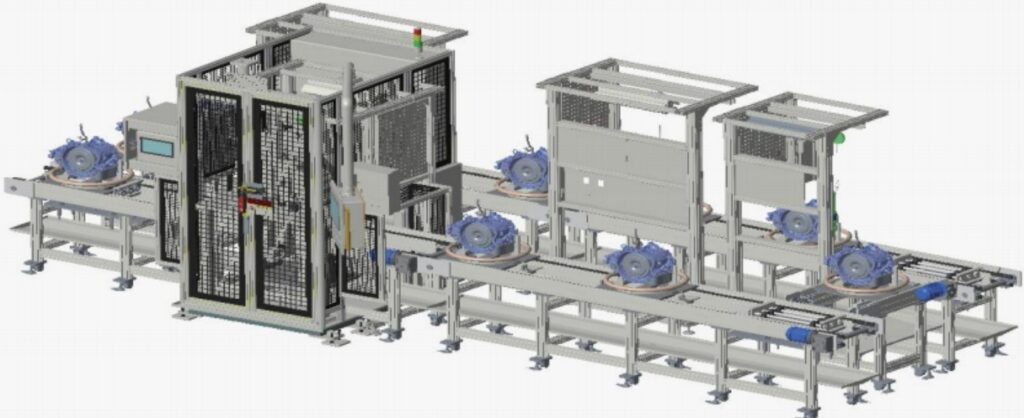
An integrated PLC and MES system records production data throughout the manufacturing process, creating a complete digital history for every product.
Typical traceability records include:
- Product serial number
- Barcode or Data Matrix code
- Assembly station
- Robot program version
- Torque tightening results
- Vision inspection images
- Leak test results
- Operator identification
- Production date and time
- Equipment identification
If a quality issue is identified after shipment, manufacturers can quickly determine which products were affected and identify the root cause.
→ Vision Inspection Systems in Automotive Manufacturing
→ Leak Testing Equipment Explained
Better Equipment Utilization
Modern MES platforms calculate Overall Equipment Effectiveness (OEE) by collecting real-time data directly from PLCs.
OEE is typically evaluated using three key indicators:
- Availability
- Performance
- Quality
Instead of estimating equipment performance, manufacturers obtain accurate production statistics that support continuous improvement.
Production engineers can identify:
- Frequent equipment stoppages
- Long changeover times
- Repeated machine faults
- Low-performing workstations
- Unplanned downtime
These insights help improve production efficiency and increase equipment utilization.
Reduced Manual Data Entry
Traditional production reporting often depends on operators manually recording process data.
Manual recording increases the risk of:
- Data entry errors
- Missing information
- Delayed reporting
- Inconsistent records
Integrated PLC and MES systems automatically capture production data directly from equipment, eliminating redundant paperwork while improving data accuracy.
Faster Quality Response
When production data is available in real time, quality engineers can detect abnormal trends before large numbers of defective products are produced.
For example, if tightening torque begins to drift outside acceptable limits, the MES can immediately notify engineers, allowing corrective action before additional parts are affected.
This proactive approach reduces scrap, minimizes rework, and improves customer satisfaction.
Communication Technologies Used for PLC and MES Integration
Reliable communication is essential for successful system integration.
Several industrial communication standards are widely used in automotive manufacturing.
PROFINET
PROFINET is one of the most common Industrial Ethernet protocols used in automotive production.
It provides:
- High-speed communication
- Real-time data exchange
- Excellent reliability
- Easy integration with distributed I/O devices
PROFINET is frequently selected for conveyor systems, robotic cells, and assembly equipment.
EtherNet/IP
EtherNet/IP is another widely adopted industrial communication protocol.
It is commonly used to connect:
- PLCs
- Robots
- Variable frequency drives
- Vision systems
- Safety controllers
Its flexibility makes it suitable for both standalone machines and complete production lines.
OPC UA
OPC UA has become an important communication standard for Industry 4.0.
Unlike traditional fieldbus protocols, OPC UA focuses on secure, standardized data exchange between different software platforms and automation systems.
Typical applications include:
- MES communication
- SCADA integration
- ERP connectivity
- Cloud-based analytics
- Industrial IoT platforms
Because it is vendor-independent, OPC UA simplifies integration between equipment from different manufacturers.
Modbus TCP
Modbus TCP remains a practical solution for connecting auxiliary equipment and monitoring devices.
Although it does not provide the advanced capabilities of OPC UA, it is widely used because of its simplicity and broad compatibility.
Typical applications include:
- Energy monitoring
- Environmental monitoring
- Utility systems
- Auxiliary production equipment
Practical Applications in Automotive Manufacturing
PLC and MES integration supports nearly every production area within an automotive factory.
Engine Assembly Lines
Engine assembly requires strict process control and complete quality documentation.
An integrated system can:
- Download assembly recipes automatically
- Verify engine model information
- Record tightening results
- Store leak testing data
- Track engine serial numbers
- Generate electronic production records
This ensures every engine is assembled according to the correct specifications.
Transmission Assembly
Transmission production involves numerous precision assembly operations.
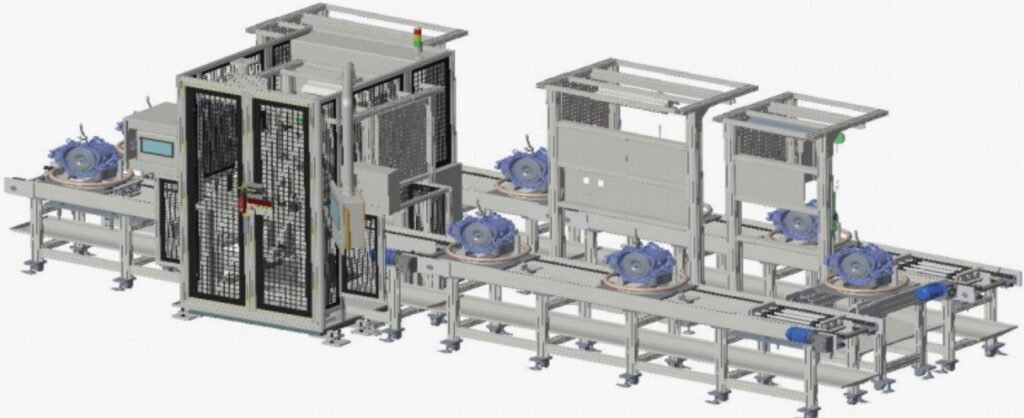
PLC and MES integration supports:
- Production sequence management
- Component verification
- Tool parameter control
- Quality inspection records
- Final assembly traceability
The system helps reduce assembly errors while improving process consistency.
Electric Vehicle Battery Assembly
Battery manufacturing demands exceptionally high traceability due to safety and regulatory requirements.
Integrated control systems can record:
- Battery cell identification
- Module assembly information
- Busbar tightening results
- Insulation test results
- Cooling system inspection
- Final battery pack verification
This comprehensive data supports lifecycle quality management and simplifies future service investigations.
Final Vehicle Assembly
During final assembly, multiple workstations exchange information continuously.
Typical data includes:
- Vehicle Identification Number (VIN)
- Assembly configuration
- Torque tightening confirmation
- Functional test results
- Vision inspection status
- Operator verification
Before a vehicle proceeds to the next station, the PLC verifies that all required operations have been completed successfully. The MES simultaneously updates the vehicle’s production record, ensuring complete traceability throughout the assembly process.
Best Practices for Successful PLC and MES Integration
Successful integration requires careful planning and standardized engineering practices.
Manufacturers should consider the following recommendations:
Define a Standard Data Structure
Standardizing naming conventions, equipment identifiers, alarm codes, and product data simplifies future maintenance and system expansion.
Design for Scalability
Production requirements evolve over time.
Control architectures should allow additional workstations, robots, inspection systems, and software modules to be integrated without extensive redesign.
Standardize Communication Protocols
Using common communication standards throughout the factory reduces integration complexity and improves interoperability between equipment from different suppliers.
Implement Cybersecurity Measures
As more manufacturing equipment becomes connected, protecting production networks is increasingly important.
Recommended measures include:
- Network segmentation
- User authentication
- Role-based access control
- Secure remote maintenance
- Regular software updates
- Continuous system monitoring
These practices help protect manufacturing operations from unauthorized access and cyber threats.
Common Challenges of PLC and MES Integration
Although PLC and MES integration offers significant operational benefits, successful implementation requires careful engineering, standardized communication, and long-term planning. Understanding common challenges helps manufacturers reduce project risks and achieve a smoother deployment.
Equipment from Multiple Suppliers
Automotive production lines often include equipment supplied by different manufacturers.
A single production line may contain:
- Conveyor systems
- Industrial robots
- Tightening systems
- Vision inspection stations
- Leak testing equipment
- AGVs
- End-of-line testing machines
Each supplier may use different PLC platforms, communication protocols, and data structures.
A standardized integration architecture helps ensure reliable communication across the entire production line.
Legacy Equipment Integration
Many automotive plants continue to operate equipment that has been in service for more than ten years.
These legacy machines may have limited communication capabilities or rely on older industrial networks.
Rather than replacing all equipment, manufacturers often integrate legacy systems using protocol gateways, industrial edge devices, or customized communication interfaces.
This approach reduces investment costs while extending the useful life of existing production assets.
Data Standardization
Collecting data is only valuable if the information is consistent.
Without standardized naming conventions and data structures, production reports become difficult to analyze.
Manufacturers should establish standards for:
- Equipment IDs
- Station numbers
- Alarm codes
- Product identifiers
- Quality status
- Process parameters
- Time synchronization
Standardization improves reporting accuracy and simplifies future system upgrades.
Workforce Training
Digital manufacturing systems require operators, maintenance technicians, and production engineers to understand both equipment operation and manufacturing software.
Training programs should cover:
- PLC operation
- HMI navigation
- MES workflows
- Alarm diagnosis
- Data interpretation
- Basic troubleshooting
Well-trained personnel can resolve issues more quickly and maximize the value of the integrated system.
Future Trends in PLC and MES Integration
As automotive manufacturing moves toward smart factories, PLC and MES technologies continue to evolve.
Several emerging trends are shaping the next generation of digital production systems.
Digital Twin Technology
Digital Twin technology creates a virtual model of a production line using real-time operational data.
Engineers can simulate:
- Production flow
- Equipment utilization
- Robot movements
- Cycle time optimization
- Maintenance planning
By identifying issues in the virtual environment before they occur on the factory floor, manufacturers can reduce commissioning time and improve production efficiency.
Industrial Internet of Things (IIoT)
Industrial IoT enables production equipment to exchange information continuously across the factory network.
Sensors installed throughout the production line collect data such as:
- Equipment status
- Energy consumption
- Temperature
- Vibration
- Production counts
- Process parameters
This information supports predictive maintenance and more informed production decisions.
Artificial Intelligence
Artificial intelligence is increasingly being used to analyze manufacturing data generated by PLCs and MES platforms.
AI applications include:
- Predictive maintenance
- Production scheduling optimization
- Quality trend analysis
- Process parameter optimization
- Root cause analysis
Rather than reacting to problems after they occur, manufacturers can identify potential issues before they affect production.
Edge Computing
Edge computing processes production data close to the equipment instead of sending all information to centralized servers.
Benefits include:
- Lower communication latency
- Faster machine response
- Reduced network traffic
- Improved cybersecurity
- Higher system reliability
Edge computing is expected to play an increasingly important role in future automotive factories.
Choosing an Automation Integration Partner
Implementing PLC and MES integration is a multidisciplinary engineering project.
Success depends not only on software selection but also on the ability to integrate mechanical systems, electrical controls, industrial networks, robotics, quality systems, and production processes into a unified solution.
When evaluating an automation partner, manufacturers should consider:
- Experience with automotive manufacturing projects
- PLC programming capability
- MES integration expertise
- Industrial network design
- Robot and vision system integration
- Production line commissioning experience
- Functional safety knowledge
- Global technical support
- Long-term maintenance capability
A capable integration partner should focus on optimizing the complete manufacturing process rather than delivering individual pieces of equipment.
Conclusion
PLC and MES integration forms the digital backbone of modern automotive manufacturing.
By connecting production equipment with manufacturing management systems, manufacturers gain real-time visibility into operations, improve product traceability, reduce manual intervention, and enhance overall production efficiency.
As technologies such as artificial intelligence, Industrial IoT, digital twins, and edge computing continue to mature, integrated control systems will become even more intelligent and data-driven.
For automotive manufacturers seeking to build flexible, efficient, and future-ready production facilities, investing in a well-designed PLC and MES integration strategy is an essential step toward achieving Industry 4.0 manufacturing objectives.
Frequently Asked Questions
What is the difference between a PLC and an MES?
A PLC controls machines and production equipment in real time, while an MES manages production execution, work orders, quality records, and manufacturing data across the factory.
Why is PLC and MES integration important?
Integration enables automatic data exchange between equipment and production management systems, improving traceability, efficiency, and decision-making.
Which communication protocols are commonly used?
Common protocols include PROFINET, EtherNet/IP, OPC UA, and Modbus TCP. The choice depends on equipment compatibility, real-time requirements, and the overall automation architecture.
Can existing production lines be upgraded?
Yes. Many manufacturers integrate legacy equipment through communication gateways, protocol converters, or edge devices, allowing older machines to participate in modern digital manufacturing systems.
How does MES improve quality management?
MES records production data, inspection results, process parameters, and operator information, providing complete traceability and supporting quality analysis throughout the product lifecycle.
Can PLC and MES systems support electric vehicle production?
Yes. They are widely used in battery module assembly, battery pack production, electric drive assembly, and final vehicle assembly, where high levels of traceability and process control are essential.
What should manufacturers consider before implementing an MES?
Manufacturers should define production objectives, standardize data structures, evaluate existing equipment, establish communication standards, and ensure adequate employee training before deployment.
What are the key benefits of Industry 4.0 integration?
Industry 4.0 technologies improve production visibility, predictive maintenance, process optimization, equipment utilization, and data-driven decision-making.
Best Practices
To maximize the value of PLC and MES integration, manufacturers should:
- Design a standardized control architecture across all production lines.
- Use open communication standards whenever possible.
- Build complete product traceability from raw materials to finished vehicles.
- Collect only meaningful production data and define clear data ownership.
- Plan for future expansion, including additional robots, inspection systems, and software platforms.
- Review production data regularly to identify improvement opportunities and optimize Overall Equipment Effectiveness (OEE).