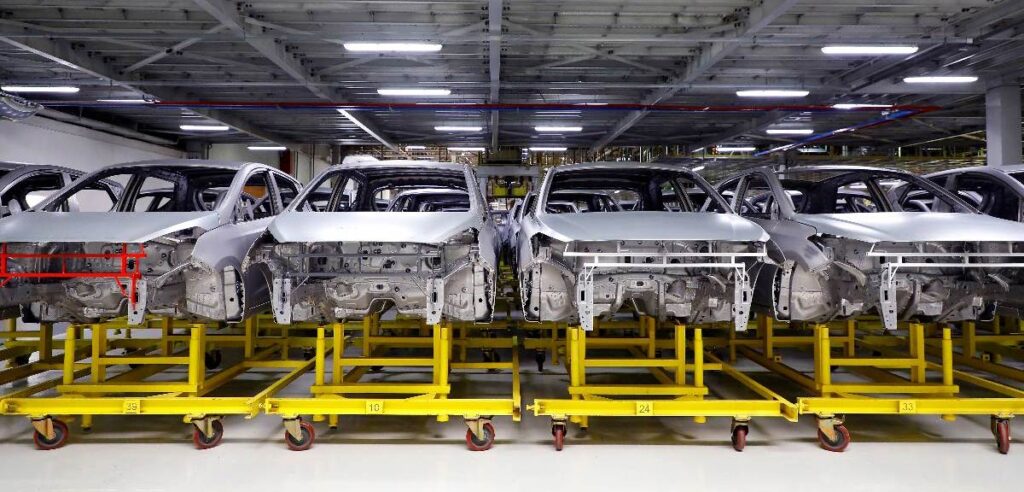
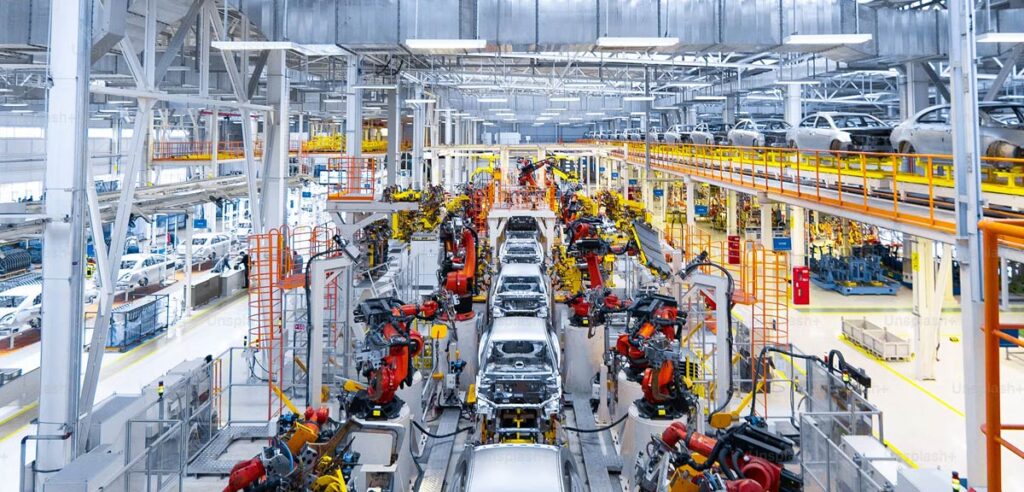
The engine is one of the most complex and critical components in traditional vehicles. Manufacturing a reliable engine requires highly precise assembly processes, strict quality control, and advanced automation technologies.
An engine assembly line integrates mechanical systems, automated equipment, inspection technologies, and digital manufacturing solutions to transform individual engine components into a complete power unit.
Modern automotive manufacturers rely on highly automated engine assembly lines to achieve:
- High production efficiency
- Consistent assembly quality
- Reduced manufacturing errors
- Complete production traceability
- Flexible production capability
From cylinder block installation and crankshaft assembly to torque tightening and final testing, every process must meet strict engineering requirements.
This article explains the main processes, equipment, automation technologies, and design considerations involved in modern engine assembly line manufacturing.
Overview of Engine Assembly Process
An automotive engine consists of hundreds of precision components working together under extreme operating conditions.
A typical engine assembly process includes:
- Cylinder block preparation
- Crankshaft installation
- Piston and connecting rod assembly
- Cylinder head installation
- Timing system assembly
- Intake and exhaust component installation
- Fuel system installation
- Electrical component assembly
- Final inspection and testing
Each assembly step requires accurate positioning, controlled fastening, and quality verification.
A modern engine assembly line combines automated equipment with skilled engineering processes to ensure every engine meets performance and reliability requirements.
What Is an Engine Assembly Line?
An engine assembly line is a specialized production system designed to assemble engine components through a sequence of automated and semi-automated manufacturing operations.
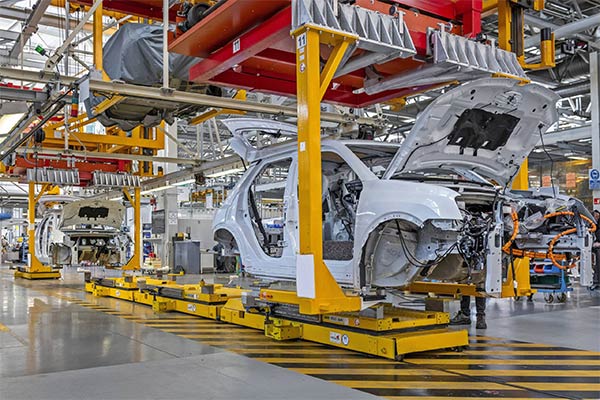
Unlike general assembly lines, engine production requires extremely high precision because engine components operate with very small tolerances.
A complete engine assembly line typically includes:
- Pallet conveyor systems
- Engine lifting and transfer equipment
- Robotic assembly stations
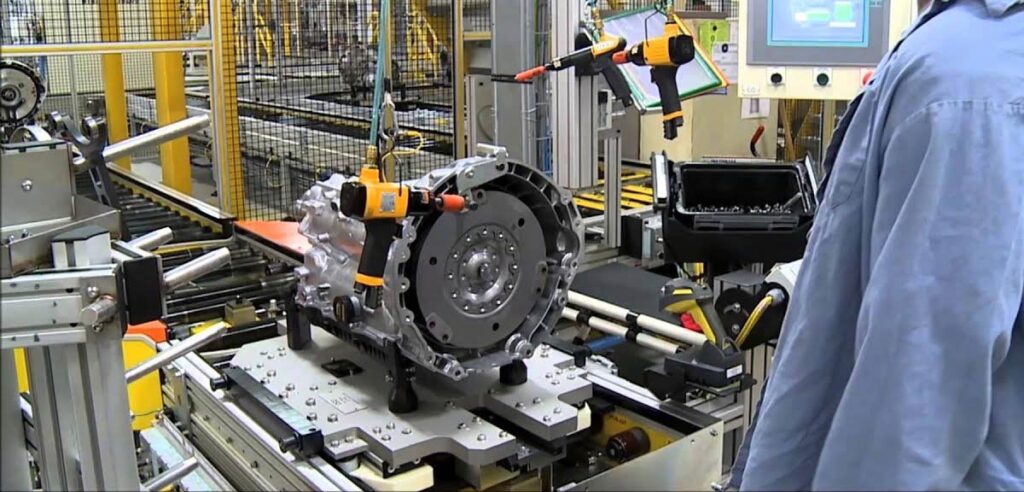
- Torque tightening systems
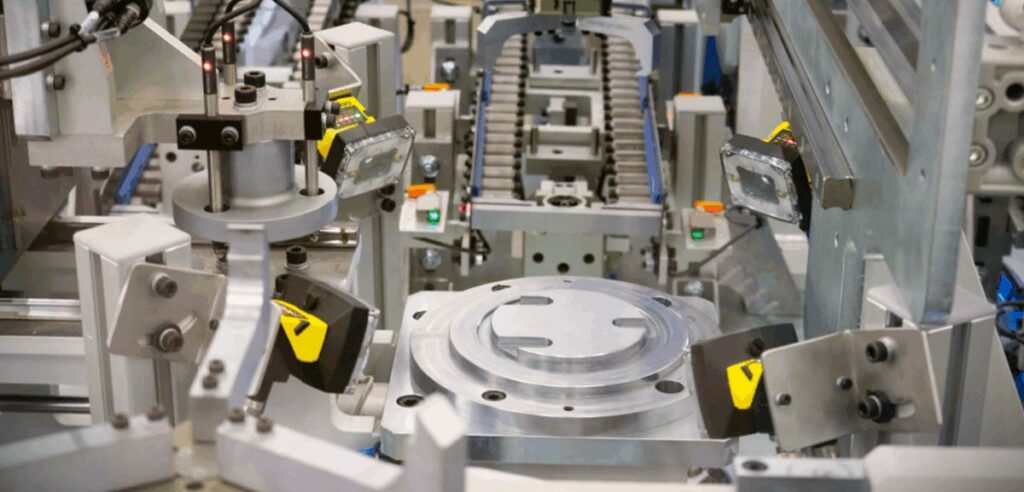
- Vision inspection systems
- Leak testing equipment
- Washing and cleaning stations
- Engine test equipment
- PLC control systems
- MES production tracking
The production line is designed according to:
- Engine type
- Production volume
- Cycle time requirements
- Automation level
- Factory layout
- Quality standards
Main Processes in an Engine Assembly Line
Cylinder Block Preparation and Loading
The cylinder block is the foundation of the engine assembly process.
Before entering the assembly line, the cylinder block is usually cleaned, inspected, and prepared for installation.
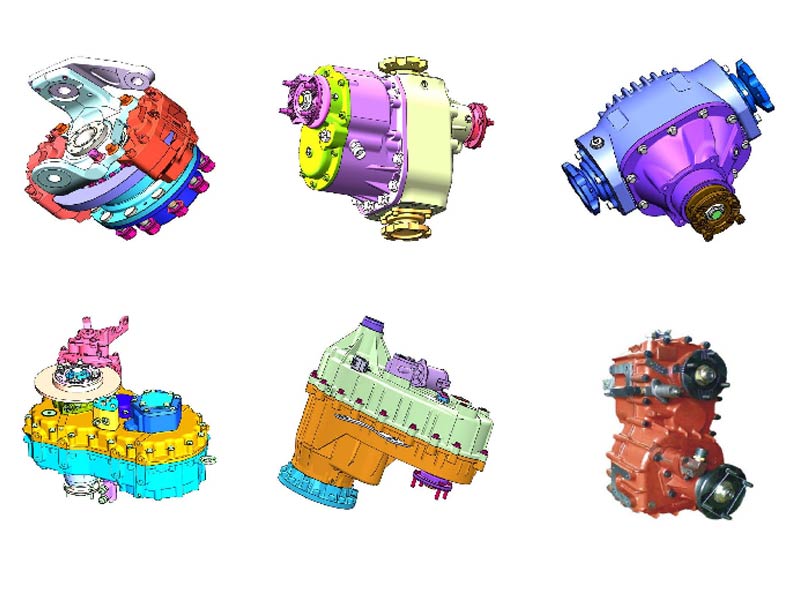
Typical operations include:
- Block cleaning
- Surface inspection
- Identification scanning
- Fixture positioning
The production system verifies that the correct engine model enters the correct assembly process.
Barcode and RFID systems are often used to support product traceability.
Crankshaft Assembly
The crankshaft converts piston movement into rotational power and is one of the most critical engine components.
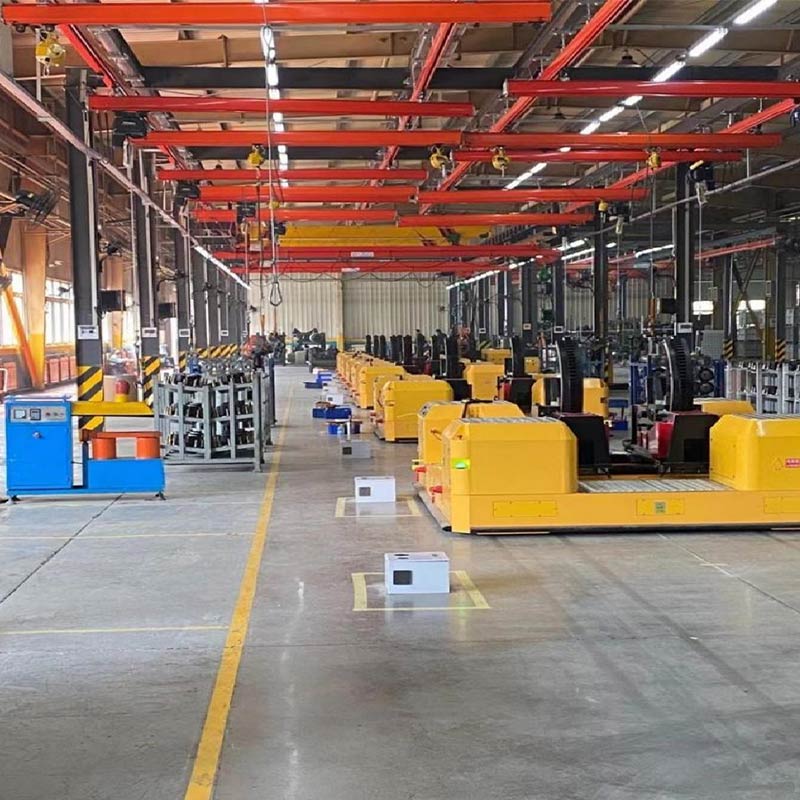
The assembly process includes:
- Bearing installation
- Crankshaft positioning
- Clearance verification
- Fastening operations
Precision control is essential because incorrect installation may affect:
- Engine vibration
- Friction performance
- Service life
Automated equipment ensures accurate positioning and repeatable assembly quality.
Piston and Connecting Rod Assembly
Piston installation requires precise control because piston movement directly affects engine performance.
Typical processes include:
- Piston ring installation
- Connecting rod assembly
- Piston insertion
- Lubrication application
Automation equipment helps maintain:
- Correct orientation
- Proper installation force
- Consistent assembly quality
Vision inspection systems may be used to verify piston direction and component presence.
Vision Inspection Systems in Automotive Manufacturing
Cylinder Head Assembly
The cylinder head contains critical combustion components and requires strict sealing performance.
Typical operations include:
- Cylinder head positioning
- Bolt tightening
- Valve system installation
- Component verification
Cylinder head bolts usually require advanced tightening methods such as:
- Torque control
- Torque + angle control
These processes ensure proper clamping force and prevent sealing failures.
Torque Tightening Systems in Automotive Assembly Lines
Timing System Assembly
The timing system controls the synchronization between engine components.
Depending on engine design, this may include:
- Timing chain
- Timing belt
- Camshaft components
- Tensioners
Assembly accuracy is extremely important because incorrect timing can affect engine performance and reliability.
Intake, Exhaust and Fuel System Installation
The next stage involves installing external engine components.
Typical components include:
- Intake manifold
- Exhaust manifold
- Fuel injectors
- Sensors
- Electrical connectors
Automated assembly systems ensure:
- Correct component selection
- Accurate positioning
- Proper fastening
Final Engine Inspection and Testing
Before leaving the assembly line, each engine undergoes final quality verification.
Testing may include:
- Leak testing
- Rotation testing
- Pressure testing
- Electrical testing
- Visual inspection
The collected data is stored in manufacturing systems to provide complete engine production history.
Leak Testing Equipment in Automotive Manufacturing
Main Equipment Used in Engine Assembly Lines
A modern engine assembly line consists of multiple specialized machines and automation systems working together to achieve high-quality and efficient production.
The selection of equipment depends on:
- Engine type
- Production capacity
- Automation level
- Required cycle time
- Quality standards
- Factory layout
The following equipment categories are commonly used in automotive engine assembly plants.
Engine Pallet Conveyor Systems
The conveyor system is the backbone of an engine assembly line.
It transports engine blocks or assemblies between different workstations while maintaining accurate positioning.
Common conveyor types include:
- Pallet conveyors
- Chain conveyors
- Roller conveyors
- Skid conveyor systems
Engine pallet conveyors must support:
- Heavy component loads
- Precise positioning accuracy
- Stable transportation
- Flexible production layouts
High-precision positioning is especially important because many assembly operations require robots or automated tools to work within tight tolerances.
Automotive Conveyor Systems: Types, Design & Applications
Torque Tightening Equipment
Fastening is one of the most critical processes in engine manufacturing.
Many engine components require precise tightening control, including:
- Cylinder head bolts
- Main bearing bolts
- Connecting rod bolts
- Flywheel bolts
- Oil pan bolts
Modern engine assembly lines use intelligent electric tightening systems that provide:
- Accurate torque control
- Angle monitoring
- Automatic parameter adjustment
- Tightening data recording
Each tightening operation can be linked to the engine serial number, creating complete quality traceability.
Torque Tightening Systems in Automotive Assembly Lines
Industrial Robots
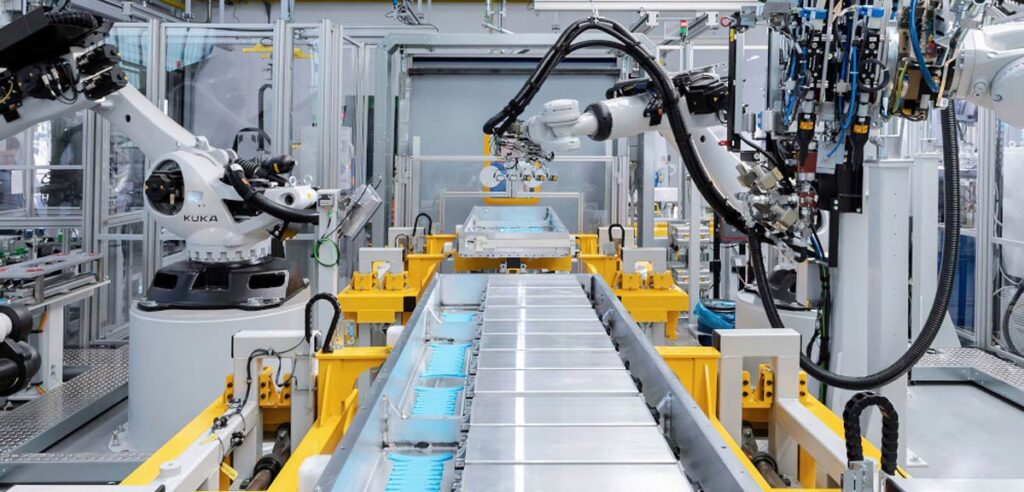
Industrial robots improve automation levels and assembly consistency.
Typical robot applications in engine production include:
- Component handling
- Engine loading and unloading
- Sealant dispensing
- Visual inspection assistance
- Heavy component installation
Robots provide advantages such as:
- High repeatability
- Improved worker safety
- Reduced manual workload
- Stable production quality
For high-volume engine production, robotic automation helps manufacturers achieve consistent cycle times and lower production variation.
Industrial Robots in Automotive Manufacturing
Vision Inspection Systems
Quality inspection is essential throughout the engine assembly process.
Machine vision systems can automatically verify:
- Component presence
- Correct assembly position
- Fastener status
- Label information
- Surface defects
Compared with manual inspection, vision systems provide:
- Higher inspection consistency
- Faster detection
- Digital inspection records
- Reduced human error
Vision inspection is commonly integrated into automated assembly stations.
Vision Inspection Systems in Automotive Manufacturing
Leak Testing Equipment
Engine components contain multiple fluid passages and sealing interfaces.
Leak testing ensures that assembled engines meet sealing requirements before final delivery.
Typical leak testing applications include:
- Cooling system testing
- Oil passage testing
- Cylinder head testing
- Intake and exhaust system testing
Common technologies include:
- Pressure decay testing
- Air leak testing
- Vacuum testing
Leak testing equipment can be integrated directly into the production line and connected with MES systems for quality traceability.
Leak Testing Equipment in Automotive Manufacturing
Engine Test Equipment
After assembly, engines require functional verification.
End-of-line engine testing may include:
- Rotation testing
- Oil pressure testing
- Fuel system testing
- Noise and vibration analysis
- Performance verification
These tests ensure that assembled engines meet design specifications before shipment or vehicle installation.
Engine Assembly Line Automation Technologies
The automotive industry is moving toward highly automated and connected production systems.
Modern engine assembly lines combine mechanical automation with digital technologies to improve efficiency and quality.
PLC-Based Control Systems
PLC systems are responsible for controlling equipment operation and production sequences.
Typical PLC functions include:
- Conveyor movement control
- Robot communication
- Sensor monitoring
- Safety management
- Process synchronization
A reliable PLC architecture ensures stable operation throughout the production line.
MES Integration and Production Traceability
Modern automotive manufacturers require complete visibility of every engine produced.
MES systems collect and manage manufacturing information, including:
- Engine serial number
- Assembly parameters
- Torque results
- Inspection data
- Testing results
- Operator information
This enables manufacturers to:
- Track production history
- Analyze quality issues
- Improve manufacturing processes
- Support warranty investigation
PLC & MES Integration in Automotive Manufacturing
Automated Material Handling
Efficient material supply is essential for continuous engine production.
Automated logistics systems may include:
- AGVs
- Automated storage systems
- Conveyor transfer systems
- Robotic material handling
These systems reduce manual transportation and ensure components arrive at the correct workstation at the right time.
Engine Assembly Line Design Considerations
Designing an engine assembly line requires balancing production efficiency, quality requirements, and future flexibility.
Production Capacity and Cycle Time
The first consideration is defining production requirements.
Engine manufacturers should evaluate:
- Annual production volume
- Required takt time
- Number of shifts
- Product variants
- Future expansion plans
The assembly line should be designed to achieve stable production without creating bottlenecks.
Line Layout Optimization
A well-designed layout improves:
- Material flow
- Operator efficiency
- Maintenance accessibility
- Production flexibility
Common engine assembly layouts include:
- Straight-line layout
- U-shaped production line
- Multi-line flexible layout
The optimal layout depends on factory space, production volume, and process requirements.
Quality Control Integration
Quality should be considered during the initial line design stage.
Modern engine assembly lines integrate quality control systems directly into production processes.
Examples include:
- Automatic inspection stations
- Torque monitoring
- Vision verification
- Leak testing
- Functional testing
This approach prevents defects rather than discovering them after production.
Future Expansion Capability
Automotive manufacturers often need to adapt production lines as market demands change.
A flexible engine assembly line should allow:
- Additional workstations
- New engine models
- Increased production capacity
- Updated automation equipment
Modular design helps manufacturers reduce future investment requirements.
Future Trends in Engine Manufacturing Automation
Although electric vehicles are rapidly developing, internal combustion engines remain an important part of the global automotive market, especially in hybrid vehicles, commercial vehicles, and many emerging markets.
Engine manufacturing is continuously evolving through automation, digitalization, and intelligent production technologies.
Future engine assembly lines will focus on improving:
- Production efficiency
- Manufacturing flexibility
- Quality consistency
- Data transparency
- Energy efficiency
Smart Manufacturing and Industry 4.0
Industry 4.0 technologies are transforming traditional engine production into intelligent manufacturing systems.
Modern engine assembly lines increasingly integrate:
- Connected production equipment
- Real-time data collection
- Digital monitoring platforms
- Automated quality management
- Manufacturing analytics
Through smart manufacturing technologies, manufacturers can monitor production conditions, identify potential problems, and optimize processes continuously.
Digital Twin Applications
Digital twin technology creates a virtual model of an actual production line.
Engine manufacturers can use digital twins to:
- Simulate assembly processes
- Optimize production layouts
- Evaluate cycle time
- Identify bottlenecks
- Reduce commissioning time
Before building a physical production line, engineers can analyze and improve the system digitally.
This reduces project risks and improves overall production efficiency.
Flexible Engine Assembly Lines
The automotive market is becoming more diverse, and manufacturers increasingly need flexible production systems.
Future engine assembly lines will support:
- Multiple engine models
- Different product variants
- Hybrid powertrain production
- Quick production changeovers
Flexible manufacturing solutions may include:
- Modular workstations
- Programmable robots
- Automatic tool change systems
- Flexible fixtures
This allows manufacturers to respond quickly to changing market requirements.
Data-Driven Quality Management
Modern automotive manufacturing is moving from traditional quality inspection toward data-driven quality control.
Engine assembly lines can collect thousands of production parameters, including:
- Tightening torque values
- Assembly force data
- Inspection results
- Testing parameters
- Equipment status
By analyzing this data, manufacturers can:
- Identify quality trends
- Prevent production failures
- Improve process stability
- Reduce manufacturing costs
How to Select an Engine Assembly Line Manufacturer
Selecting the right engine assembly line supplier is a critical decision for automotive manufacturers.
A professional supplier should not only provide individual machines but also deliver complete production solutions.
Key evaluation factors include:
Automotive Industry Experience
Engine assembly involves complex manufacturing processes and strict quality requirements.
A qualified supplier should understand:
- Automotive production standards
- Assembly process engineering
- Quality control requirements
- Manufacturing automation
Experience in automotive projects allows suppliers to design more reliable and efficient production solutions.
Complete Turnkey Solution Capability
A complete engine assembly line project involves multiple engineering disciplines.
The supplier should have capabilities in:
- Production line design
- Mechanical engineering
- Electrical control
- Robot integration
- Testing systems
- Software communication
A turnkey solution reduces communication costs and improves project execution efficiency.
Engineering and Commissioning Support
Successful production depends not only on equipment delivery but also on installation and commissioning.
Professional suppliers should provide:
- Production line installation
- Equipment debugging
- Process optimization
- Operator training
- Technical support
Good after-sales support helps manufacturers maintain stable production performance.
International Project Experience
For global automotive manufacturers, international project experience is an important advantage.
A capable supplier should understand:
- International engineering standards
- Overseas installation requirements
- Remote technical support
- Cross-cultural communication
This ensures smoother cooperation for overseas automotive production projects.
Why Automotive Manufacturers Need Turnkey Assembly Line Solutions
Modern automotive production is no longer based on individual machines working independently.
Manufacturers require complete production systems that combine:
- Mechanical equipment
- Automation technology
- Quality inspection
- Production data management
- Smart factory integration
A turnkey automotive assembly line supplier can provide:
- Process planning
- Equipment design
- Manufacturing
- Installation
- Commissioning
- Production optimization
This integrated approach helps automotive companies reduce project complexity and achieve faster production launch.
Conclusion
An engine assembly line is a highly complex manufacturing system that requires precision engineering, advanced automation, and strict quality management.
From cylinder block preparation and crankshaft installation to final testing, every production stage plays an important role in ensuring engine reliability and performance.
Modern engine assembly lines combine:
- Automated conveyors
- Industrial robots
- Torque tightening systems
- Vision inspection technology
- Leak testing equipment
- PLC control systems
- MES traceability solutions
As automotive manufacturing continues to evolve, intelligent and flexible production systems will become increasingly important.
For automotive manufacturers seeking reliable production solutions, choosing an experienced automotive assembly line manufacturer is essential for achieving efficient, high-quality, and future-ready manufacturing capabilities.
Frequently Asked Questions
What is an engine assembly line?
An engine assembly line is an automated production system designed to assemble engine components into complete engines through a series of controlled manufacturing processes.
What equipment is used in an engine assembly line?
Common equipment includes pallet conveyors, robotic systems, torque tightening machines, vision inspection systems, leak testing equipment, engine test systems, and MES-connected control systems.
Why is automation important in engine manufacturing?
Automation improves assembly accuracy, production efficiency, quality consistency, and manufacturing traceability while reducing human errors.
What are the key processes in engine assembly?
Major processes include cylinder block assembly, crankshaft installation, piston assembly, cylinder head installation, component integration, tightening, inspection, and final testing.
How does MES improve engine production?
MES systems record production data, track engine history, monitor quality parameters, and provide complete manufacturing traceability.
Can engine assembly lines support multiple engine models?
Yes. Modern flexible assembly lines can support different engine variants through modular design, programmable equipment, and flexible automation systems.
What should companies consider when selecting an engine assembly line supplier?
Companies should evaluate automotive experience, engineering capability, automation expertise, project management ability, and after-sales support.
What is the future trend of engine assembly automation?
Future trends include smart manufacturing, digital twins, AI-based quality analysis, flexible production systems, and deeper integration between production equipment and digital platforms.