Introduction
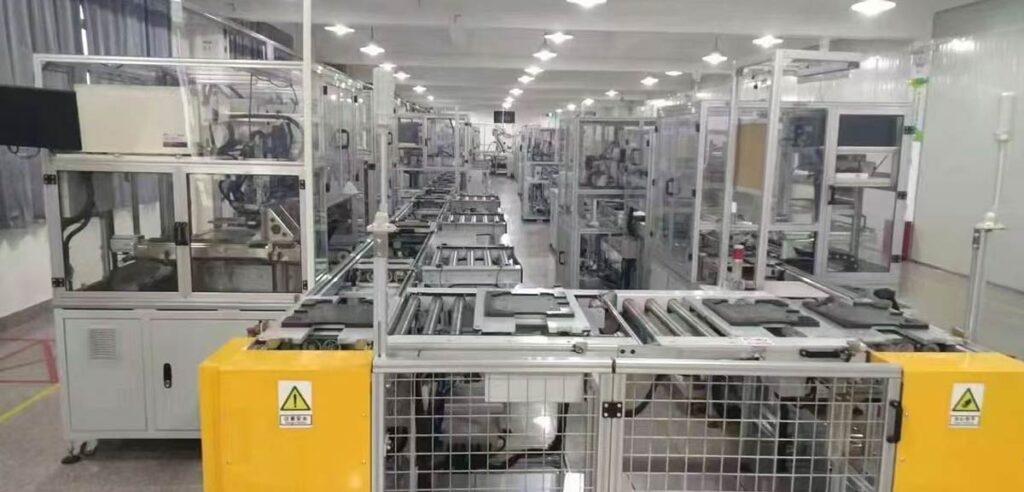
As vehicle quality standards continue to rise, manufacturers are under increasing pressure to detect defects earlier, reduce human error, and ensure complete production traceability. Traditional manual inspection methods are no longer sufficient for today’s high-speed, highly automated automotive production lines.
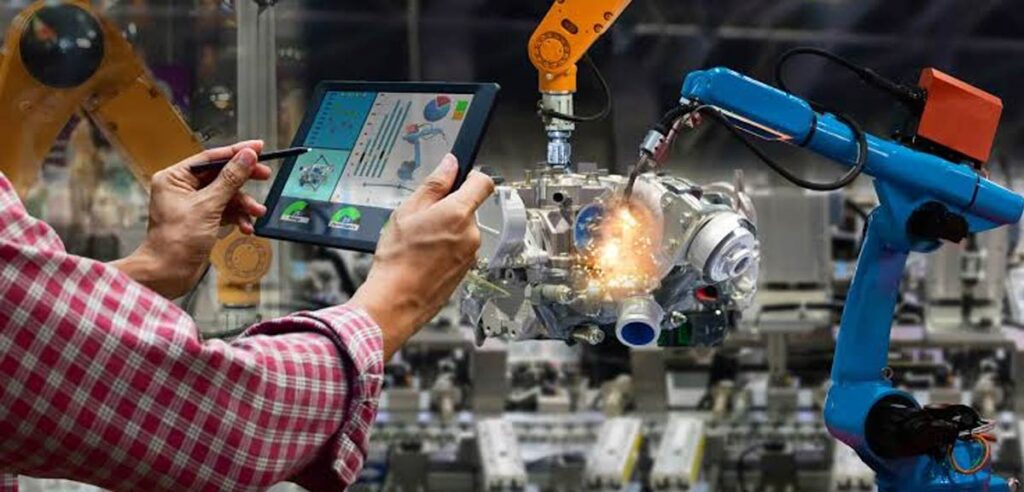
Vision inspection systems have become a critical technology for modern automotive manufacturing. By combining industrial cameras, advanced lighting, image processing software, and artificial intelligence, these systems can automatically inspect products with exceptional speed and accuracy.
From verifying component presence and assembly orientation to measuring dimensions, reading barcodes, and detecting cosmetic defects, machine vision systems help manufacturers improve product quality while reducing inspection costs and increasing production efficiency.
This guide explains the working principles, major components, applications, and future trends of vision inspection systems used in modern automotive manufacturing.
Quick Summary
| Item | Details |
|---|---|
| Industry | Automotive Manufacturing |
| Equipment | Vision Inspection System |
| Primary Function | Automated Quality Inspection |
| Applications | Engine, Transmission, Battery Pack, Vehicle Assembly, Auto Parts |
| Inspection Type | Presence, Dimension, OCR, Barcode, Defect Detection |
| Typical Users | OEMs, Tier 1 & Tier 2 Suppliers |
What Is a Vision Inspection System?
A vision inspection system is an automated quality control solution that captures images of products using industrial cameras and analyzes them through image processing software to determine whether they meet predefined quality standards.
Unlike human inspectors, machine vision systems can perform repetitive inspections continuously with consistent accuracy, making them ideal for high-volume automotive production.
A typical vision inspection system consists of:
- Industrial cameras
- Machine vision lenses
- LED lighting systems
- Image acquisition hardware
- Vision processing software
- PLC communication interfaces
- Industrial computers
- Reject mechanisms (if defects are detected)
When integrated into an automated production line, the system captures product images in real time, analyzes critical features, and automatically sends inspection results to the production control system.
Why Vision Inspection Systems Are Essential
Automotive manufacturers must maintain extremely high quality standards while producing thousands of components every day.
Machine vision systems help achieve this by providing:
Higher Inspection Accuracy
Vision systems inspect every product using the same criteria, eliminating inconsistencies caused by human fatigue or subjective judgment.
Faster Production Speeds
Automated inspection keeps pace with high-speed production lines, ensuring quality verification without slowing manufacturing throughput.
Improved Traceability
Inspection results, images, and measurement data can be stored and linked to each product’s serial number, supporting complete production traceability.
Internal Link → PLC & MES Integration in Automotive Manufacturing
Lower Manufacturing Costs
Early defect detection reduces scrap, minimizes rework, and prevents defective products from reaching downstream processes or customers.
Consistent Product Quality
Automated inspection ensures every component is evaluated against the same standards, improving process capability and customer satisfaction.
Main Components of a Vision Inspection System
Industrial Cameras
Industrial cameras capture high-resolution images of products for analysis.
Depending on the application, manufacturers may use:
- Area scan cameras
- Line scan cameras
- 3D vision cameras
- Smart cameras
Machine Vision Lenses
The lens determines image quality, field of view, and measurement accuracy.
Selecting the correct focal length and optical quality is essential for reliable inspection results.
Lighting Systems
Lighting is one of the most important factors in machine vision.
Common lighting technologies include:
- Ring lights
- Dome lights
- Backlights
- Bar lights
- Coaxial lights
Proper lighting maximizes image contrast and improves defect detection performance.
Vision Software
Vision software processes captured images and performs:
- Pattern matching
- Edge detection
- Dimensional measurement
- OCR (Optical Character Recognition)
- Barcode and QR code reading
- Defect classification
Modern software increasingly incorporates AI algorithms to improve inspection accuracy and adapt to product variation.
PLC and Communication Interfaces
Inspection results are transmitted to PLCs and MES platforms, allowing automatic product sorting, process control, and data recording.
This integration supports fully automated production and real-time quality monitoring.
Types of Vision Inspection Systems Used in Automotive Manufacturing
Vision inspection technology has developed significantly in recent years. Depending on inspection requirements, manufacturers can select different types of vision systems based on accuracy, speed, product complexity, and production environment.
2D Vision Inspection Systems
2D vision inspection is the most commonly used machine vision technology in automotive manufacturing.
It analyzes two-dimensional images captured by industrial cameras to identify product features, defects, and assembly conditions.
Typical inspection functions include:
- Component presence detection
- Position verification
- Label inspection
- Barcode reading
- Surface defect detection
- Dimensional measurement
Advantages
- Cost-effective solution
- Fast inspection speed
- Easy integration
- Suitable for a wide range of applications
2D vision systems are commonly used for automotive components such as electronic modules, connectors, fasteners, and assembled parts.
3D Vision Inspection Systems
3D vision systems use depth information to analyze the three-dimensional characteristics of products.
Compared with traditional 2D inspection, 3D vision can measure:
- Height differences
- Surface profiles
- Volume changes
- Spatial positioning
- Complex geometries
Typical applications include:
- Weld inspection
- Adhesive bead inspection
- Connector height measurement
- Battery module inspection
- Precision assembly verification
3D vision is especially valuable when product quality depends on accurate three-dimensional positioning.
AI-Based Vision Inspection Systems
Artificial Intelligence has significantly improved the capability of machine vision systems.
Traditional vision systems typically rely on predefined rules, while AI vision systems use machine learning algorithms to identify complex patterns and defects.
AI vision can recognize:
- Surface scratches
- Assembly errors
- Appearance defects
- Irregular product variations
- Abnormal component conditions
Benefits include:
- Higher detection accuracy
- Reduced programming requirements
- Better adaptability
- Improved defect classification
AI-based inspection is becoming increasingly important in advanced automotive manufacturing environments.
Applications of Vision Inspection Systems in Automotive Manufacturing
Vision inspection technology is used throughout automotive production, from incoming components to final product verification.
Component Presence and Assembly Verification
One of the most common applications is verifying whether components are correctly installed.
The system checks:
- Missing components
- Incorrect orientation
- Incorrect assembly position
- Wrong product variant
For example, during engine assembly, vision systems can confirm whether connectors, bolts, seals, and critical components are installed correctly before the product moves to the next station.
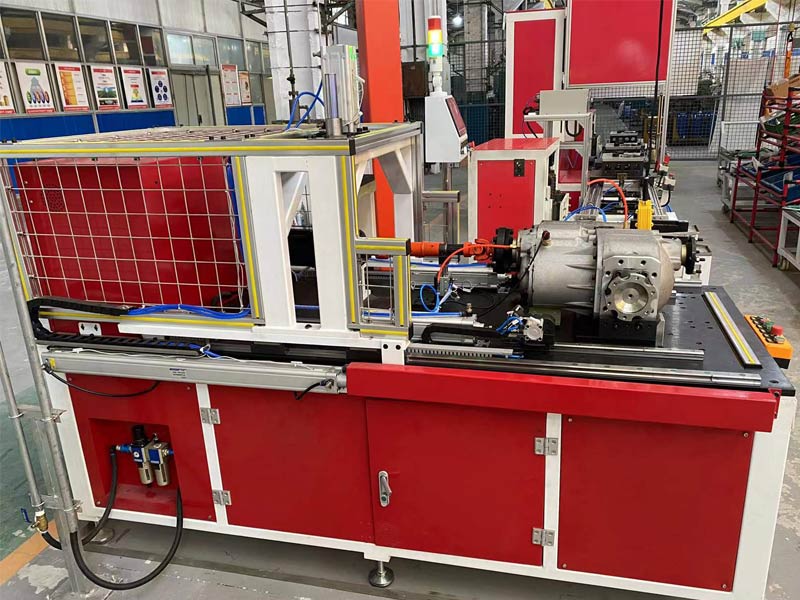
This prevents assembly errors from reaching later production stages.
Barcode and Data Matrix Identification
Modern automotive manufacturing requires complete production traceability.
Vision systems automatically read:
- Barcodes
- QR codes
- Data Matrix codes
- Serial numbers
- Product labels
This information can be connected with MES systems to record:
- Production time
- Assembly station
- Operator information
- Inspection results
- Process parameters
Internal Link → PLC & MES Integration in Automotive Manufacturing
Dimensional Measurement
Precision measurement is critical for many automotive components.
Vision systems can measure:
- Component dimensions
- Hole positions
- Gap and flushness
- Assembly alignment
- Surface profiles
Compared with manual measurement tools, automated vision measurement provides faster inspection and better repeatability.
Typical applications include:
- Engine components
- Transmission parts
- Brake components
- Electronic assemblies
Surface Defect Detection
Appearance and surface quality are important factors in automotive manufacturing.
Vision systems can automatically detect:
- Scratches
- Cracks
- Contamination
- Surface damage
- Missing coatings
- Manufacturing defects
AI-based inspection is particularly effective for detecting defects that are difficult for human inspectors to identify consistently.
Robotic Vision Guidance
Vision systems are often combined with industrial robots to improve automation flexibility.
A camera identifies the position and orientation of a component, then sends coordinates to the robot controller.
Applications include:
- Component picking
- Automatic assembly
- Flexible feeding
- Robot calibration
- Precision positioning
This combination allows robots to handle product variations without requiring perfectly positioned parts.
Battery and Electric Vehicle Applications
The rapid growth of electric vehicles has created new requirements for advanced vision inspection.
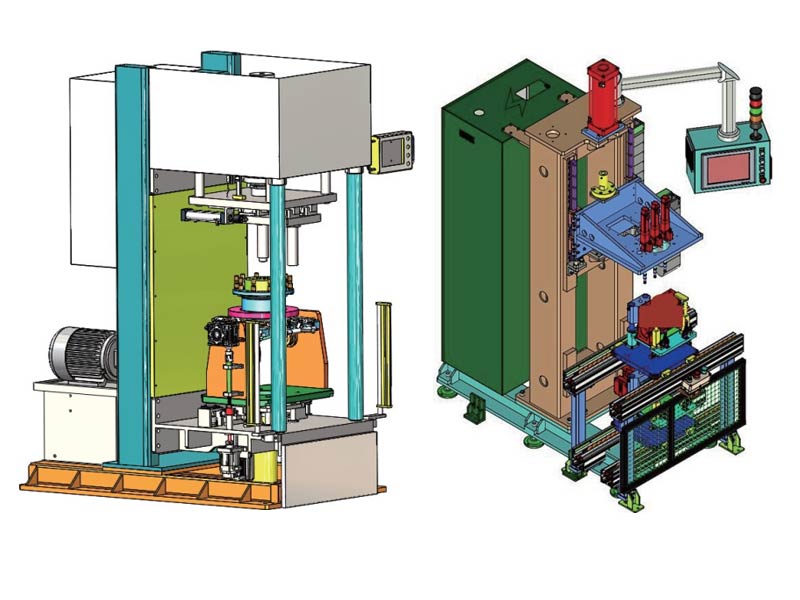
EV manufacturing uses vision systems for:
- Battery cell inspection
- Module assembly verification
- Busbar inspection
- Connector positioning
- Adhesive inspection
- Battery pack assembly
Because battery safety is directly related to manufacturing quality, automated inspection has become a critical part of EV production.
Common Inspection Technologies
Modern vision inspection systems combine multiple technologies to achieve reliable quality control.
Pattern Matching
Pattern matching compares captured images with predefined reference images.
Applications include:
- Component identification
- Assembly confirmation
- Product orientation detection
Optical Character Recognition (OCR)
OCR technology automatically reads printed or laser-marked information.
Common applications:
- Serial number verification
- Part number recognition
- Manufacturing date checking
- Label inspection
Measurement and Calibration
Vision measurement tools analyze image data to verify dimensional accuracy.
Typical measurements include:
- Length
- Width
- Diameter
- Position
- Angle
These measurements help maintain manufacturing consistency.
Defect Classification
Advanced AI systems classify defects according to predefined categories.
Examples:
- Acceptable variation
- Minor defect
- Critical defect
This allows manufacturers to improve quality analysis and continuously optimize production processes.
How to Select the Right Vision Inspection System
Selecting a suitable vision inspection system requires a comprehensive understanding of the production process, product characteristics, inspection objectives, and future automation requirements.
A successful vision inspection solution should not only detect defects but also integrate seamlessly with the entire manufacturing system.
The following factors should be considered during system selection.
Inspection Requirements
The first step is defining what needs to be inspected.
Typical inspection objectives include:
- Presence or absence detection
- Position verification
- Dimensional measurement
- Surface defect detection
- Barcode identification
- Assembly quality verification
A clear inspection target helps determine the appropriate camera, lens, lighting, and software configuration.
Product Characteristics
Different products require different inspection technologies.
Important factors include:
- Product size
- Surface material
- Color and texture
- Reflective characteristics
- Required measurement accuracy
- Production speed
For example, reflective metal components may require specialized lighting, while complex assemblies may require 3D vision technology.
Inspection Accuracy and Speed
Automotive production lines typically operate with strict takt time requirements.
The vision system must complete image acquisition and analysis within the available production cycle.
Key performance indicators include:
- Inspection accuracy
- Processing speed
- Repeatability
- False rejection rate
- False acceptance rate
A high-quality vision system should balance inspection precision with production efficiency.
Integration Capability
Modern automotive factories require equipment that communicates effectively with other automation systems.
A vision inspection system should integrate with:
- PLC control systems
- Industrial robots
- Conveyor systems
- MES platforms
- Database systems
- Production traceability software
Effective integration enables automatic decision-making and creates a complete closed-loop manufacturing process.
Integration of Vision Inspection Systems into Automotive Assembly Lines
In modern automotive manufacturing, vision inspection systems rarely operate as standalone equipment.
Instead, they become part of a complete automated production cell.
A typical integrated inspection station may include:
- Conveyor system for product transfer
- Positioning fixture for accurate inspection
- Industrial camera and lighting system
- Image processing software
- PLC control system
- Robot handling system
- MES data management interface
The workflow usually follows this process:
Product Arrival → Positioning → Image Capture → Data Analysis → Quality Decision → Automatic Sorting → Data Recording
This integrated approach improves production reliability while reducing manual inspection requirements.
Future Trends of Vision Inspection Technology
As automotive manufacturing moves toward smart factories, vision inspection systems are becoming more intelligent, connected, and flexible.
AI Deep Learning Inspection
Traditional machine vision relies mainly on rule-based algorithms.
However, AI deep learning enables systems to learn from large amounts of image data and recognize complex defects more effectively.
Future AI vision systems will provide:
- Automatic defect classification
- Self-learning capabilities
- Improved detection accuracy
- Reduced programming time
- Adaptation to product variation
This technology is particularly valuable for EV battery manufacturing and complex automotive components.
Smart Factory Connectivity
Vision inspection systems are becoming important data sources within Industry 4.0 environments.
Inspection data can be connected with:
- MES systems
- Cloud platforms
- Manufacturing databases
- Quality management systems
This enables manufacturers to analyze:
- Defect trends
- Production performance
- Process stability
- Quality improvement opportunities
Edge Computing and Real-Time Analysis
Traditional inspection systems often send data to centralized servers.
Modern systems increasingly use edge computing, allowing image processing to happen directly near the production equipment.
Advantages include:
- Faster response time
- Reduced network load
- Improved production control
- Enhanced data security
Flexible Vision Systems for Mixed Production
Automotive manufacturers increasingly produce multiple models on the same production line.
Flexible vision systems support:
- Automatic product recognition
- Recipe switching
- Multiple model inspection
- Quick changeover
This capability is essential for modern flexible manufacturing.
Choosing the Right Automation Partner
A successful vision inspection project requires more than selecting a camera or software package.
The supplier must understand the complete manufacturing process and provide a fully integrated solution.
When selecting an automation partner, manufacturers should evaluate:
- Automotive industry experience
- Mechanical engineering capability
- Electrical control expertise
- Vision system integration experience
- Robot integration capability
- PLC and MES programming skills
- Project management ability
- Commissioning and after-sales support
A professional automation integrator can help optimize the complete production process, from product handling and inspection to data management and quality control.
For automotive manufacturers and component suppliers, the ideal partner should provide not only equipment but also engineering knowledge and long-term technical support.
Conclusion
Vision inspection systems have become an essential technology in modern automotive manufacturing.
By combining industrial cameras, advanced lighting, image processing software, and artificial intelligence, these systems enable manufacturers to achieve higher quality standards, improve production efficiency, and maintain complete product traceability.
From component verification and dimensional measurement to robotic guidance and EV battery inspection, machine vision technology supports almost every stage of automotive production.
As vehicles become more intelligent and manufacturing processes become increasingly automated, vision inspection systems will continue to play a critical role in building smarter, safer, and more efficient automotive factories.
For manufacturers planning new production lines or upgrading existing facilities, integrating advanced vision inspection technology is an important step toward achieving Industry 4.0 manufacturing goals.
Frequently Asked Questions
What is a vision inspection system?
A vision inspection system is an automated quality control solution that uses cameras, lighting, and software to inspect products and detect defects during manufacturing.
Why are vision inspection systems used in automotive manufacturing?
They improve inspection accuracy, reduce human error, increase production efficiency, and provide complete quality traceability.
What types of defects can machine vision detect?
Machine vision can detect missing components, incorrect assembly, scratches, surface defects, dimensional errors, barcode problems, and positioning issues.
What is the difference between 2D and 3D vision inspection?
2D vision analyzes image information on a flat surface, while 3D vision measures depth and three-dimensional characteristics for more complex inspection tasks.
H3 Can vision systems work with industrial robots?
Yes. Vision systems can guide robots by providing accurate position and orientation information for automated handling and assembly.
Can vision inspection systems connect with MES?
Yes. Modern vision systems can communicate with MES platforms to store inspection results and provide complete production traceability.
Are AI vision systems replacing traditional machine vision?
AI vision is not replacing all traditional systems. Instead, it enhances machine vision capabilities, especially for complex defect detection and variable products.
How do manufacturers choose the right vision inspection supplier?
Manufacturers should evaluate the supplier’s automation experience, engineering capability, integration skills, and understanding of automotive production processes.