Introduction
Leak testing is a critical quality control process in modern automotive manufacturing. As vehicles become more complex, especially with the rapid growth of electric vehicles, manufacturers require highly reliable testing methods to ensure components meet strict safety and performance requirements.
From engine assemblies and transmission systems to fuel systems, cooling circuits, and battery packs, many automotive components must maintain precise sealing performance throughout their service life.
Even a small leakage problem can result in:
- Reduced product reliability
- Performance degradation
- Safety risks
- Customer complaints
- Expensive warranty costs
To prevent these issues, automotive manufacturers use advanced leak testing equipment to automatically detect and measure leakage rates during production.
Modern leak testing systems combine pressure sensors, flow measurement technology, electronic control systems, and production traceability software to provide fast, accurate, and repeatable inspection results.
This guide explains how automotive leak testing equipment works, the major testing technologies, common applications, and key considerations when selecting a leak testing solution.
Key Takeaways
| Item | Description |
| Industry | Automotive Manufacturing |
| Equipment | Leak Testing System |
| Main Function | Detect Air, Gas or Fluid Leakage |
| Applications | Engine, Transmission, Battery Pack, Components |
| Testing Methods | Pressure Decay, Flow Test, Helium Test |
| Integration | PLC, MES, Production Traceability |
What Is Leak Testing Equipment?
Leak testing equipment is an automated inspection system used to identify and measure unwanted leakage in automotive components and assemblies.
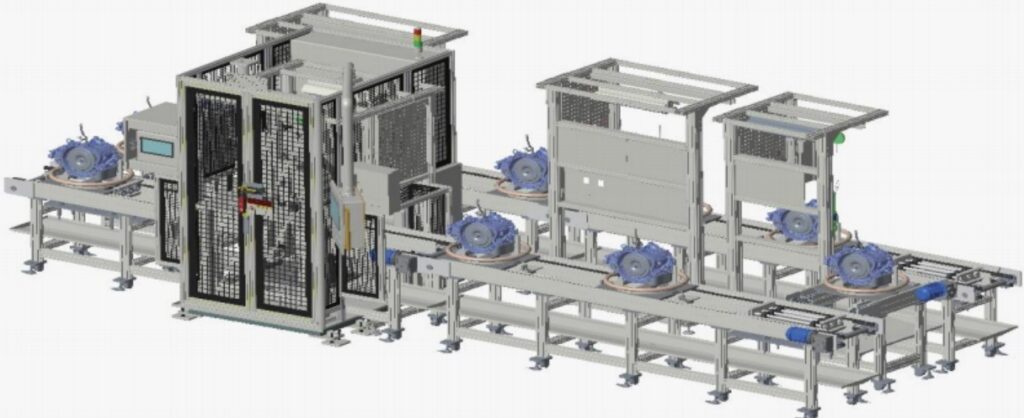
The basic principle is to introduce a controlled test medium, such as compressed air, nitrogen, or helium, into a component and measure whether pressure or flow changes occur over a defined period.
If the measured leakage exceeds the acceptable limit, the system automatically identifies the product as failed and prevents it from moving to the next production stage.
A typical automotive leak testing system includes:
- Test fixture
- Sealing mechanism
- Pressure regulator
- Sensors
- Control unit
- PLC system
- HMI interface
- Data recording system
- Reject mechanism
Depending on the application, leak testing can be performed as:
- Standalone inspection equipment
- Integrated workstation
- Fully automatic production line station
Why Leak Testing Is Important in Automotive Manufacturing
Automotive components operate under demanding conditions, including high pressure, temperature changes, vibration, and long service periods.
Reliable sealing performance is essential for both safety and durability.
Ensuring Product Safety
Many automotive systems contain fluids or gases that must remain sealed.
Examples include:
- Brake systems
- Cooling systems
- Fuel systems
- Battery cooling circuits
- Air conditioning systems
Leakage in these systems may affect vehicle safety and performance.
Improving Manufacturing Quality
Manual inspection methods cannot provide consistent measurement accuracy for high-volume production.
Automated leak testing systems provide:
- Repeatable test results
- Accurate measurement
- Automatic pass/fail judgment
- Complete production records
This helps manufacturers maintain stable quality throughout mass production.
Reducing Warranty Costs
Detecting leaks during production is significantly more economical than discovering failures after vehicles reach customers.
Automated leak testing helps prevent:
- Field failures
- Customer complaints
- Recall risks
- Additional repair costs
Supporting Automotive Traceability Requirements
Modern manufacturers require complete production records.
Leak testing systems can record:
- Product serial number
- Test pressure
- Leakage value
- Test duration
- Test result
- Production station
- Date and time
These records can be transferred to MES platforms for complete product history management.
→ PLC & MES Integration in Automotive Manufacturing
How Does an Automotive Leak Testing System Work?
A typical leak testing process includes several stages.
Step 1: Component Positioning and Sealing
The component is placed into a dedicated fixture.
The fixture automatically seals all required ports and creates a controlled testing environment.
High-quality fixtures are essential because poor sealing can create false test results.
Step 2: Filling or Pressurization
The system introduces a testing medium into the component.
Common test mediums include:
- Compressed air
- Nitrogen
- Helium
The system then stabilizes the internal pressure before measurement begins.
Step 3: Measurement and Analysis
Sensors monitor pressure changes or gas flow during the testing period.
The control system compares the measured leakage value with predefined acceptance limits.
Step 4: Result Judgment and Data Recording
The system automatically determines:
- PASS
- FAIL
The result is stored locally or transmitted to MES for production tracking.
If a failure occurs, the product can be automatically rejected or sent for further analysis.
Types of Leak Testing Technologies Used in Automotive Manufacturing
Different automotive components require different leak detection methods depending on their structure, sealing requirements, production volume, and acceptable leakage limits.
Selecting the correct testing technology is critical because an unsuitable method may result in inaccurate inspection, excessive cycle time, or unnecessary equipment costs.
The most commonly used leak testing technologies in automotive manufacturing include:
- Pressure decay testing
- Pressure differential testing
- Flow testing
- Vacuum decay testing
- Helium leak testing
- Water immersion testing
Pressure Decay Testing
Pressure decay testing is one of the most widely used leak testing methods in automotive manufacturing.
The basic principle is simple:
- The component is filled with compressed air to a predefined pressure.
- The system isolates the test chamber.
- Sensors monitor pressure changes over a specific period.
- The system calculates leakage based on pressure loss.
If the pressure drop exceeds the defined limit, the component is classified as defective.
Advantages of Pressure Decay Testing
- Simple operating principle
- Reliable performance
- Low operating cost
- Easy integration with automated production lines
- Suitable for high-volume manufacturing
Typical applications include:
- Engine cooling systems
- Transmission housings
- Fuel system components
- Brake components
- Hydraulic assemblies
Because of its balance between accuracy and cost, pressure decay testing is widely adopted by automotive OEMs and Tier 1 suppliers.
Pressure Differential Testing
Pressure differential testing measures the pressure difference between a reference volume and the tested component.
Compared with traditional pressure decay testing, this method can provide higher sensitivity because environmental influences are reduced.
Typical applications include:
- Precision automotive components
- Small sealed assemblies
- Electronic modules
- Valve systems
This technology is often selected when manufacturers require improved measurement stability and higher detection accuracy.
Flow Testing
Flow testing measures the amount of air or gas passing through a component under controlled conditions.
Instead of measuring pressure loss, the system directly evaluates leakage flow rate.
Typical applications include:
- Valves
- Manifolds
- Pipes
- Fuel system components
- Cooling system parts
Flow testing is especially useful when components naturally allow a certain amount of airflow and manufacturers need to verify that the flow remains within acceptable limits.
Vacuum Decay Testing
Vacuum decay testing works by creating a vacuum condition inside the component and monitoring vacuum changes over time.
This method is commonly used when components cannot be safely pressurized.
Typical applications include:
- Plastic components
- Medical-style automotive systems
- Reservoirs
- Sealed assemblies
Advantages include:
- No risk of component deformation
- Good sensitivity
- Suitable for lightweight parts
Helium Leak Testing
Helium leak testing is one of the most sensitive leak detection technologies available.
The system uses helium as a tracer gas and detects extremely small leakage rates using a helium mass spectrometer.
Due to its high sensitivity, helium testing is commonly used for safety-critical applications.
Typical applications include:
- EV battery packs
- Refrigeration systems
- Fuel cells
- Air conditioning components
- High-pressure systems
Advantages
- Extremely high detection sensitivity
- Suitable for complex sealing structures
- Reliable for safety-critical components
However, helium testing requires higher equipment investment and operating costs compared with air-based testing methods.
Automotive Applications of Leak Testing Equipment
Leak testing is applied throughout the automotive manufacturing process, from individual components to complete vehicle systems.
Engine Assembly Leak Testing
Engine systems contain multiple fluid channels and sealing interfaces that must operate reliably under high temperature and pressure conditions.
Typical leak testing applications include:
- Cylinder head testing
- Engine block testing
- Cooling channel testing
- Oil passage testing
- Intake and exhaust system testing
During engine assembly, leak testing ensures that critical sealing areas meet design requirements before the engine enters final validation.
Transmission Leak Testing
Transmission systems require precise sealing to prevent oil leakage and maintain lubrication performance.
Leak testing applications include:
- Transmission housing testing
- Gearbox sealing inspection
- Oil circuit testing
- Hydraulic system testing
Automated testing helps prevent transmission failures caused by poor sealing quality.
EV Battery Pack Leak Testing
The rapid growth of electric vehicles has created new requirements for advanced leak detection technology.
Battery packs must maintain excellent sealing performance to protect internal electrical components from moisture and contamination.
Typical battery leak testing applications include:
- Battery enclosure testing
- Cooling channel testing
- Cover sealing inspection
- Liquid cooling system testing
Common technologies include:
- Pressure decay testing
- Helium leak testing
- Vacuum testing
Battery leak testing is becoming increasingly important because sealing failures can affect battery safety, reliability, and service life.
→ Battery Pack Assembly Lines for Electric Vehicles
Brake System Leak Testing
Brake systems are directly related to vehicle safety and require extremely reliable sealing performance.
Testing applications include:
- Brake hydraulic circuits
- Brake boosters
- Master cylinders
- Brake valves
Leak testing ensures that pressure can be maintained during vehicle operation.
Air Conditioning System Leak Testing
Vehicle air conditioning systems contain refrigerant circuits that require strict leakage control.
Testing applications include:
- Refrigerant pipes
- Condensers
- Evaporators
- Compressors
Helium leak testing is commonly used because refrigerant systems require high sensitivity.
Fuel System Leak Testing
Fuel systems must prevent fuel leakage under all operating conditions.
Typical applications include:
- Fuel tanks
- Fuel lines
- Fuel pumps
- Injection components
Automated leak testing ensures compliance with safety regulations and environmental requirements.
Integration of Leak Testing Systems into Automotive Production Lines
Modern leak testing equipment is rarely operated as an independent machine.
Instead, it is integrated into automated production systems together with:
- Conveyor systems
- Industrial robots
- PLC controllers
- MES platforms
- Vision inspection systems
- Automatic loading systems
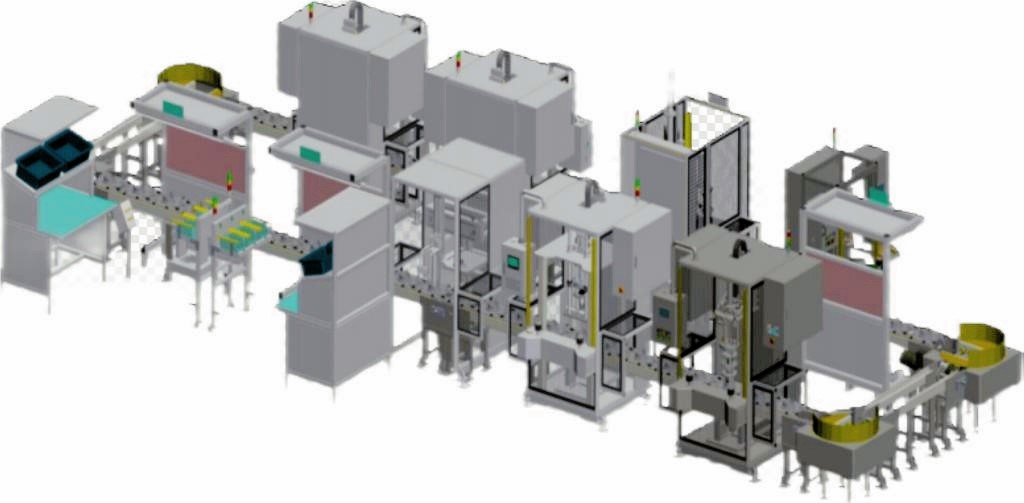
A typical automated leak testing workstation includes:
- Product loading
- Automatic positioning
- Sealing fixture activation
- Leak test execution
- Result evaluation
- Data recording
- Automatic unloading or rejection
This integrated approach improves production efficiency while ensuring every product meets quality requirements.
→ Automotive Assembly Line: Complete Guide for Manufacturers
Key Factors When Selecting Leak Testing Equipment
Choosing the right leak testing equipment requires a detailed understanding of the product design, production requirements, and quality standards.
A properly designed leak testing system should provide reliable inspection results while maintaining production efficiency and long-term stability.
The following factors should be considered during the selection process.
Define the Required Leak Rate
The first step is determining the acceptable leakage limit for the component.
Different automotive applications have different requirements.
For example:
- Non-critical plastic components may allow relatively higher leakage rates.
- Engine, fuel, and battery components usually require much stricter limits.
- Safety-related systems may require extremely sensitive detection capability.
The required leak rate directly affects the selection of:
- Testing technology
- Sensors
- Test pressure
- Measurement time
- Equipment configuration
Consider Production Cycle Time
Automotive manufacturing requires equipment that can match the production line takt time.
When selecting a leak testing system, manufacturers should evaluate:
- Testing duration
- Loading and unloading time
- Automatic fixture operation
- Parallel testing capability
- Production volume
For high-volume automotive production, multi-station leak testing systems may be required to maintain production efficiency.
A well-designed system should achieve a balance between inspection accuracy and production speed.
Product Fixture Design
The fixture is one of the most important components of a leak testing system.
Poor fixture design can cause:
- False failures
- False acceptance
- Unstable test results
- Longer cycle times
A professional fixture should provide:
- Reliable sealing
- Fast product positioning
- Easy maintenance
- Repeatable clamping force
- Compatibility with different product variants
For automotive applications with multiple models, flexible fixture designs can significantly reduce changeover time.
Environmental Conditions
Production environments can influence leak testing accuracy.
Important factors include:
- Temperature variation
- Humidity
- Dust
- Vibration
- Compressed air quality
High-precision applications may require environmental compensation functions to maintain stable measurement performance.
Data Traceability Requirements
Modern automotive manufacturers increasingly require complete digital records for every tested component.
A smart leak testing system should be able to record:
- Product identification
- Test parameters
- Leakage values
- Test curves
- Pass/fail results
- Equipment status
- Timestamp
This information can be transferred to MES systems for complete manufacturing traceability.
→ PLC & MES Integration in Automotive Manufacturing
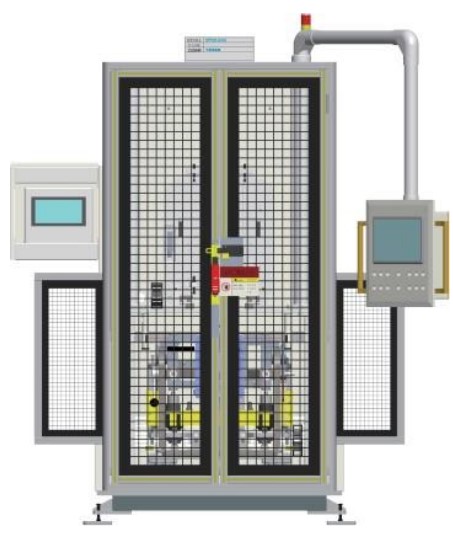
Leak Testing System Design Considerations
Designing an effective leak testing solution requires integration between mechanical engineering, electrical control, and manufacturing processes.
Automatic Loading and Unloading
For high-volume production, automated loading systems improve efficiency and reduce operator workload.
Common solutions include:
- Industrial robots
- Pick-and-place systems
- Conveyor transfer systems
- Automated fixtures
Automatic handling ensures consistent product positioning and improves repeatability.
Integration with PLC Control
The PLC manages the complete testing sequence, including:
- Fixture operation
- Pressure control
- Sensor monitoring
- Test timing
- Result judgment
- Communication with upstream and downstream equipment
A well-designed PLC program ensures safe and reliable operation.
Integration with Quality Systems
Leak test results should be connected with factory quality management systems.
Integration enables:
- Automatic quality records
- Real-time monitoring
- Statistical analysis
- Defect tracking
- Process optimization
This allows manufacturers to identify quality trends and improve production processes continuously.
Maintenance and Serviceability
Equipment reliability is critical in automotive production.
A good leak testing system should include:
- Easy access to maintenance components
- Sensor calibration functions
- Diagnostic interfaces
- Spare parts availability
- Preventive maintenance support
Designing for maintainability reduces downtime and improves equipment availability.
Smart Leak Testing and Industry 4.0 Trends
As automotive factories become increasingly digitalized, leak testing equipment is evolving from standalone inspection machines into intelligent production systems.
Digital Test Data Management
Modern leak testing systems can automatically collect and analyze inspection data.
Manufacturers can monitor:
- Leakage trends
- Equipment performance
- Product quality variation
- Process stability
This data supports continuous improvement and preventive quality management.
AI-Based Quality Analysis
Artificial intelligence can analyze large amounts of production data to identify potential quality issues.
AI applications include:
- Detecting abnormal leakage patterns
- Predicting equipment failures
- Identifying process variation
- Supporting root cause analysis
This helps manufacturers move from reactive inspection toward predictive quality control.
Remote Monitoring and Maintenance
Connected leak testing equipment enables engineers to monitor machine status remotely.
Possible functions include:
- Remote diagnostics
- Alarm notifications
- Performance monitoring
- Maintenance reminders
These capabilities reduce downtime and improve production availability.
Choosing the Right Automotive Automation Partner
A leak testing system is not simply a testing machine. In modern automotive manufacturing, it is part of a complete production ecosystem.
Manufacturers should evaluate automation partners based on their ability to provide integrated solutions, including:
- Mechanical system design
- Leak testing technology selection
- PLC programming
- MES communication
- Conveyor integration
- Robot integration
- Production line commissioning
- Technical support
An experienced automation partner can help optimize the complete manufacturing process, ensuring that leak testing becomes an effective part of quality control rather than an isolated inspection step.
For automotive OEMs and component manufacturers, the ideal supplier should understand both manufacturing processes and automation engineering requirements.
Conclusion
Leak testing equipment plays a critical role in ensuring the safety, reliability, and quality of modern automotive products.
From engines and transmissions to electric vehicle battery packs and vehicle systems, reliable sealing performance is essential for long-term product durability.
Advanced leak testing technologies, including pressure decay testing, flow testing, and helium leak detection, allow manufacturers to achieve accurate inspection while maintaining efficient production.
When integrated with PLC control, MES systems, robots, and automated production lines, leak testing becomes an important part of a smart manufacturing environment.
As automotive manufacturing continues to evolve toward electrification and Industry 4.0, intelligent leak testing solutions will become increasingly important for achieving higher quality standards, complete traceability, and efficient production.
Frequently Asked Questions
What is leak testing equipment?
Leak testing equipment is an automated inspection system used to detect and measure leakage in automotive components and assemblies by monitoring pressure, flow, or tracer gas changes.
Why is leak testing important in automotive manufacturing?
Leak testing ensures that critical automotive components maintain proper sealing performance, improving safety, reliability, and product quality.
What are the most common leak testing methods?
The most common methods include pressure decay testing, pressure differential testing, flow testing, vacuum testing, and helium leak testing.
Which automotive components require leak testing?
Common applications include engines, transmissions, battery packs, fuel systems, brake systems, cooling systems, and air conditioning components.
What is the difference between pressure decay and helium leak testing?
Pressure decay testing uses pressure changes to detect leakage and is suitable for many general applications. Helium leak testing uses helium gas and provides much higher sensitivity for critical applications.
Can leak testing equipment be integrated with MES?
Yes. Modern leak testing systems can communicate with MES platforms to store inspection results and provide complete production traceability.
How can manufacturers reduce false leak test failures?
Manufacturers can improve reliability through proper fixture design, stable test conditions, regular calibration, and optimized testing parameters.
What should companies consider when purchasing leak testing equipment?
Key factors include required leak rate, production speed, product characteristics, automation level, traceability requirements, and supplier integration capability.