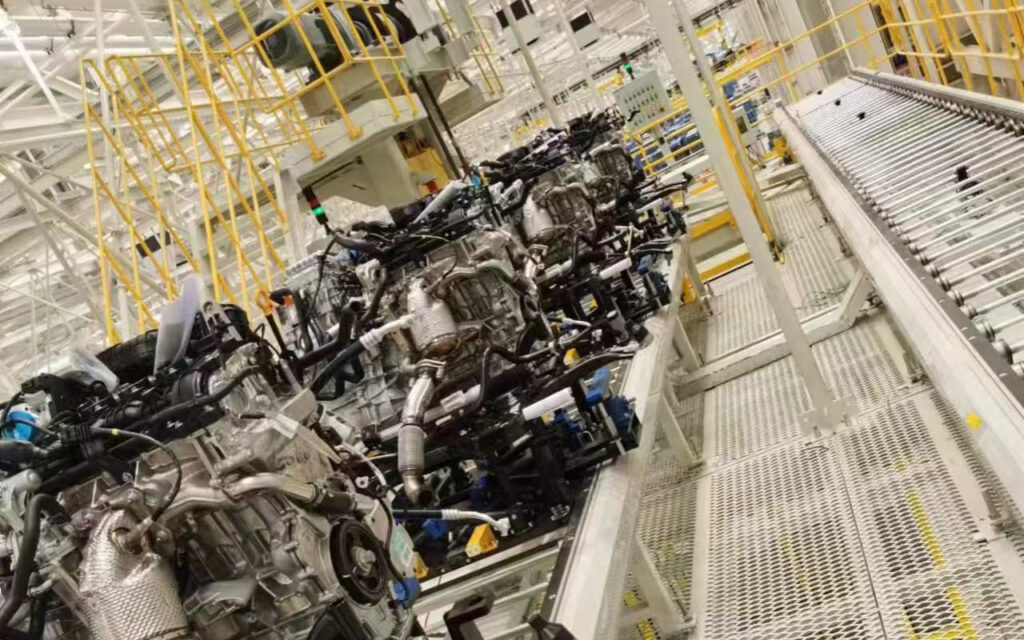
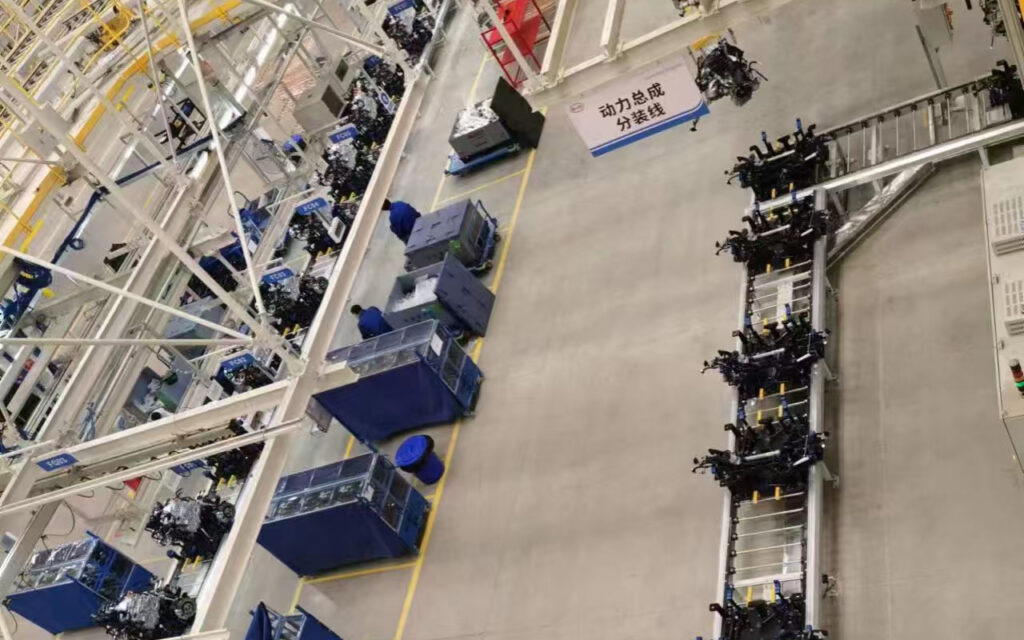
Automated pallet handling is an important part of modern automotive assembly and component manufacturing. When products move through multiple assembly, inspection, testing, and material handling processes, pallets provide a standardized platform for transporting components and maintaining controlled product positioning.
A complete automotive pallet handling system goes beyond a single conveyor. It can combine pallet conveyors, transfer machines, pallet stackers, pallet destackers, lift-and-locate units, identification systems, sensors, PLC controls, and MES interfaces into one coordinated material handling network.
The purpose of the system is to control how pallets enter the production line, move between workstations, accumulate when necessary, return after product unloading, and re-enter the production process.
For automotive manufacturers, the pallet handling system should be designed according to the product, pallet structure, production takt time, line layout, automation level, traceability requirements, and future production requirements.
What Is an Automotive Pallet Handling System?
An automotive pallet handling system is an integrated material handling solution designed to transport, position, store, identify, and circulate pallets throughout a manufacturing process.
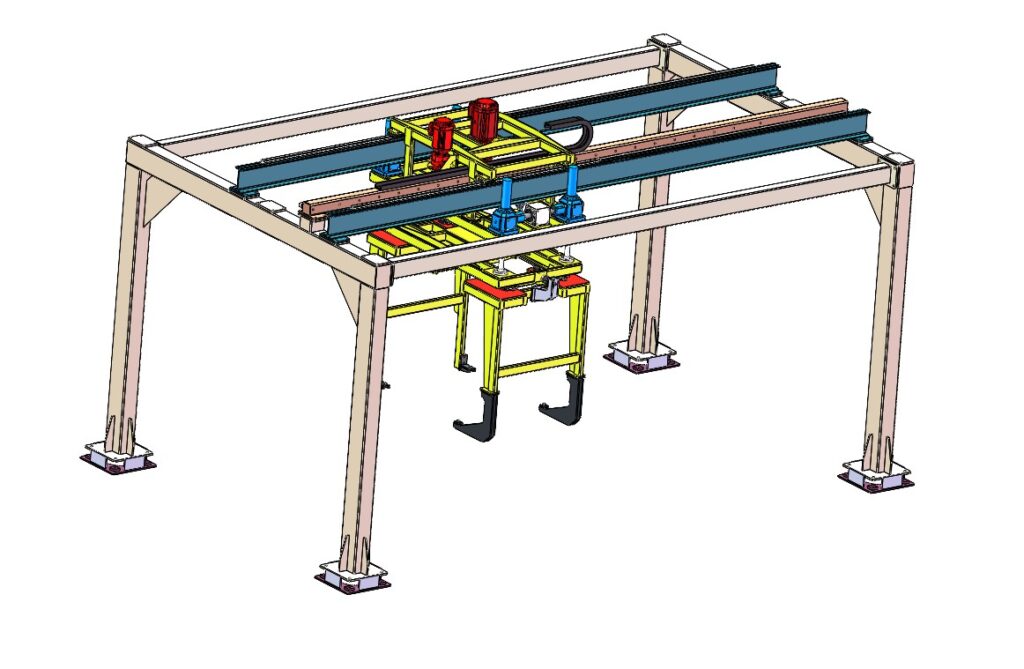
A pallet can carry an automotive component, subassembly, fixture, or workpiece through several production operations.
Depending on the production line, the pallet may pass through:
- Loading stations
- Assembly workstations
- Robotic stations
- Press-fitting stations
- Tightening stations
- Inspection stations
- Leak testing stations
- Functional testing stations
- Unloading stations
- Empty pallet return systems
The pallet handling system connects these processes and manages the movement of the carrier throughout the production cycle.
A typical system may include:
- Pallet conveyors
- Pallet stackers
- Pallet destackers
- Transfer machines
- Lift-and-locate units
- Stoppers
- Pallet identification systems
- Sensors
- PLC controls
- Safety systems
- MES interfaces
The exact configuration depends on the production process and factory layout.
Why Pallet Handling Is Important in Automotive Manufacturing
Automotive manufacturing involves high production volumes, multiple process steps, and strict requirements for process consistency.
A pallet handling system provides a standardized method of moving products through the production process.
Standardized Product Handling
A dedicated pallet can provide a consistent interface between the product and the production equipment.
The product can remain in a defined orientation while moving between workstations.
This is particularly useful when robots, assembly tools, inspection equipment, or testing systems require predictable product positioning.
Reduced Manual Handling
Automated pallet movement reduces the need for operators to manually move heavy or awkward components between production stations.
This can also make material flow more predictable.
Improved Production Flow
A controlled pallet circulation system can coordinate material movement between upstream and downstream processes.
When one workstation stops, the control system can prevent additional pallets from entering an unavailable station.
Support for Traceability
When pallets are identified using RFID or barcode technology, their movement can be associated with production information.
This can support product traceability and production monitoring.
Main Components of an Automotive Pallet Handling System
A complete pallet handling system normally consists of several interconnected subsystems.
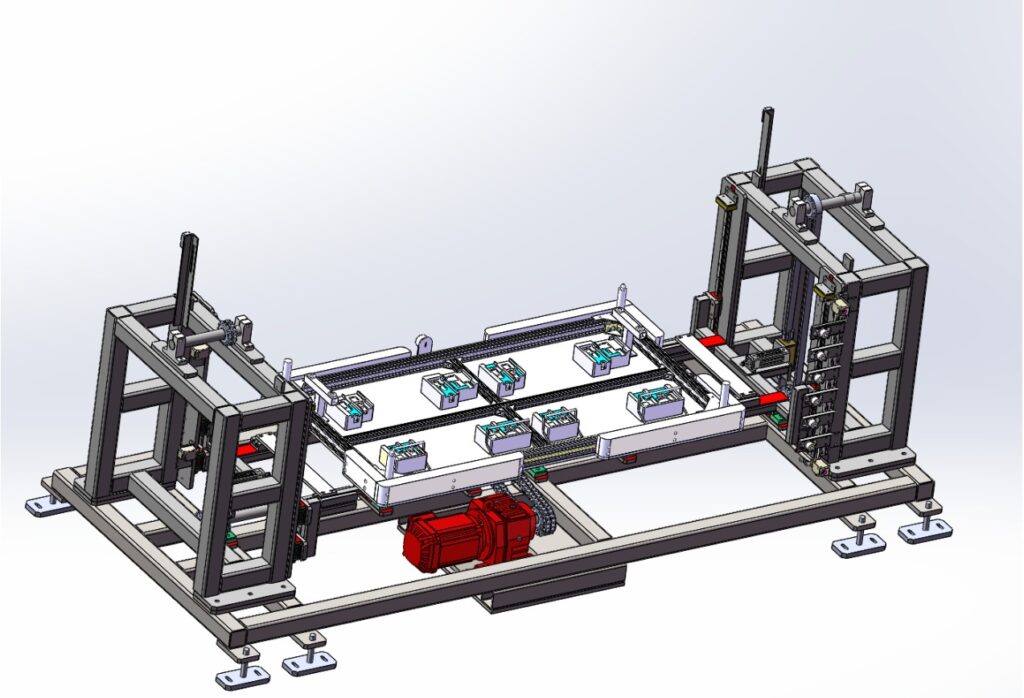
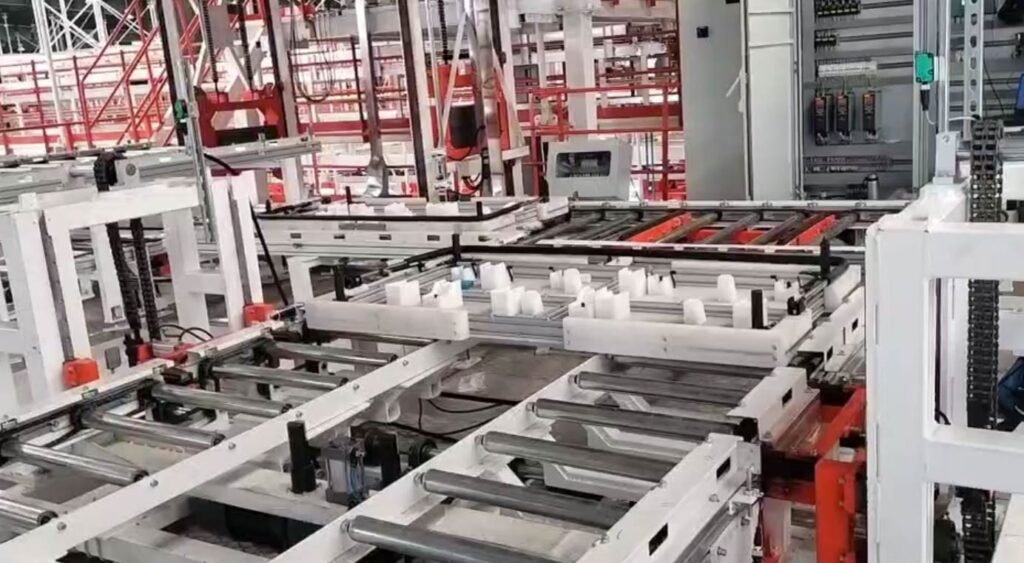
Pallet Conveyor System
The pallet conveyor provides the primary transportation path.
Depending on the pallet design and load, the conveyor can use:
- Roller conveyors
- Chain conveyors
- Belt conveyors
- Slat conveyors
- Specialized pallet transport systems
The conveyor should provide stable pallet movement while maintaining compatibility with downstream equipment.
For precision assembly applications, the conveyor may deliver the pallet to a stopper and lift-and-locate station.
Pallet Stacker
A pallet stacker collects individual pallets and forms a vertical stack.
It is commonly used for empty pallet accumulation or temporary pallet storage.
Vertical stacking can reduce the floor area required for pallet storage and provide a controlled buffer between different production processes.
Pallet Destacker
A pallet destacker separates individual pallets from a vertical stack and supplies them to the production line.
It is commonly installed at the beginning of a pallet circulation loop or near a pallet feeding station.
The destacker must be designed around the pallet geometry and separation characteristics.
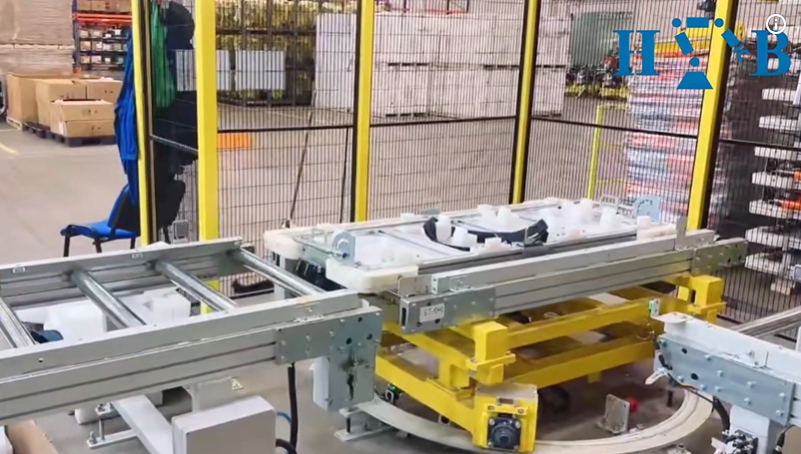
Transfer Machine
A transfer machine moves pallets between different conveyor sections or production areas.
It may provide:
- Lateral transfer
- Vertical transfer
- Direction change
- Conveyor-to-conveyor transfer
- Workstation loading
Transfer machines become particularly useful when several production lines operate in parallel.
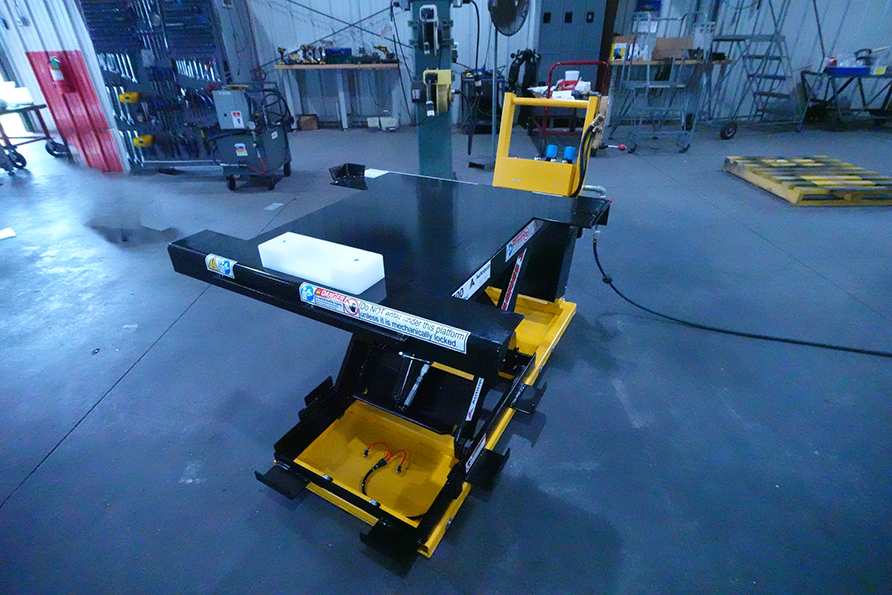
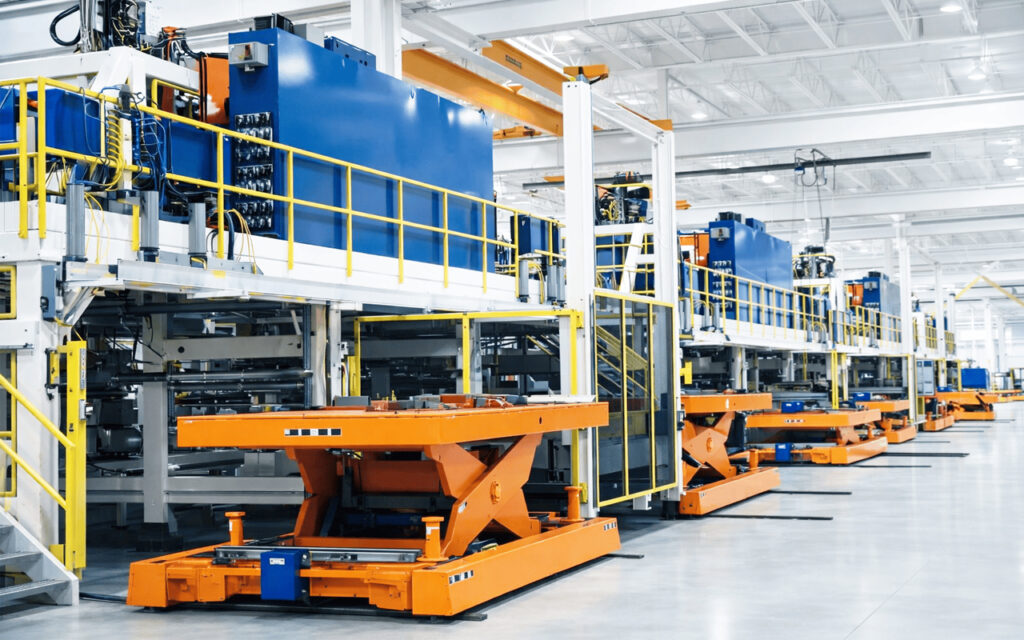
Lift-and-Locate Unit
A lift-and-locate system raises the pallet from the conveyor and accurately positions it for processing.
The conveyor is primarily responsible for transportation.
The lift-and-locate mechanism provides the final positioning required for assembly, inspection, or testing.
This separation of functions is common in automated automotive assembly.
Pallet Stopper
A stopper controls the movement of a pallet at a defined position.
It can prevent pallets from entering an occupied workstation and establish a preliminary position before a lift-and-locate mechanism engages the pallet.
The stopper can be pneumatic, electric, or mechanically actuated depending on the application.
Pallet Identification System
RFID or barcode systems can identify individual pallets.
The identification system can provide information about:
- Pallet ID
- Product model
- Fixture type
- Production order
- Current station
- Process status
This information can be transmitted to the PLC or higher-level manufacturing systems.
PLC Control System
The PLC coordinates the operation of the complete pallet handling system.
It can manage:
- Conveyor movement
- Pallet detection
- Transfer operations
- Stacker operation
- Destacker operation
- Lift-and-locate positioning
- Safety conditions
- Production station status
The PLC also provides communication between individual machines.
How an Automotive Pallet Handling System Works
A typical pallet circulation system may operate as follows.
Step 1: Pallet Feeding
Empty pallets are supplied from a pallet destacker.
The destacker separates one pallet from the stack and transfers it to the pallet conveyor.
Step 2: Pallet Identification
An RFID reader or barcode scanner identifies the pallet.
The control system can associate the pallet with the corresponding production information.
Step 3: Pallet Transportation
The pallet conveyor moves the pallet toward the first production workstation.
Sensors monitor the pallet position.
Step 4: Workstation Positioning
When the pallet reaches the assembly station, a stopper controls its movement.
A lift-and-locate unit may then raise and precisely position the pallet.
Step 5: Production Operation
The workstation performs the required operation.
This could include:
- Component assembly
- Press fitting
- Automated tightening
- Robot assembly
- Vision inspection
- Leak testing
- Functional testing
Step 6: Pallet Release
After the process is completed and the result is confirmed, the pallet is released.
The conveyor moves it to the next workstation.
Step 7: Process Tracking
The PLC or MES records the relevant process information.
Depending on the system architecture, the data may include product identification, workstation status, process result, and timestamps.
Step 8: Product Unloading
At the end of the production process, the finished component or assembly is removed from the pallet.
Step 9: Empty Pallet Return
The empty pallet enters the return conveyor.
It may be transferred to a pallet stacker for temporary storage.
Step 10: Pallet Recirculation
When production requires another pallet, the destacker supplies an empty pallet back to the production line.
This creates a closed-loop pallet circulation system.
Pallet Handling for Engine Assembly Lines
Engine assembly is a typical application for pallet-based production systems.
An engine block or partially assembled engine can be mounted on a dedicated pallet and transported through multiple operations.
A typical production flow may include:
Pallet Feeding → Engine Loading → Component Assembly → Press Fitting → Tightening → Inspection → Testing → Unloading → Empty Pallet Return
The pallet may contain dedicated locating features to maintain the engine assembly in the required position.
At precision assembly stations, the pallet can be lifted from the conveyor and accurately located before the process begins.
Pallet Handling for Transmission Assembly
Transmission assembly often involves multiple component installation and inspection processes.
A dedicated pallet can carry the transmission housing or partially assembled transmission through different stations.
The pallet handling system may connect:
- Housing loading
- Bearing installation
- Gear assembly
- Shaft installation
- Fastening
- Inspection
- Leak testing
- Functional testing
Because different operations may require different product orientations, transfer machines and positioning mechanisms can be incorporated into the pallet handling system.
Pallet Handling for Axle and Driveline Production
Axle assemblies and driveline components can require heavy-duty pallet handling equipment.
The combined weight of the product, fixture, and pallet must be considered when selecting conveyors and transfer equipment.
Heavy-duty pallet handling systems may require reinforced frames, high-capacity chains, robust rollers, and appropriately sized drive systems.
The system should also account for the center of gravity and product stability during movement.
Pallet Handling for EV Powertrain Production
Electric drive units, reducers, motors, and other EV powertrain components can be transported on dedicated pallets.
The pallet fixture can be designed to protect sensitive components and provide consistent positioning.
Depending on the process, the pallet handling system may connect:
- Component loading
- Assembly
- Fastening
- Inspection
- Electrical testing
- Leak testing
- Functional testing
Special handling requirements should be incorporated into the system design where applicable.
Pallet Handling and Robotic Assembly
Robotic assembly requires repeatable product positioning.
The pallet handling system provides the transportation interface, while the fixture and positioning equipment establish the process reference.
A typical sequence may be:
Pallet Conveyor → Stopper → Lift-and-Locate → Robot Assembly → Process Confirmation → Pallet Release
The robot can receive a ready signal from the PLC after the pallet reaches the required position.
After the robot completes the operation, the PLC can receive the process result before releasing the pallet.
This creates a controlled interface between material handling and robotic automation.
Pallet Handling and Press-Fitting
Press-fitting operations require sufficient mechanical support and accurate positioning.
The pallet handling system transports the product to the press station.
A separate fixture or lift-and-locate system can then establish the final position.
The pallet handling system should not necessarily absorb the entire process force.
Instead, the product can be transferred into a rigid process fixture specifically designed for the pressing operation.
This approach helps separate material handling requirements from process-force requirements.
Pallet Handling and Torque Tightening
Automated tightening systems require controlled product positioning.
The pallet handling system can deliver the product to the tightening station.
The pallet is then positioned using a stopper and lift-and-locate mechanism.
After the tightening system completes the operation, the PLC can receive the tightening result before the pallet continues to the next station.
If traceability is required, the tightening result can be associated with the pallet ID or product ID.
Pallet Handling and Vision Inspection
Vision inspection systems require stable product positioning and a controlled inspection environment.
The pallet handling system can move the product into the inspection area.
The positioning system can establish the required camera-to-product relationship.
The inspection system may verify:
- Component presence
- Component orientation
- Assembly condition
- Surface features
- Marking or labeling
- Specific dimensional characteristics
Inspection results can be associated with the product or pallet record when the production control architecture supports traceability.
Pallet Handling and Leak Testing
Leak testing equipment often requires the product to be accurately positioned and connected to the testing system.
The pallet handling system transports the product to the leak test station.
A dedicated fixture can establish the required position and provide the necessary interfaces for the test.
After the test is completed, the PLC receives the result before allowing the pallet to continue.
This prevents products with incomplete process results from automatically proceeding without the required control logic.
Pallet Handling and MES Integration
An advanced pallet handling system can be connected to MES.
The MES can receive production information from the production line and provide relevant instructions or records.
Depending on the customer’s system architecture, information can include:
- Product ID
- Pallet ID
- Production order
- Workstation
- Process status
- Inspection result
- Test result
- Timestamp
- Error information
RFID is often useful because the pallet itself can carry an identification tag that remains associated with the product during production.
The actual communication architecture should be defined according to the customer’s MES and automation standards.
Production Traceability
Traceability becomes increasingly important when multiple product variants are manufactured on the same line.
A pallet handling system can provide a physical carrier for product identification.
For example:
Pallet ID → Product ID → Workstation Data → Inspection Result → Test Result → Finished Product
This structure can help production engineers determine which processes a product has completed.
The exact data retention and traceability requirements depend on the customer’s production management system.
Mixed-Model Production
Modern automotive factories may produce several vehicle or component variants on the same production line.
The pallet handling system can support mixed-model production when the pallets, fixtures, and workstation interfaces are designed appropriately.
The control system can identify the product and determine which process sequence is required.
For example, different product variants may require different assembly tools or inspection parameters.
The pallet handling system itself does not determine the complete manufacturing recipe, but it provides the controlled movement and identification infrastructure needed by the production control system.
Buffering and Production Line Balancing
Pallet handling systems can also provide temporary buffering between processes.
A buffer can help separate upstream and downstream production operations when their cycle times are not identical.
Possible buffer configurations include:
- FIFO pallet buffer
- Vertical pallet buffer
- Empty pallet buffer
- Process buffer
- Inspection buffer
- Finished assembly buffer
The buffer capacity should be calculated from actual production flow requirements.
An excessively large buffer can increase equipment footprint and inventory within the process, while insufficient buffering can cause frequent production interruptions.
Safety Architecture
Because pallet handling systems combine conveyors, lifting equipment, transfer mechanisms, and potentially heavy products, safety must be addressed at system level.
Safety functions may include:
- Guarding
- Safety doors
- Interlocks
- Emergency stops
- Light curtains
- Safety scanners
- Safety PLC
- Position monitoring
- Anti-drop mechanisms
- Controlled restart
The safety system should consider interactions between the pallet handling equipment and other machines such as robots and presses.
The final design should be based on a formal machine risk assessment and applicable customer and market requirements.
Maintenance and Serviceability
A pallet handling system should be designed for practical maintenance.
Key maintenance points include:
- Conveyor chains
- Rollers
- Bearings
- Drive motors
- Gearboxes
- Guides
- Lift mechanisms
- Transfer mechanisms
- Sensors
- Pneumatic components
- Fixtures
- Safety devices
Maintenance access should be considered during the equipment layout stage.
If components that require regular inspection are difficult to access, maintenance downtime can increase.
For high-volume automotive production, preventive maintenance schedules should be established according to operating cycles and component service requirements.
How to Design an Automotive Pallet Handling System
The design process should begin with the production process rather than with individual equipment.
Step 1: Define the Product
Determine product dimensions, weight, center of gravity, orientation, and handling requirements.
Step 2: Define the Pallet
Specify pallet dimensions, weight, fixture configuration, locating features, and identification method.
Step 3: Define Production Takt Time
Determine the required pallet cycle based on production volume and workstation cycle times.
Step 4: Map the Material Flow
Define how the pallet moves through each workstation.
Step 5: Determine Buffer Requirements
Identify where temporary pallet storage is required and calculate the required capacity.
Step 6: Select Handling Equipment
Determine where pallet conveyors, transfer machines, stackers, destackers, and lift-and-locate systems are required.
Step 7: Define Control Architecture
Specify PLC structure, sensors, drives, communication interfaces, and safety functions.
Step 8: Define Traceability
Determine whether RFID, barcode, MES, or other identification systems are required.
Step 9: Design Safety
Perform the required risk assessment and define guarding, interlocks, emergency stops, and safety control functions.
Step 10: Validate the Complete System
Verify cycle time, pallet flow, equipment interfaces, positioning accuracy, safety, and maintenance access before final commissioning.
Common Design Problems
Several problems can occur when pallet handling equipment is designed without considering the complete production system.
Insufficient Pallet Capacity
If the number of pallets is too small, production may stop while waiting for pallet return.
Incompatible Pallet Interfaces
Differences in conveyor height or pallet support points can create transfer problems.
Poor Positioning Accuracy
If the pallet is not accurately located, downstream robots, tools, or inspection equipment may not operate reliably.
Excessive Buffering
Too much pallet accumulation can consume valuable factory space and increase work-in-process inventory.
Inadequate Communication
If equipment does not exchange correct ready, busy, complete, and fault signals, the production sequence can become unstable.
Insufficient Maintenance Access
Equipment that is difficult to service can result in longer production downtime.
These issues should be addressed during system engineering rather than after installation.
Customized Automotive Pallet Handling Systems from Hongbo Automation
Hongbo Automation provides customized automation and material handling solutions for automotive manufacturers and automotive component suppliers.
The pallet handling system can be engineered around the customer’s:
- Product
- Pallet
- Fixture
- Production takt time
- Factory layout
- Process sequence
- Automation level
- Traceability requirements
- PLC architecture
- MES interface
- Safety requirements
Hongbo can integrate pallet conveyors, pallet stackers, pallet destackers, transfer machines, lift-and-locate systems, automated workstations, inspection equipment, and other production equipment into a coordinated production system.
The engineering objective is not simply to move a pallet from one location to another. The system should provide a reliable interface between material handling and the manufacturing process.
For automotive manufacturers planning a new assembly line or upgrading an existing production system, this system-level approach can help align mechanical equipment, controls, production flow, and workstation requirements.
Conclusion
An automotive pallet handling system provides the infrastructure required to move, position, identify, buffer, and circulate pallets throughout an automated production line.
Unlike a standalone conveyor, a complete pallet handling system can combine pallet conveyors, stackers, destackers, transfer machines, lift-and-locate units, sensors, PLC controls, RFID identification, and MES interfaces.
The correct system depends on the product, pallet, fixture, takt time, production layout, workstation requirements, and automation strategy.
For engine, transmission, axle, powertrain, EV component, and other automotive manufacturing applications, the pallet handling system should be engineered as part of the complete production line.
A well-designed system provides controlled material flow while creating a consistent interface between products, pallets, assembly equipment, inspection systems, robots, and production control software.
For automotive manufacturers and component suppliers, working with an automation equipment supplier capable of integrating these different systems can simplify the engineering process and provide a more coordinated production solution.
Frequently Asked Questions
What is an automotive pallet handling system?
An automotive pallet handling system is an integrated system used to transport, position, store, identify, and circulate pallets through automotive assembly or component production processes.
What equipment is included in a pallet handling system?
Depending on the application, it can include pallet conveyors, pallet stackers, pallet destackers, transfer machines, lift-and-locate systems, stoppers, sensors, RFID systems, PLC controls, and MES interfaces.
Why are pallets used in automotive assembly?
Pallets provide a standardized platform for transporting components and fixtures while maintaining controlled product positioning throughout multiple manufacturing processes.
Can pallet handling systems support robotic assembly?
Yes. The pallet handling system can transport the product to the robot workstation, while dedicated fixtures and positioning mechanisms establish the required assembly position.
Can a pallet handling system be integrated with MES?
Yes. RFID or barcode identification can be used to associate pallets and products with production data, while PLC and MES communication can provide process tracking and traceability.
Can the same system handle multiple product models?
Yes, provided the pallets, fixtures, conveyors, and workstations are designed to support the required product variants. Product identification and production control systems can also support mixed-model production.
How is pallet handling capacity determined?
Capacity depends on pallet consumption, production takt time, pallet return rate, buffer requirements, stack capacity, and the physical layout of the production line.
Does Hongbo provide complete pallet handling systems?
Hongbo Automation can design and integrate customized pallet handling equipment according to the customer’s product, pallet, production process, factory layout, control architecture, and automation requirements.