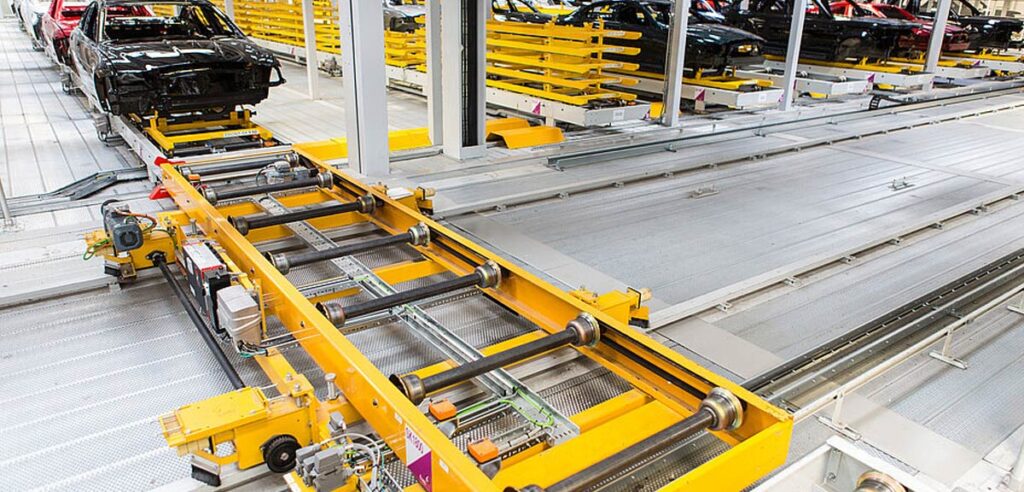
Automotive manufacturing requires the continuous movement of components, assemblies, and finished products between different production processes.
As automotive factories increase their level of automation, conveyor systems have become an essential part of modern assembly and manufacturing operations.
An automotive assembly line conveyor provides controlled material handling between workstations while maintaining the required production sequence, positioning accuracy, and cycle time.
Modern conveyor systems can be integrated with:
- Assembly workstations
- Industrial robots
- Automated fixtures
- Lifting systems
- Transfer machines
- Vision inspection systems
- Torque tightening equipment
- Leak testing equipment
- PLC control systems
- MES production management systems
For automotive OEMs and component manufacturers, selecting the appropriate conveyor technology is an important part of production line design.
The conveyor must not only transport products. It must also support accurate positioning, process synchronization, production traceability, and safe operation.
What Is an Automotive Assembly Line Conveyor?
An automotive assembly line conveyor is a material handling system designed to transport automotive components, assemblies, pallets, or vehicle bodies between different production stations.
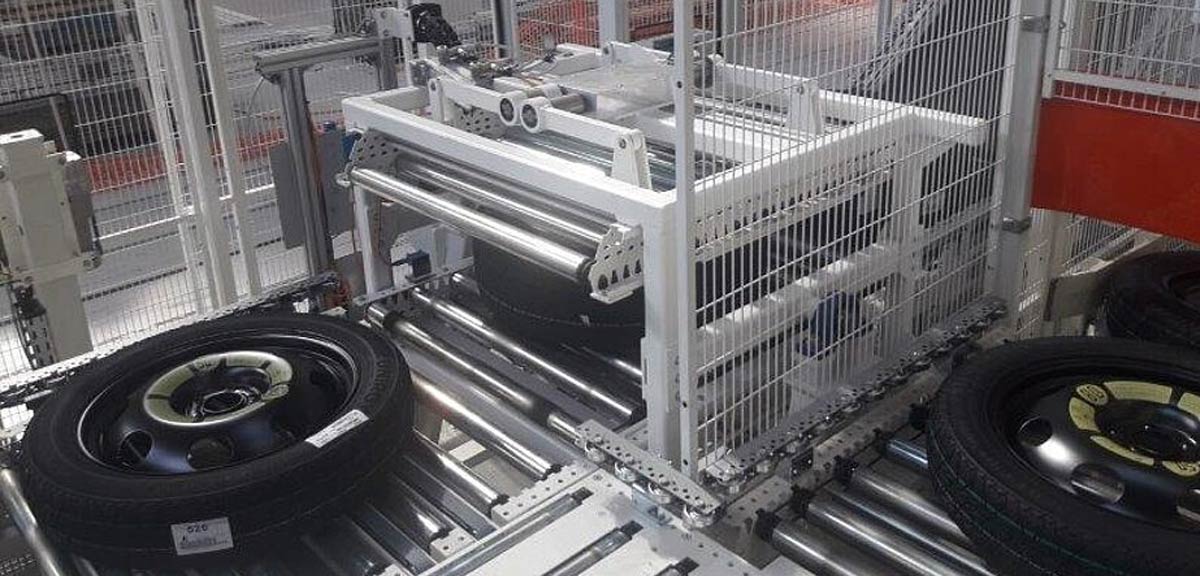
Unlike general industrial conveyors, automotive assembly conveyors often need to handle:
- High product weights
- Different product models
- Precise positioning requirements
- Continuous production
- Automated loading and unloading
- Frequent stopping and indexing
The conveyor system therefore becomes part of the overall production process rather than simply a material transportation device.
For example, a pallet conveyor may transport an engine assembly from one workstation to another while the pallet is accurately positioned for robotic assembly or torque tightening.
Why Conveyor Systems Are Important in Automotive Manufacturing
Material flow has a direct impact on production efficiency.
If products cannot move smoothly between workstations, the entire production line can experience delays.
A properly designed conveyor system helps manufacturers achieve:
- Stable material flow
- Consistent production cycle time
- Accurate workstation positioning
- Reduced manual handling
- Improved production efficiency
- Better operator ergonomics
- Easier production automation
Conveyors also provide the physical connection between individual manufacturing processes.
A production line may combine several different technologies, but the conveyor system connects them into one continuous manufacturing process.
Types of Automotive Assembly Line Conveyors
Different automotive applications require different conveyor configurations.
The selection depends on product weight, dimensions, production volume, positioning requirements, and factory layout.
Pallet Conveyor Systems
Pallet conveyors are widely used in automotive component assembly.
A pallet carries the product or assembly fixture while moving between production stations.
Typical applications include:
- Engine assembly
- Transmission assembly
- Electric motor assembly
- Automotive component assembly
- Battery component assembly
The pallet can also carry product identification information.
For example, a barcode or RFID tag can identify:
- Product model
- Serial number
- Production order
- Process status
This makes pallet conveyors particularly suitable for automated production and MES integration.
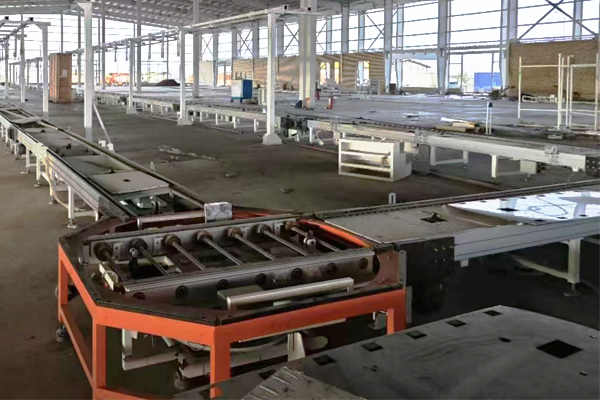
Roller Conveyor Systems
Roller conveyors use rotating rollers to transport products or pallets.
They are suitable for applications involving:
- Heavy components
- Pallets
- Industrial containers
- Automotive assemblies
Powered roller conveyors can provide controlled movement and automatic indexing.
The system can be configured to stop products at predefined production stations.
Chain Conveyor Systems
Chain conveyors are suitable for transporting heavy pallets and components.
They provide reliable material movement in demanding industrial environments.
Typical applications include:
- Engine assembly
- Transmission assembly
- Powertrain assembly
- Heavy automotive components
The conveyor design should consider:
- Product weight
- Pallet dimensions
- Chain configuration
- Required speed
- Positioning accuracy
Slat Conveyor Systems
Slat conveyors use a continuous chain-driven slat surface to transport products.
They are often used where products require a stable and continuous support surface.
Applications may include:
- Automotive assembly
- Component handling
- Subassembly transport
- Production line transfer
Slat conveyor systems can be configured for different product sizes and production layouts.
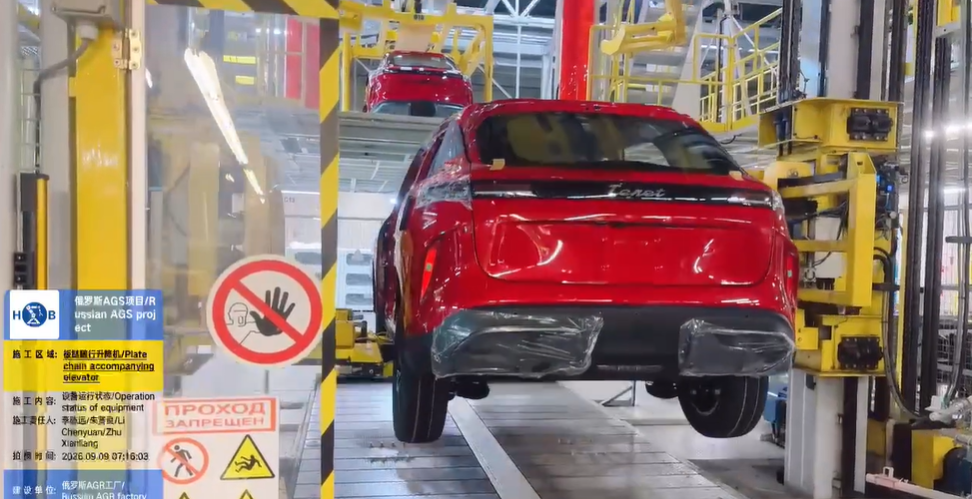
Vertical Conveyor Systems
Vertical conveyors move products between different elevations.
They are useful when a factory has multiple production levels or when equipment layout requires vertical material transfer.
Applications include:
- Multi-level production lines
- Warehouse connections
- Component transfer
- Buffer systems
Vertical conveyors can reduce the floor space required for material movement.
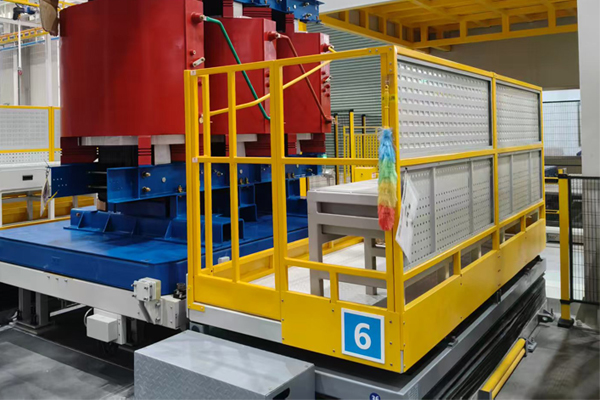
Lift Tables
Lift tables provide controlled vertical movement for automotive components and pallets.
They can be used for:
- Height adjustment
- Component positioning
- Production transfer
- Operator ergonomics
- Cross-level material movement
In automotive assembly, lift systems can also be integrated with automated fixtures and conveyor systems.
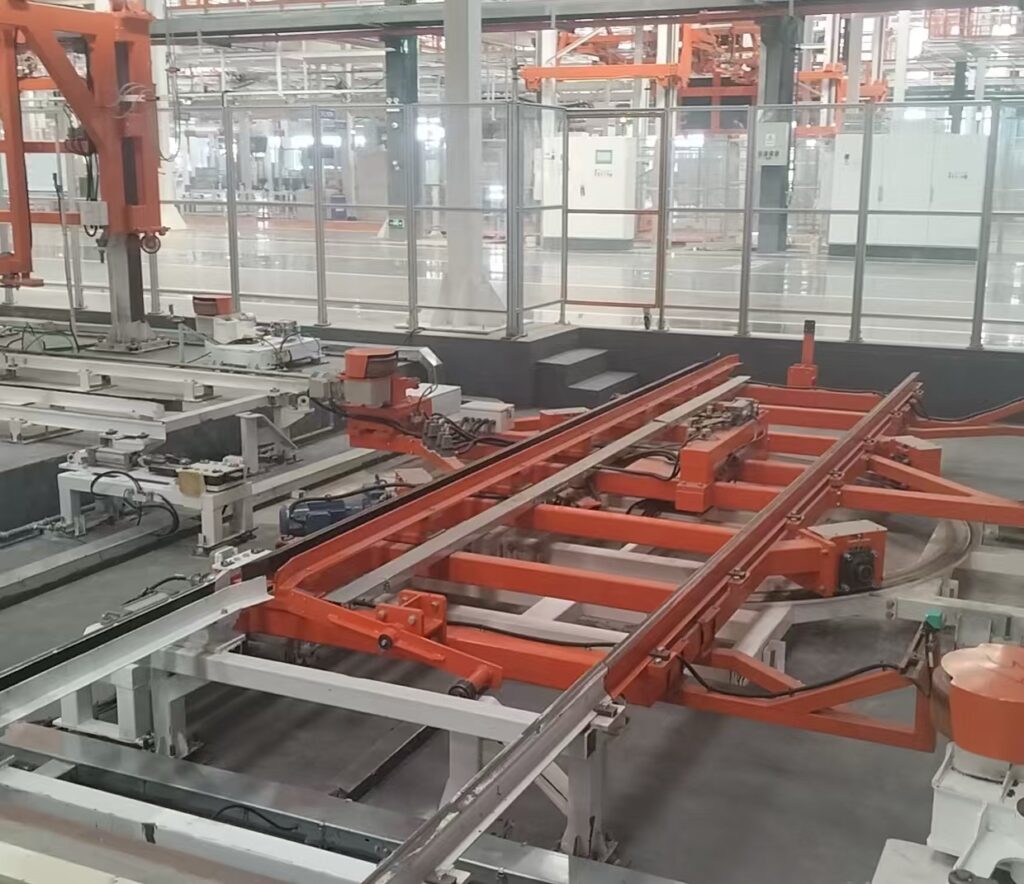
Transfer Machines
Transfer systems move products between parallel conveyor lines or production stations.
A cross-transfer mechanism can move a pallet laterally from one conveyor to another.
This is useful when production layouts require:
- Parallel process lines
- Bypass stations
- Buffer areas
- Multiple production routes
Transfer equipment can therefore provide greater flexibility in production line layout.
Automotive Conveyor System Design
A conveyor should be designed as part of the complete production process.
The first step is to understand the product and manufacturing requirements.
Important design parameters include:
- Product dimensions
- Product weight
- Pallet dimensions
- Cycle time
- Conveyor speed
- Positioning accuracy
- Number of production stations
- Factory layout
- Automation requirements
Product Weight and Dimensions
Automotive products can vary significantly in size and weight.
An engine assembly, transmission, battery pack, and small automotive component require very different conveyor configurations.
Engineers must determine:
- Maximum load
- Minimum product size
- Center of gravity
- Product orientation
- Pallet design
The conveyor structure, drive system, and support components should be selected according to these parameters.
Production Cycle Time
Conveyor performance must match the production takt time.
If the conveyor moves too slowly, it can restrict production capacity.
If the conveyor operates significantly faster than required, it may increase unnecessary energy consumption and product handling.
The complete production flow should therefore be analyzed before determining:
- Conveyor speed
- Indexing frequency
- Buffer capacity
- Station spacing
Positioning Accuracy
Many automotive assembly operations require precise product positioning.
For example, a robot may need to install a component at a specific location.
A torque tightening station may also require the product to remain securely positioned while fasteners are tightened.
Conveyor systems can therefore use:
- Mechanical stoppers
- Positioning pins
- Lift-and-locate mechanisms
- Servo positioning
- Fixture systems
The appropriate positioning method depends on the accuracy requirements of the process.
Pallet and Fixture Design
Pallet design is closely related to conveyor performance.
A production pallet normally supports the product and maintains its orientation throughout the assembly process.
The pallet may include:
- Product locating features
- Clamping mechanisms
- RFID tags
- Barcode labels
- Electrical connections
- Pneumatic connections
For flexible production lines, pallets may be designed to support multiple product variants.
Conveyor Automation and Control
Modern automotive conveyor systems are normally controlled through PLC-based automation systems.
The PLC manages:
- Conveyor motors
- Sensors
- Product positioning
- Pallet tracking
- Transfer systems
- Lift tables
- Safety devices
Sensors detect product presence and position.
The control system can then determine when a conveyor should:
- Start
- Stop
- Index
- Transfer
- Lift
- Release a pallet
This creates synchronized material flow throughout the production line.
Conveyor Integration with Industrial Robots
Conveyors and robots must work together as an integrated system.
For example, an automated workstation may operate as follows:
- The pallet enters the workstation.
- A sensor detects the pallet.
- The conveyor stops.
- The positioning system locks the pallet.
- The PLC sends a ready signal to the robot.
- The robot performs the assembly operation.
- The process result is confirmed.
- The pallet is released.
- The conveyor moves the product to the next station.
This type of integration allows automated assembly processes to operate continuously.
Internal Link:
Industrial Robots in Automotive Manufacturing
Conveyor Integration with Assembly Equipment
Conveyors can also communicate with individual production machines.
Examples include:
- Servo presses
- Torque tightening systems
- Dispensing machines
- Leak testers
- Vision inspection systems
- Functional test equipment
The conveyor determines when the product arrives, while the workstation performs the required process.
After the process is completed, the workstation sends a completion signal to the PLC.
The conveyor can then move the product to the next process.
This creates a synchronized production sequence.
Conveyor Systems for Powertrain Assembly
Powertrain manufacturing is a major application for automotive conveyor systems.
Powertrain components can be heavy and require precise positioning.
A powertrain assembly line may include:
- Engine assembly
- Transmission assembly
- Engine-to-transmission joining
- Accessory installation
- Fluid filling
- Leak testing
- Functional testing
Pallet conveyors, chain conveyors, lift systems, and transfer machines can be combined to create the required production flow.
Internal Link:
Powertrain Assembly: Process, Equipment & Automation
Conveyor Systems for Engine Assembly
Engine assembly requires controlled transportation of the engine between multiple assembly stations.
Typical processes may include:
- Cylinder head assembly
- Crankshaft installation
- Piston assembly
- Accessory installation
- Torque tightening
- Leak testing
- End-of-line testing
The conveyor must provide sufficient load capacity while maintaining stable positioning.
Internal Link:
Engine Assembly Line: Process, Equipment and Automation
Conveyor Systems for Transmission Assembly
Transmission assemblies also require controlled material handling.
A transmission assembly line may include:
- Gear installation
- Shaft assembly
- Bearing installation
- Housing assembly
- Torque tightening
- Oil filling
- Leak testing
- Functional testing
Pallet-based conveyor systems are particularly suitable because the product can remain on the same fixture through multiple processes.
Internal Link:
Transmission Assembly Line: Process, Equipment and Automation
Conveyor Systems for EV Manufacturing
Electric vehicle production introduces new conveyor applications.
EV production lines may transport:
- Battery modules
- Battery packs
- Electric motors
- Reduction gears
- Inverters
- Electrical components
Battery packs can be large and heavy, requiring appropriately designed material handling systems.
The conveyor must consider:
- Product weight
- Battery dimensions
- Positioning accuracy
- Electrical safety
- Production takt time
Conveyor Safety in Automotive Manufacturing
Safety should be considered during the initial conveyor design stage.
Important safety systems may include:
- Emergency stop buttons
- Safety light curtains
- Safety scanners
- Guarding
- Safety interlocks
- Safety PLCs
Moving chains, rollers, transfer mechanisms, and lifting systems can create potential hazards if not properly protected.
The safety architecture should therefore be designed according to the production environment and applicable standards.
Conveyor Maintenance
Reliable conveyor operation is essential for production continuity.
Common maintenance tasks include:
- Chain inspection
- Roller inspection
- Motor inspection
- Lubrication
- Sensor inspection
- Fastener inspection
- Alignment checks
Preventive maintenance helps identify potential problems before they result in production downtime.
For automated factories, conveyor condition monitoring can also be integrated into the plant’s maintenance management system.
Smart Conveyor Systems and Industry 4.0
Modern conveyor systems are becoming increasingly connected.
Sensors and control systems can provide real-time information about:
- Conveyor status
- Pallet location
- Motor condition
- Production flow
- Equipment faults
This data can be connected to MES or other factory management systems.
Manufacturers can then monitor production performance and identify bottlenecks.
MES and Conveyor Traceability
When a conveyor system is integrated with MES, individual products can be tracked throughout the production process.
The system can record:
- Product identity
- Pallet identity
- Production station
- Process status
- Inspection results
- Test results
For example, the system can determine which workstation processed a particular engine or transmission and retrieve the associated production data.
This level of traceability is increasingly important for automotive OEMs and component suppliers.
How to Select an Automotive Conveyor System
Choosing the correct conveyor technology requires consideration of the entire manufacturing process.
Important questions include:
- What is the product weight?
- What are the product dimensions?
- What is the required production capacity?
- What positioning accuracy is required?
- How many product variants are involved?
- Will robots be integrated?
- Is MES traceability required?
- What factory space is available?
- What safety requirements apply?
The conveyor should be selected based on the production system rather than as an isolated piece of equipment.
Hongbo Automation Conveyor Solutions
Hongbo Automation develops conveyor systems and automated equipment for automotive manufacturing applications.
Our conveyor capabilities include:
- Pallet conveyor systems
- Chain conveyor systems
- Roller conveyor systems
- Slat conveyor systems
- Cross-transfer systems
- Lift tables
- Vertical conveyor systems
- Transfer machines
These systems can be integrated with automotive assembly lines, powertrain production lines, component assembly systems, robotic workstations, testing equipment, and production control systems.
Hongbo’s engineering approach focuses on developing complete material handling and automation solutions according to the customer’s product, production capacity, factory layout, and process requirements.
For automotive OEMs and component manufacturers, the objective is to create a conveyor system that provides reliable material flow while supporting the overall performance of the production line.
Conclusion
Automotive assembly line conveyors are a fundamental part of modern vehicle and component manufacturing.
A properly designed conveyor system does more than move products from one station to another. It supports production synchronization, accurate positioning, automation integration, product traceability, and safe material handling.
Depending on the application, automotive manufacturers may use:
- Pallet conveyors
- Roller conveyors
- Chain conveyors
- Slat conveyors
- Lift tables
- Vertical conveyors
- Transfer systems
The appropriate solution depends on product characteristics, production capacity, process requirements, factory layout, and automation level.
As automotive manufacturing continues to move toward electrification, flexible production, and Industry 4.0, conveyor systems will become increasingly integrated with robots, inspection equipment, PLCs, and MES platforms.
For automotive OEMs and component suppliers planning a new production line, selecting an experienced conveyor and automation supplier can help create a reliable, scalable, and efficient manufacturing system.
Frequently Asked Questions
What is an automotive assembly line conveyor?
An automotive assembly line conveyor is a material handling system used to transport vehicle components, assemblies, pallets, or products between different production stations.
What type of conveyor is commonly used in automotive assembly?
Pallet conveyors, chain conveyors, roller conveyors, and slat conveyors are commonly used. The best option depends on product weight, dimensions, production process, and positioning requirements.
What is a pallet conveyor?
A pallet conveyor transports products using dedicated pallets or fixtures. It is widely used for engine, transmission, powertrain, and automotive component assembly.
Why is positioning accuracy important for automotive conveyors?
Many assembly operations require the product to be held at a precise location. Accurate positioning allows robots, tightening systems, presses, and inspection equipment to perform their processes consistently.
Can automotive conveyors be integrated with robots?
Yes. Conveyor systems can communicate with robots through PLC-based control systems to synchronize product transfer, positioning, assembly, and inspection operations.
Can conveyor systems be connected to MES?
Yes. When integrated with MES, conveyor systems can support product tracking, pallet identification, process status monitoring, and manufacturing traceability.
What factors should be considered when designing an automotive conveyor system?
Important factors include product weight, dimensions, pallet design, takt time, positioning accuracy, production layout, automation requirements, safety, and future production expansion.
Does Hongbo provide customized automotive conveyor systems?
Hongbo Automation develops customized conveyor and automation solutions according to customer requirements, including product characteristics, production capacity, factory layout, and manufacturing processes.