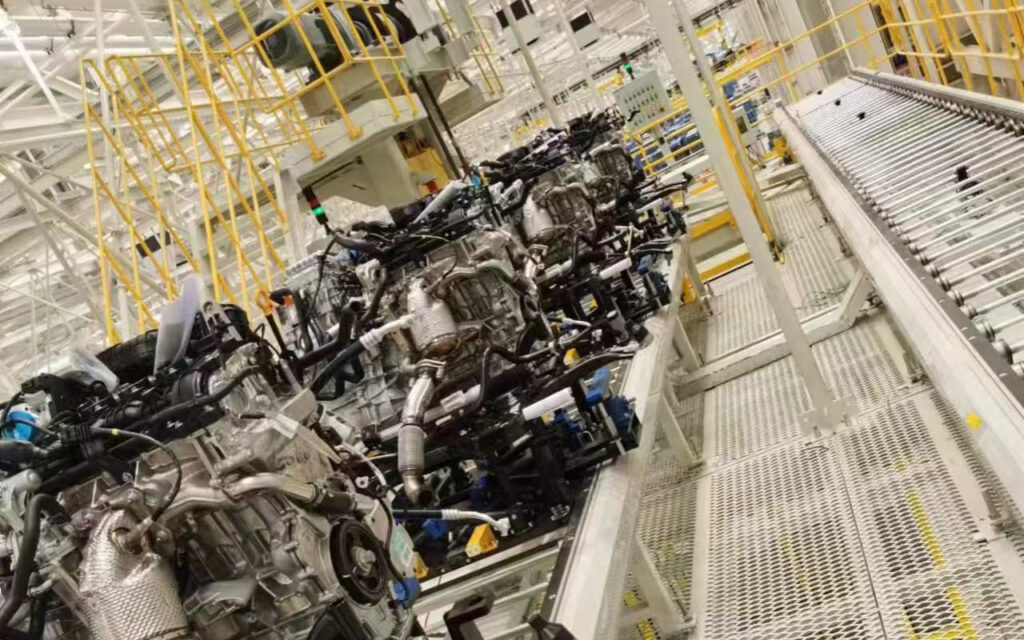
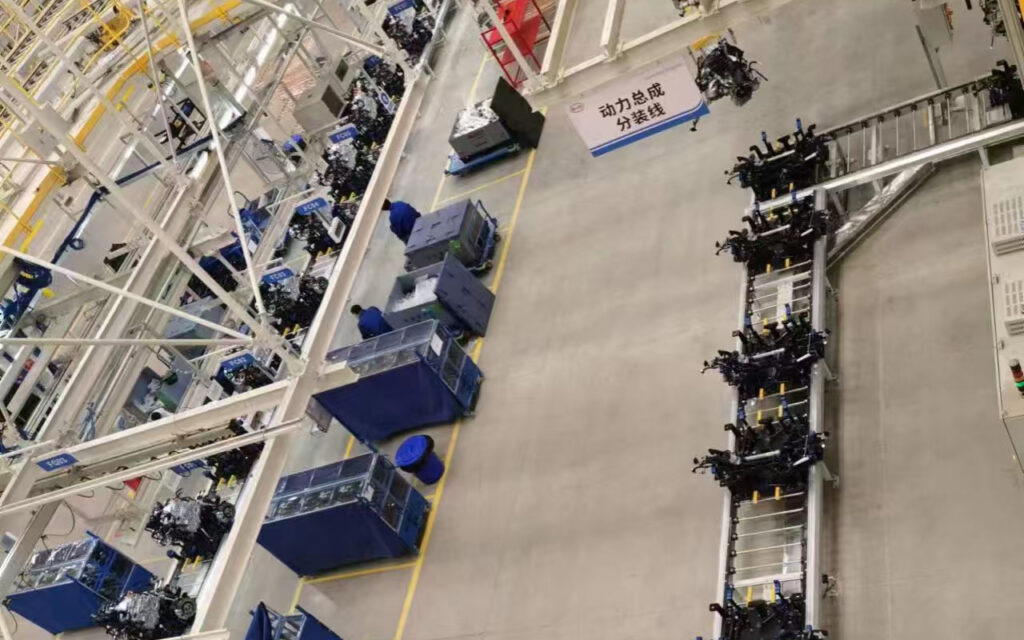
Accurate positioning is essential for automated automotive assembly. Although a pallet conveyor can transport a component from one workstation to another, transportation alone does not provide the positioning accuracy required by robots, tightening tools, inspection equipment, or press-fitting machines.
A lift-and-locate system solves this problem by temporarily lifting a pallet away from the conveyor and positioning it against defined locating references. As a result, the workpiece can be held in a stable and repeatable position while the assembly or inspection process is performed.
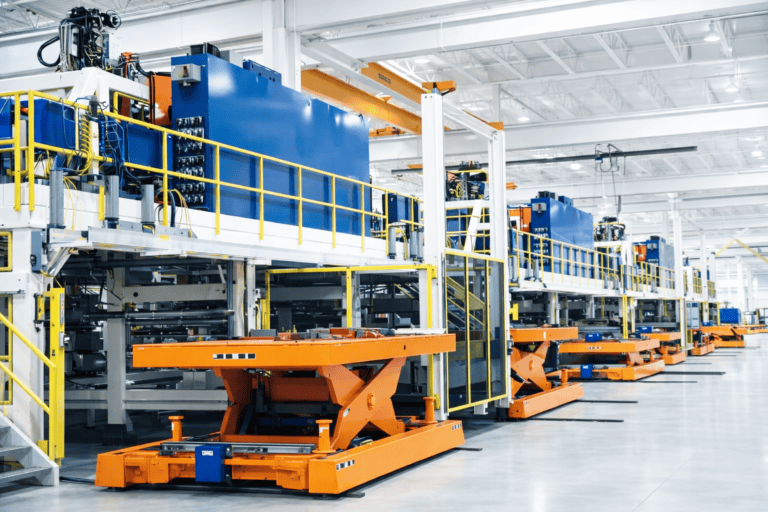
In modern automotive production lines, lift-and-locate systems are commonly integrated with pallet conveyors, stoppers, fixtures, robotic workstations, automated tightening systems, vision inspection equipment, leak testing machines, and PLC control systems.
Because every production line has different pallet dimensions, loads, process requirements, and cycle times, the lift-and-locate mechanism should be designed around the complete application rather than treated as a standard standalone component.
What Is a Lift-and-Locate System?
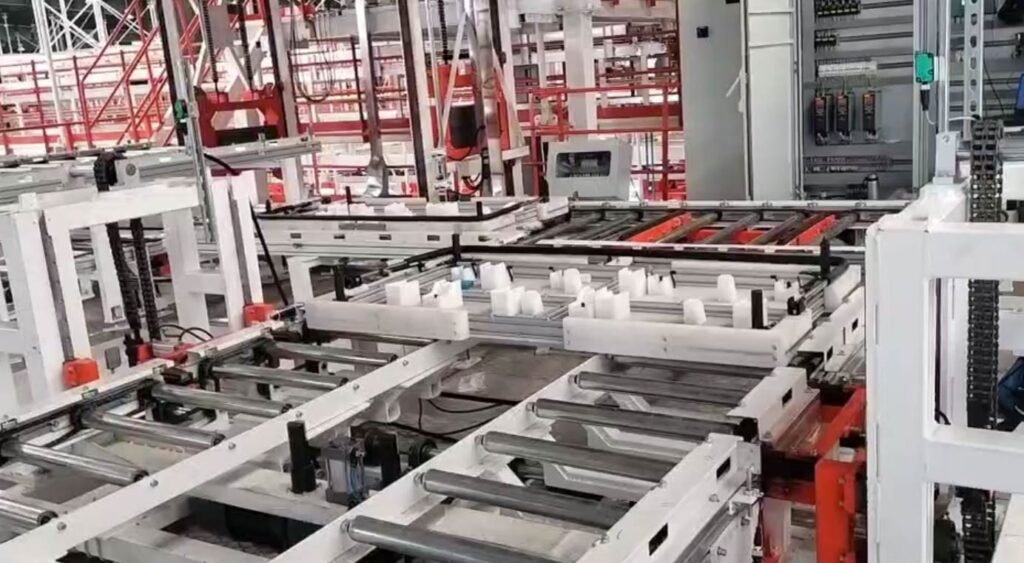
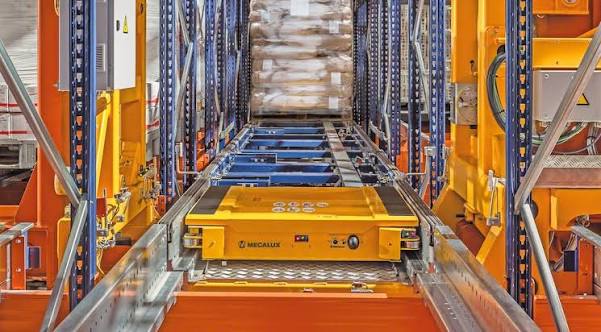
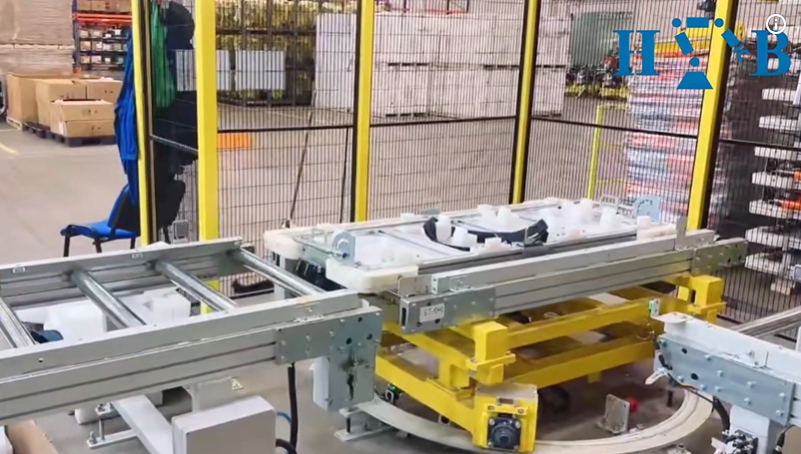
A lift-and-locate system is an automated positioning mechanism used to raise a pallet or workpiece carrier from a conveyor and accurately locate it at a production workstation.
During normal transportation, the pallet moves along the conveyor. Once it reaches the designated workstation, a stopper or positioning mechanism first controls its movement. After that, the lift-and-locate unit raises the pallet and engages the locating points.
The pallet is then separated from the conveyor’s normal transport path. This allows the production equipment to work on a stable and accurately positioned platform.
After the operation is completed, the mechanism lowers the pallet back onto the conveyor. The pallet can then continue to the next process.
A typical lift-and-locate system includes:
- Lifting mechanism
- Locating pins
- Locating blocks
- Pneumatic or servo actuator
- Mechanical stops
- Guide components
- Position sensors
- Pallet support structure
- PLC control interface
- Safety components
The exact configuration depends on the pallet, product, process force, required accuracy, and production cycle.
Why Is Accurate Pallet Positioning Important?
Automotive assembly often involves processes that require a repeatable relationship between the product and the tooling.
For example, an automated tightening tool may need to approach a fastener from a defined direction. Similarly, a vision inspection system requires a predictable camera-to-product position.
Therefore, the pallet must be positioned consistently before the process begins.
If the pallet position changes from cycle to cycle, several problems can occur:
- Robot positioning errors
- Incorrect tool alignment
- Inconsistent tightening
- Inspection errors
- Fixture interference
- Press-fitting problems
- Increased process variation
A lift-and-locate system helps establish a repeatable mechanical reference.
Lift-and-Locate vs. Conveyor Positioning
A pallet conveyor is primarily designed for transportation. By contrast, a lift-and-locate system is designed for precision positioning.
The conveyor may move the pallet to the approximate workstation location. A stopper can then stop the pallet. However, stopping the pallet alone does not necessarily provide sufficient positioning accuracy for an automated process.
A typical arrangement is:
Pallet Conveyor → Stopper → Lift-and-Locate → Assembly Process
The conveyor handles transportation.
The stopper controls pallet arrival.
The lift-and-locate unit establishes the final process position.
As a result, each component performs a specific function rather than requiring the conveyor itself to provide both transportation and precision locating.
Main Components of a Lift-and-Locate System
The mechanical configuration varies according to the application, but several components are commonly required.
Lifting Mechanism
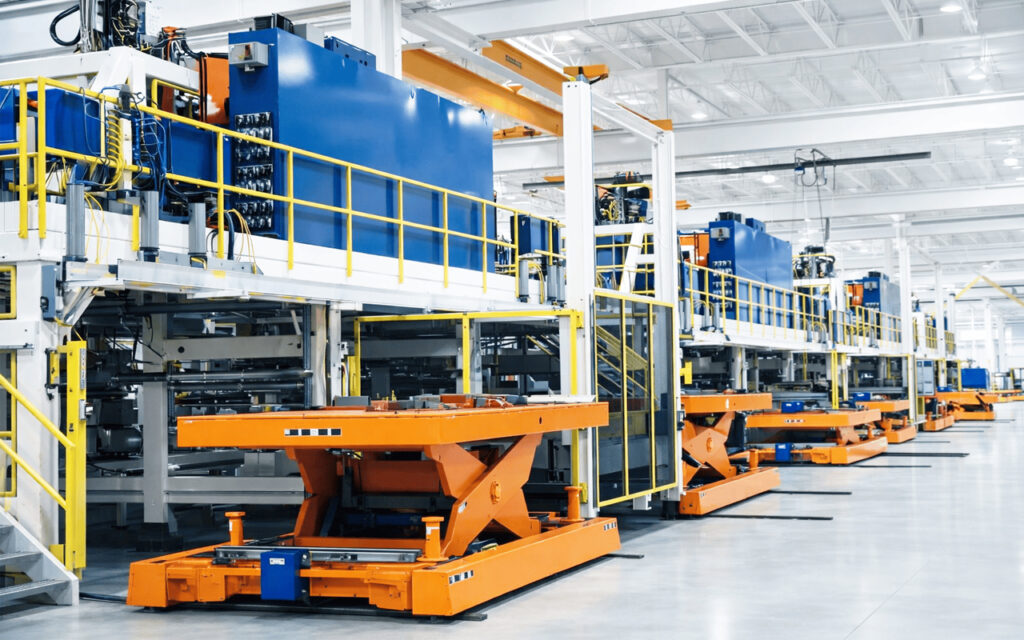
The lifting mechanism raises the pallet from the conveyor.
Depending on the application, it can use:
- Pneumatic cylinders
- Electric actuators
- Servo-driven mechanisms
- Motorized screw mechanisms
- Hydraulic systems
Pneumatic lifting is often suitable for relatively simple vertical movements. Meanwhile, servo-driven mechanisms can provide programmable positioning and better control of acceleration and deceleration.
The lifting mechanism should be selected according to pallet weight, fixture weight, lifting height, cycle time, and required positioning performance.
Locating Pins
Locating pins engage corresponding holes or reference features on the pallet.
They provide a repeatable mechanical reference for the pallet.
The number, diameter, geometry, and arrangement of locating pins depend on the required positioning accuracy and pallet design.
Locating Blocks
Locating blocks provide additional support and establish reference surfaces.
They are particularly useful when the pallet requires multiple points of support.
The locating system should constrain the pallet without creating unnecessary mechanical stress.
Pallet Support Structure
The support structure carries the pallet after it has been lifted from the conveyor.
It should provide adequate rigidity because external process forces may be transferred through the pallet and fixture.
For example, press-fitting or high-torque fastening can generate significant forces. For this reason, the support structure must be designed according to the actual process load rather than only the pallet weight.
Sensors
Sensors confirm the position of the pallet and lifting mechanism.
Typical sensors include:
- Pallet presence sensors
- Lift-up position sensors
- Lift-down position sensors
- Locating confirmation sensors
- Stopper position sensors
In addition, sensor feedback allows the PLC to prevent the assembly process from starting until the required positioning conditions have been confirmed.
How a Lift-and-Locate System Works
A typical operating cycle consists of several coordinated steps.
Step 1: Pallet Transportation
The pallet conveyor transports the pallet toward the workstation.
Sensors monitor the pallet position as it approaches the target station.
Step 2: Pallet Detection
When the pallet reaches the workstation, a sensor confirms its presence.
At this point, the PLC checks whether the workstation is ready for the next operation.
Step 3: Pallet Stopping
The stopper rises or activates to prevent the pallet from moving beyond the required position.
The conveyor may continue running for a short period or stop according to the system design.
Step 4: Pallet Lifting
The lift mechanism raises the pallet from the conveyor.
Once the pallet reaches the specified height, the locating mechanism engages the pallet’s reference points.
Step 5: Precision Locating
Locating pins and reference surfaces establish the final pallet position.
The system may use position sensors to confirm that the pallet has been fully located.
Step 6: Process Confirmation
The PLC verifies the required conditions.
For example:
- Pallet present
- Lift position confirmed
- Locating position confirmed
- Safety circuit ready
- Assembly equipment ready
Only after these conditions are satisfied should the production process begin.
Step 7: Assembly or Inspection
The production equipment performs the required operation.
This could be robotic assembly, torque tightening, press fitting, vision inspection, leak testing, or another automated process.
Step 8: Pallet Release
After the process result is confirmed, the locating mechanism disengages.
The lift then lowers the pallet back onto the conveyor.
Step 9: Conveyor Restart
The stopper releases the pallet, and the conveyor transports it to the next workstation.
As a result, the same pallet can continue through the production line without manual repositioning.
Lift-and-Locate Systems for Robotic Assembly
Robotic assembly requires predictable product positioning.
A robot normally operates within a defined coordinate system. Therefore, the product and fixture must be located within an acceptable tolerance before the robot begins its operation.
For example, a robotic station may perform:
- Component insertion
- Bolt installation
- Connector assembly
- Seal installation
- Press fitting
- Part loading
- Adhesive application
The pallet conveyor brings the product into the workstation. Afterward, the lift-and-locate system establishes the required position.
The robot can then perform its programmed movement relative to the known product reference.
This arrangement helps separate transportation accuracy from process positioning accuracy.
Lift-and-Locate Systems for Torque Tightening
Automated torque tightening is another common application.
A tightening system may need to reach bolts or fasteners at specific coordinates.
If the pallet moves slightly during tightening, the tool position relative to the fastener can change.
For this reason, the pallet should be mechanically secured before tightening begins.
A typical sequence is:
Pallet Arrival → Stopper → Lift-and-Locate → Tightening → Result Confirmation → Pallet Release
The tightening controller can communicate the process result to the PLC.
If the required tightening result is not achieved, the control system can prevent the pallet from continuing automatically, depending on the production strategy.
Lift-and-Locate Systems for Press-Fitting
Press-fitting requires particular attention to mechanical rigidity.
During pressing, significant force can be transferred between the tooling and product.
Therefore, the pallet support structure and locating mechanism must be designed to withstand the process load.
The conveyor itself should not necessarily be expected to absorb the entire pressing force.
Instead, the lift-and-locate system can transfer the load through a rigid support structure into the machine frame.
This arrangement helps protect the conveyor and maintain the required product position.
Lift-and-Locate Systems for Vision Inspection
Vision inspection requires stable positioning because image quality and inspection results can be affected by changes in product orientation or camera distance.
The lift-and-locate system can place the product at a repeatable inspection position.
For example, a vision system may check:
- Component presence
- Component orientation
- Assembly completeness
- Connector position
- Fastener presence
- Marking
- Surface features
Once the pallet is accurately positioned, the vision system can receive a ready signal and begin the inspection.
This approach helps reduce variations caused by uncontrolled pallet movement.
Lift-and-Locate Systems for Leak Testing
Leak testing often requires the product to be accurately positioned relative to test interfaces.
The pallet brings the product to the test station. Then, the lift-and-locate mechanism establishes the required position.
A dedicated fixture can provide the sealing and connection interfaces required by the test equipment.
After the test is complete, the PLC receives the result.
If the result meets the defined criteria, the pallet can continue to the next process. Otherwise, the system can route the product for rework or additional inspection according to the customer’s production strategy.
Pallet and Fixture Design
The lift-and-locate system should be developed together with the pallet and fixture.
Important parameters include:
- Pallet dimensions
- Pallet weight
- Fixture weight
- Product center of gravity
- Locating hole position
- Reference surfaces
- Support points
- Required locating accuracy
- Process forces
For example, a pallet designed for a light assembly operation may not be suitable for a press-fitting application without additional structural support.
Therefore, pallet and fixture design should be finalized before the lift-and-locate mechanism is fully engineered.
Locating Accuracy and Repeatability
Accuracy and repeatability are related but should be considered separately.
Accuracy describes how closely the actual pallet position corresponds to the intended reference position.
Repeatability, meanwhile, describes how consistently the system returns to the same position over repeated cycles.
For automated assembly, repeatability is often particularly important because the robot or tool follows a programmed path.
The required positioning performance depends on the process.
A simple manual-assisted workstation may tolerate relatively large positioning variation, while robotic insertion or precision inspection may require much tighter control.
Pneumatic vs. Servo Lift-and-Locate Systems
Both pneumatic and servo-driven mechanisms can be used.
Pneumatic Systems
Pneumatic systems are often suitable when the lifting movement is relatively simple.
Advantages include:
- Simple structure
- Fast operation
- Easy maintenance
- Relatively low initial cost
However, pneumatic systems generally provide less programmable motion control than servo systems.
Servo-Driven Systems
Servo systems provide greater control over position, speed, and acceleration.
They are useful when:
- Precise movement is required
- Multiple positions are needed
- Motion profiles must be controlled
- Product variants require different positions
However, servo systems normally require more sophisticated control and may increase equipment cost.
The appropriate solution depends on the actual process rather than simply selecting the more advanced technology.
PLC Control and Interlocking
The PLC coordinates the lift-and-locate cycle with the surrounding production equipment.
A typical sequence may include:
- Pallet detected
- Stopper activated
- Conveyor stopped
- Lift activated
- Lift-up position confirmed
- Locating mechanism engaged
- Locate confirmation received
- Assembly equipment enabled
- Process completed
- Result received
- Locating mechanism released
- Lift lowered
- Lift-down position confirmed
- Stopper released
- Conveyor restarted
By using this sequence, the production equipment does not start before the pallet is correctly positioned.
Interlocking is particularly important when robots, presses, or automated tools operate within the workstation.
Sensors and Position Confirmation
Reliable sensor feedback is essential for automatic operation.
The control system may monitor:
- Pallet arrival
- Stopper position
- Lift-up position
- Lift-down position
- Locating pin position
- Pallet presence
- Workstation readiness
In addition, critical positioning conditions can be confirmed before process equipment is enabled.
For example, the PLC can require both the lift-up signal and pallet-located signal before sending an “assembly ready” command.
This approach provides an additional layer of process control.
Integration with Pallet Conveyors
The lift-and-locate system normally sits within a pallet conveyor.
A typical configuration is:
Pallet Conveyor → Stopper → Lift-and-Locate → Workstation → Conveyor
The conveyor transports the pallet until it reaches the station.
The stopper establishes the initial position. Then, the lift-and-locate system takes over the precision positioning function.
This division of responsibilities allows the conveyor to focus on transportation while the positioning unit focuses on process accuracy.
Integration with Pallet Handling Systems
The lift-and-locate system can also operate as part of a larger pallet handling system.
For example:
Pallet Destacker → Pallet Conveyor → Lift-and-Locate → Robotic Assembly → Inspection → Pallet Conveyor → Pallet Stacker
In this configuration, the destacker supplies pallets, conveyors transport them, and lift-and-locate units establish the required position at individual workstations.
Meanwhile, the stacker can collect empty pallets after the product has been removed.
This creates a complete pallet circulation system.
Lift-and-Locate for Heavy Automotive Components
Some automotive components require relatively high-capacity positioning equipment.
Examples include:
- Engine assemblies
- Transmission assemblies
- Axle assemblies
- Electric drive units
- Battery-related components
- Large chassis components
For these applications, the lift mechanism must be designed according to the combined mass of the pallet, fixture, and product.
Furthermore, the center of gravity should be considered because an offset load can create additional mechanical stress.
The support structure must also maintain sufficient rigidity during processing.
Supporting Multiple Product Variants
A production line may manufacture multiple product variants on the same equipment.
In this situation, the lift-and-locate system may need to accommodate different pallet or fixture configurations.
Possible approaches include:
- Dedicated pallets
- Adjustable locating components
- Product-specific programs
- RFID-based identification
- Servo-controlled positioning
For example, an RFID system can identify the pallet before it reaches the workstation. The PLC can then select the corresponding positioning sequence.
The exact approach depends on the production strategy and required flexibility.
Safety Considerations
A lift-and-locate mechanism contains moving parts and may handle heavy products.
Consequently, appropriate safeguarding is required.
Depending on the machine configuration, safety functions may include:
- Safety fencing
- Interlocked doors
- Emergency stops
- Safety light curtains
- Safety scanners
- Mechanical travel limits
- Anti-drop protection
- Safety PLC
- Controlled restart
The safety design should consider the interaction between the positioning system and nearby robots, presses, tools, and operators.
A formal risk assessment should be performed before finalizing the machine safety architecture.
Maintenance Requirements
Regular maintenance helps maintain positioning accuracy and machine availability.
Important inspection points include:
- Locating pins
- Locating blocks
- Lifting mechanism
- Guide rails
- Bearings
- Cylinders
- Servo drives
- Sensors
- Fasteners
- Lubrication points
- Safety components
Wear on locating components can gradually affect positioning repeatability.
Therefore, preventive inspection should be included in the production line maintenance plan.
Where high cycle rates are involved, maintenance intervals should be based on actual operating cycles rather than calendar time alone.
Common Lift-and-Locate Problems
Several problems can occur when the system is not properly designed or maintained.
Pallet Does Not Reach the Correct Position
This may result from incorrect stopper positioning, pallet deformation, or worn locating components.
Lift Mechanism Cannot Handle the Load
If the actual product and fixture weight exceeds the design load, the mechanism may operate slowly or become unreliable.
Locating Pins Do Not Engage Correctly
Possible causes include pallet misalignment, damaged locating holes, incorrect tolerances, or mechanical wear.
Sensor Signals Are Unstable
Incorrect sensor positioning, contamination, wiring problems, or mechanical vibration can cause intermittent signals.
Product Moves During Processing
This can occur when the locating system does not provide sufficient support or when process forces exceed the original design assumptions.
For this reason, process loads should be considered during the initial equipment design.
How to Select a Lift-and-Locate System
Before selecting a lift-and-locate system, manufacturers should define the complete application.
Important parameters include:
- Product dimensions
- Product weight
- Pallet dimensions
- Pallet weight
- Fixture weight
- Center of gravity
- Required positioning accuracy
- Required repeatability
- Process force
- Cycle time
- Lifting height
- Conveyor type
- Control architecture
- Product variants
- Safety requirements
Once these parameters are defined, the appropriate lifting technology, locating structure, drive system, sensors, and control method can be selected.
Customized Lift-and-Locate Solutions from Hongbo Automation
Lift-and-locate equipment is normally application-specific because the pallet, fixture, product, and process requirements vary between automotive production lines.
Hongbo Automation develops customized positioning and material handling equipment for automotive assembly and component manufacturing applications.
A lift-and-locate system can be designed according to:
- Product dimensions and weight
- Pallet and fixture structure
- Required locating accuracy
- Process forces
- Production takt time
- Conveyor configuration
- Robot requirements
- Tightening requirements
- Inspection requirements
- PLC architecture
- Safety requirements
The system can also be integrated with pallet conveyors, pallet stackers, pallet destackers, transfer machines, robotic workstations, inspection systems, tightening equipment, and other automated production equipment.
As a result, the lift-and-locate unit can become part of a complete automotive assembly solution rather than functioning as an independent positioning machine.
Conclusion
Lift-and-locate systems provide the precision positioning required at many automated automotive assembly workstations.
While pallet conveyors are responsible for moving products between stations, the lift-and-locate mechanism establishes the final position required for assembly, inspection, tightening, pressing, testing, and other manufacturing operations.
Because different automotive applications have different loads, fixtures, process forces, and accuracy requirements, the positioning system should be engineered around the complete production process.
When properly integrated with pallet conveyors, stoppers, robots, automated tools, inspection equipment, PLC controls, and pallet identification systems, lift-and-locate equipment can provide a stable and repeatable foundation for automated production.
For automotive manufacturers and component suppliers, a customized lift-and-locate solution can improve process consistency while providing a reliable interface between pallet transportation and precision manufacturing operations.
Frequently Asked Questions
What is a lift-and-locate system?
A lift-and-locate system is an automated mechanism that raises a pallet from a conveyor and accurately positions it at a production workstation.
Why is lift-and-locate equipment used in automotive assembly?
It is used because many automated processes require more accurate and repeatable positioning than a standard conveyor can provide.
What is the difference between a stopper and a lift-and-locate system?
A stopper controls the pallet’s movement and establishes an initial position. In contrast, a lift-and-locate system raises and precisely locates the pallet for the production operation.
Can lift-and-locate systems handle heavy automotive assemblies?
Yes. The lifting mechanism and support structure can be engineered according to the combined weight of the product, fixture, and pallet.
Can a lift-and-locate system be used with robots?
Yes. It is commonly used to establish a repeatable product position before robotic assembly.
Can it be integrated with a pallet conveyor?
Yes. The lift-and-locate unit is normally installed directly within or alongside the pallet conveyor system.
Can pneumatic and servo systems both be used?
Yes. Pneumatic systems can be suitable for relatively simple lifting operations, while servo-driven systems provide greater control when programmable positioning or motion control is required.
Can Hongbo customize lift-and-locate equipment?
Yes. Hongbo Automation can design lift-and-locate systems according to product weight, pallet design, fixture requirements, positioning accuracy, process forces, cycle time, and production line layout.