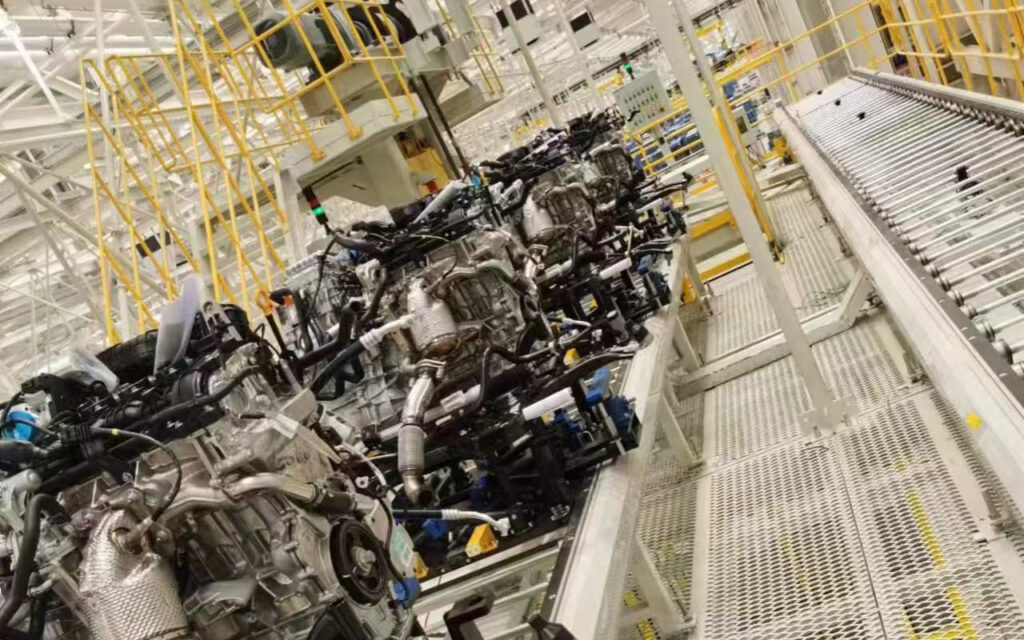
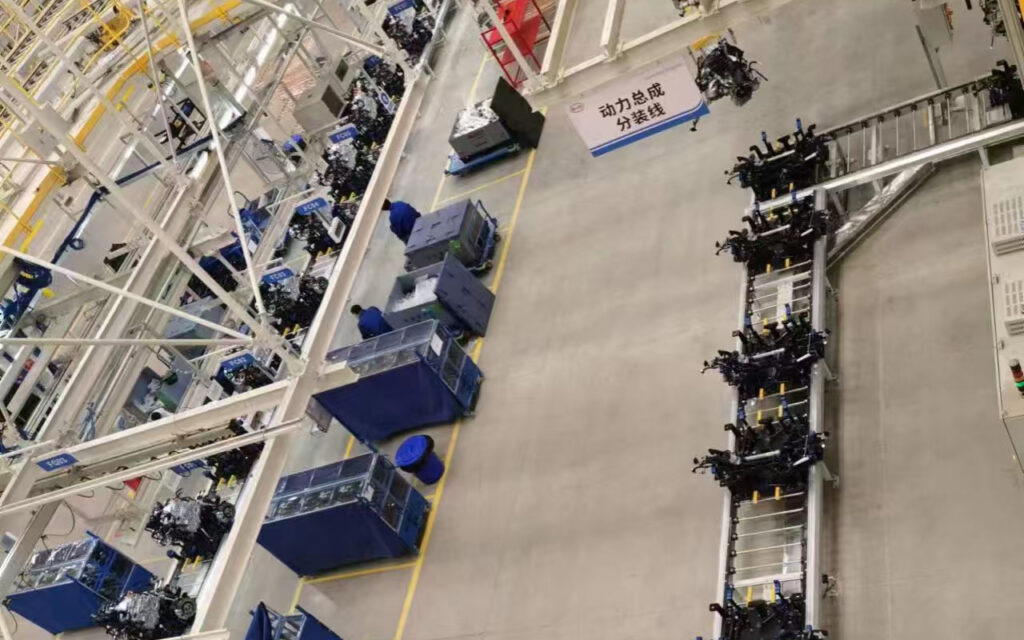
Pallet handling is an important part of automated automotive assembly lines, particularly when production relies on reusable pallets and dedicated fixtures. As pallets circulate between workstations, assembly equipment, inspection stations, and material handling systems, an efficient method is required to collect, stack, store, and redistribute empty pallets.
A pallet stacker system provides automated vertical handling of pallets, allowing multiple pallets to be stored in a compact area while maintaining controlled pallet flow. It is commonly integrated with pallet conveyors, transfer machines, vertical conveyors, and automated production line control systems.
For automotive manufacturers, the design of a pallet stacker is not simply a matter of lifting pallets. The system must account for pallet dimensions, payload, fixture geometry, stacking stability, cycle time, positioning accuracy, and communication with the overall production line.
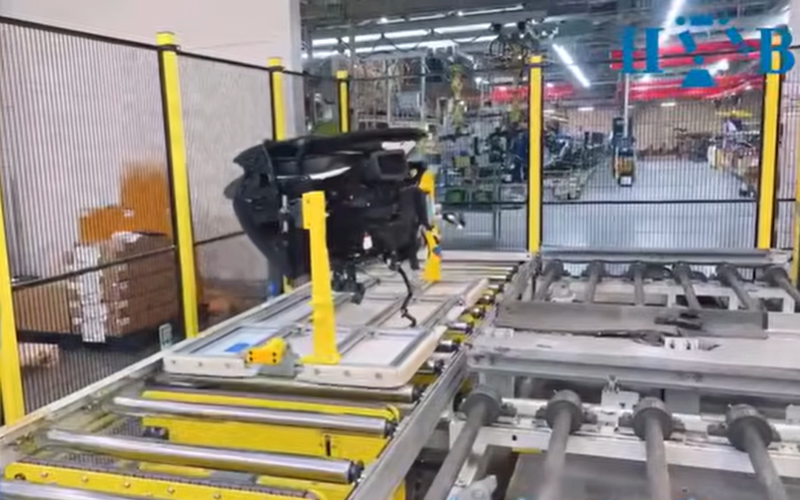
What Is a Pallet Stacker System?
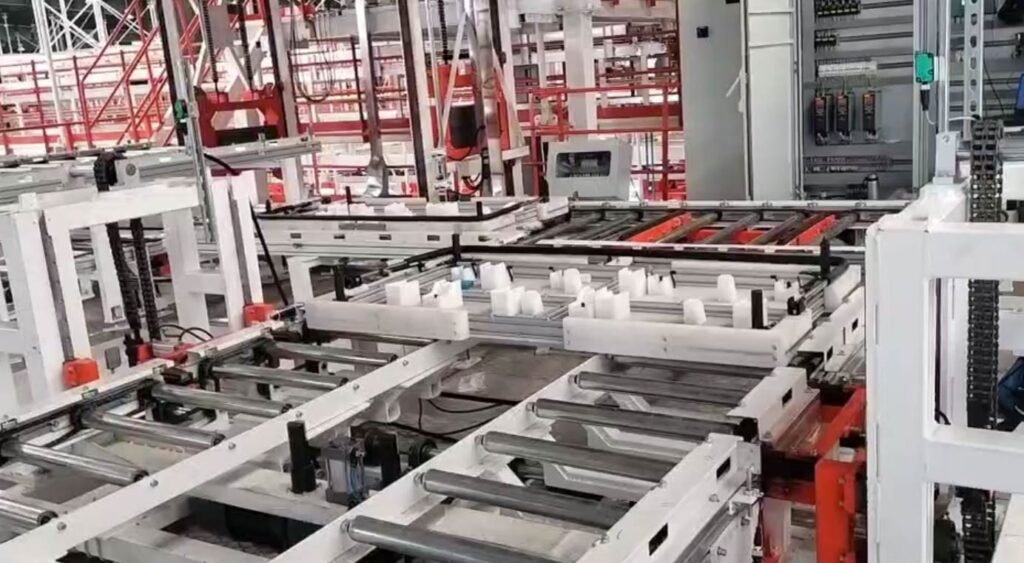
A pallet stacker is an automated material handling machine designed to collect individual pallets and arrange them into a vertical stack. Depending on the production line configuration, the equipment can also retrieve pallets from a stack and transfer them back to the conveyor system.
In automotive manufacturing, pallets normally carry components, subassemblies, or dedicated fixtures through multiple production processes. Once a pallet has completed its assigned operation, it may need to be removed from the production flow, accumulated, and returned when required.
The pallet stacker creates a controlled interface between horizontal pallet transportation and vertical pallet storage.
A typical system includes:
- Structural frame
- Lifting mechanism
- Pallet transfer mechanism
- Roller or chain conveyor
- Positioning and guiding components
- Sensors
- Pneumatic or electric actuators
- PLC control system
- Safety devices
- Communication interface
The exact configuration depends on the pallet dimensions, load capacity, required stack height, production cycle, and available installation space.
Pallet Stacker vs. Pallet Destacker, Dispenser and Buffer
These terms are sometimes used interchangeably, but they describe different functions within an automated material handling system.
A pallet stacker collects multiple pallets and forms a vertical stack. It is commonly used for empty pallet storage or pallet accumulation.
A pallet destacker performs the reverse operation by separating pallets from a stack and supplying them individually to a conveyor or workstation.
A pallet dispenser is generally designed to release individual pallets into a production flow. Depending on the machine design, a dispenser can incorporate destacking functions.
A pallet buffer provides temporary pallet storage to balance material flow between different production processes. A buffer can use horizontal or vertical storage depending on the available space and required capacity.
In some automotive production lines, one machine can combine several of these functions. For example, an automated pallet handling unit may receive empty pallets, stack them vertically, store them, and later separate them individually for production.
Applications of Pallet Stackers in Automotive Manufacturing
Pallet stackers are particularly useful on production lines where reusable pallets circulate continuously.
Empty Pallet Handling
After a workpiece is unloaded, the empty pallet can be transferred to a return conveyor. Instead of continuously occupying floor space, multiple empty pallets can be stacked vertically.
This provides a compact method for collecting pallets before they are returned to the production line.
Pallet Return Loops
Automotive assembly lines often use closed-loop pallet circulation.
A typical sequence may be:
Production workstation → unloading station → empty pallet conveyor → pallet stacker → pallet storage → pallet destacker → production line
The stacker and destacker therefore become part of the overall pallet circulation system rather than operating as independent machines.
Pallet Storage
Vertical pallet stacking can significantly reduce the floor area required for temporary pallet storage.
This is useful when a factory has limited space around the production line or when several pallet types need to be managed independently.
Production Line Feeding
A stack of empty pallets can be positioned close to an assembly line. When production requires a new pallet, the system releases one pallet and transfers it to the pallet conveyor.
This allows the production line to maintain a controlled supply without requiring manual pallet loading.
Fixture Circulation
In automotive component assembly, pallets may carry dedicated fixtures for engine components, transmission components, axles, steering systems, suspension components, or other assemblies.
After the workpiece is removed, the fixture pallet can be returned through the production line’s circulation system and prepared for the next cycle.
Main Types of Pallet Stacker Systems
Different pallet handling mechanisms can be selected according to pallet size, load, cycle time, and layout.
Lift-Type Pallet Stacker
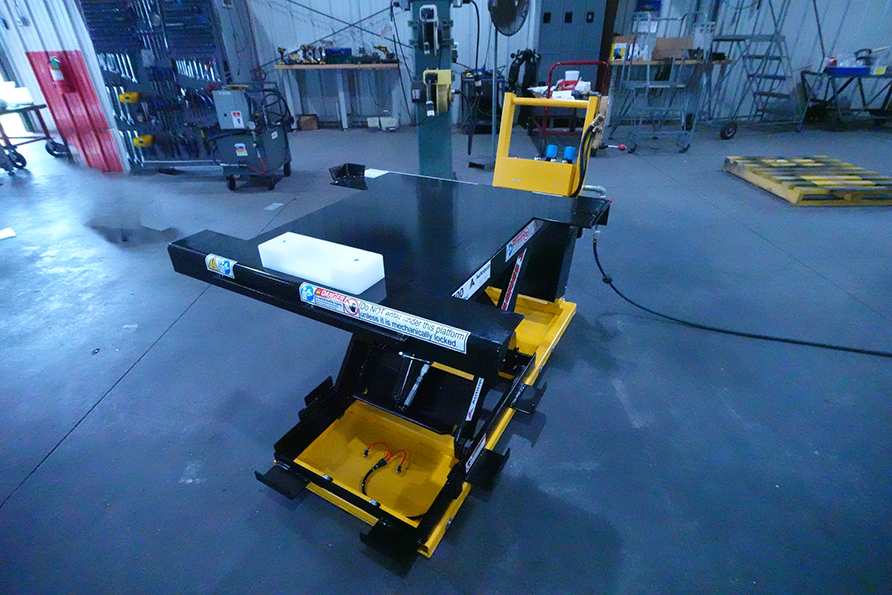
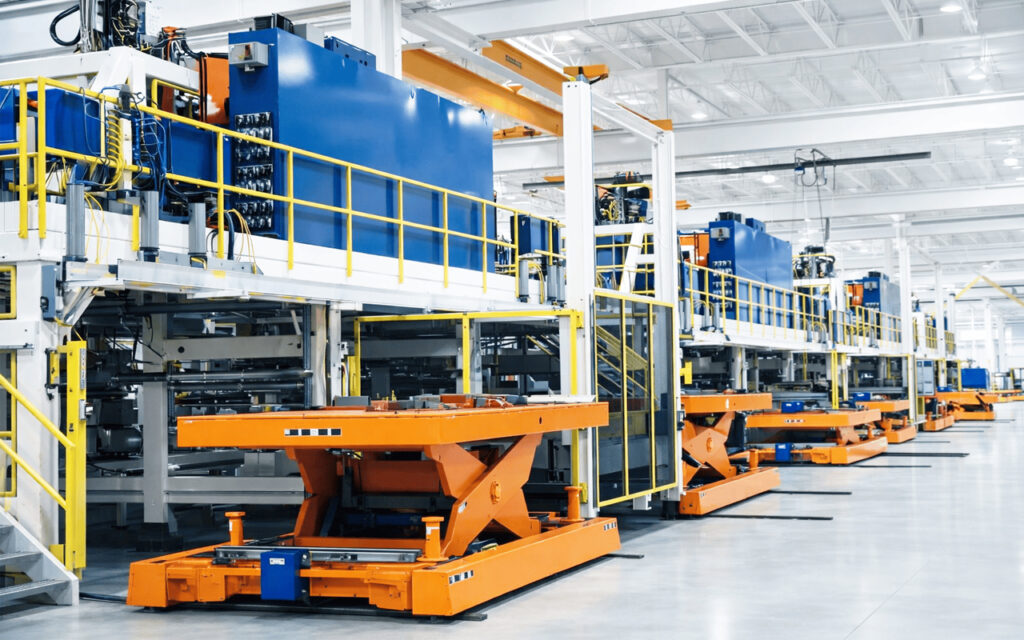
A lift-type stacker uses a vertical lifting mechanism to raise and lower pallets.
The lifting mechanism can be driven by:
- Servo motor
- Electric motor
- Hydraulic cylinder
- Pneumatic cylinder
Servo-driven systems are suitable when accurate positioning and programmable motion are required. Simpler systems can use pneumatic or mechanical lifting mechanisms when the operating requirements are more straightforward.
Chain or Roller Pallet Stacker
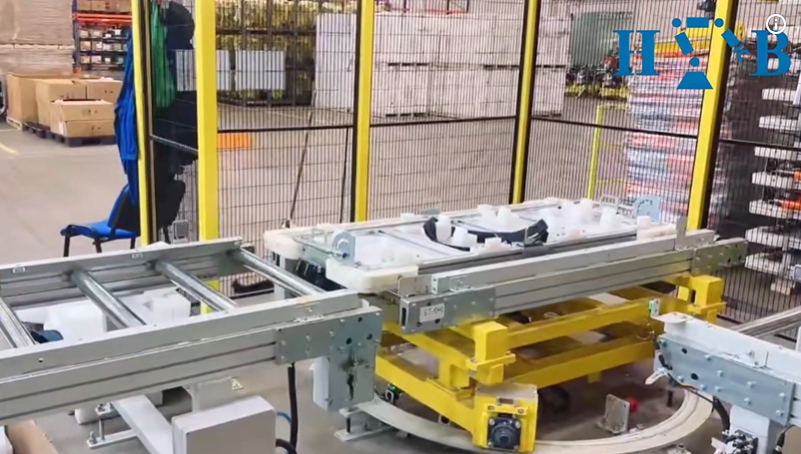
Chain and roller mechanisms are commonly used for transferring pallets into and out of the stacking position.
Roller conveyors are suitable for pallets with appropriate bottom surfaces and defined support areas. Chain conveyors can provide reliable handling for heavy-duty pallets and fixtures.
Fork or Gripper-Type Stacker
Fork mechanisms can support pallets from underneath and move them vertically.
Gripper-type designs can be used where the pallet structure provides suitable gripping locations.
The selection of the handling method depends heavily on pallet geometry. A mechanism that works well with a standard flat pallet may not be suitable for a pallet carrying a large automotive fixture.
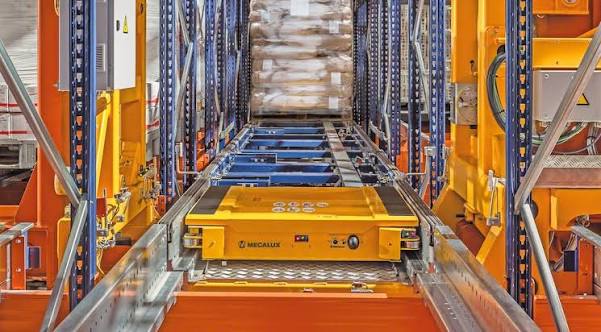
Vertical Pallet Stacker
A vertical stacker is designed specifically for space-efficient storage of multiple pallets.
The machine can be installed as an independent unit or integrated directly into a pallet conveyor system.
For automotive factories, vertical stacking is particularly useful when pallet circulation requires temporary storage without creating long horizontal conveyor sections.
Key Components of an Automotive Pallet Stacker
A reliable pallet stacker requires coordinated mechanical, electrical, and control components.
Structural Frame
The frame supports the lifting mechanism and pallet load. It must maintain sufficient rigidity under repeated dynamic loading.
For heavy automotive pallets, structural design should consider not only the static pallet weight but also acceleration, deceleration, eccentric loads, and repeated operating cycles.
Lifting Mechanism
The lifting mechanism determines how pallets move between different vertical positions.
Important parameters include:
- Maximum lifting load
- Lifting height
- Vertical speed
- Positioning accuracy
- Acceleration and deceleration
- Duty cycle
The mechanism should be selected based on actual pallet and fixture weight rather than nominal pallet weight alone.
Pallet Transfer Mechanism
The transfer mechanism moves pallets between the conveyor and stacking position.
Depending on the design, this can use rollers, chains, belts, forks, or other dedicated mechanisms.
The transfer mechanism must provide stable movement without damaging the pallet or fixture.
Positioning and Guiding System
Guide rails, locating pins, mechanical stops, and centering mechanisms ensure that the pallet reaches the correct position before stacking.
Accurate positioning is particularly important when the same pallet will later be transferred to an automated workstation.
Sensors
Sensors are used to confirm pallet presence, position, stack height, and machine status.
Typical devices include:
- Photoelectric sensors
- Proximity sensors
- Position sensors
- Limit switches
- Safety sensors
- Pallet identification systems
Sensor signals are processed by the PLC to control the operating sequence.
Pallet Design and Stacking Compatibility
The pallet stacker cannot be designed independently from the pallet.
The pallet structure should be evaluated before the machine is developed.
Important factors include pallet length and width, overall height, weight, bottom support points, guide surfaces, locating holes, and stacking geometry.
Pallet Dimensions
The machine must accommodate the actual pallet dimensions with appropriate mechanical clearance.
If multiple pallet sizes are used, the stacker may require adjustable guides, different programs, or separate storage positions.
Pallet Weight
The design load should include both the pallet and any fixture or component that may remain on the pallet during handling.
Where the stacker is intended only for empty pallets, the design load may be lower, but the maximum possible pallet condition should still be considered during equipment specification.
Pallet Flatness and Stability
Stacking requires stable contact between adjacent pallets.
Excessive deformation, damaged pallet edges, or inconsistent locating surfaces can cause unstable stacking and increase the risk of machine faults.
For this reason, pallet condition should be included in the material handling system design.
Pallet Stacker Operating Sequence
A typical automated pallet stacking cycle can include the following steps.
1. Pallet arrival
The empty pallet arrives at the stacker through the pallet conveyor.
2. Pallet detection
Sensors confirm that the pallet has entered the designated transfer position.
3. Positioning
The pallet is accurately positioned and mechanically located.
4. Lifting or transfer
The handling mechanism raises or transfers the pallet to the appropriate stacking level.
5. Stacking
The pallet is placed on top of the existing pallet stack.
6. Position confirmation
Sensors confirm that the pallet has reached the required position.
7. System reset
The lifting mechanism returns to the required standby position and waits for the next pallet.
For destacking operations, the sequence is reversed. The machine separates the upper pallet from the stack and transfers it to the outgoing conveyor.
Stack Height and Storage Capacity
Stack height is one of the main parameters when designing a pallet storage system.
The required capacity depends on factors such as:
- Number of pallets in circulation
- Production cycle time
- Pallet return rate
- Pallet consumption rate
- Buffer requirements
- Available installation height
- Maximum permitted lifting height
For example, if a production line returns empty pallets faster than they can be reused, the stacker needs sufficient capacity to prevent the return conveyor from becoming blocked.
Conversely, excessive storage capacity may increase equipment size and cost without providing a practical production benefit.
The stack height should therefore be determined from actual material flow requirements.
Cycle Time and Pallet Flow
Pallet stacker cycle time must be compatible with the production line.
If the production line requires a new pallet every 30 seconds, but the pallet handling system requires significantly longer to provide one, the stacker or destacker may become a bottleneck.
Cycle time should consider the complete operation rather than only the vertical lifting movement.
A complete cycle may include:
- Pallet detection
- Conveyor stopping
- Positioning
- Clamping
- Lifting
- Transfer
- Lowering
- Release
- Sensor confirmation
The machine should be designed with sufficient capacity to support the required production takt time.
Integration with Pallet Conveyor Systems
Pallet stackers normally operate as part of a larger material handling system.
A common configuration includes:
Pallet Conveyor → Transfer Machine → Pallet Stacker → Storage → Pallet Destacker → Pallet Conveyor
The interfaces between these machines are important because differences in conveyor height, pallet positioning, speed, and control logic can cause transfer problems.
Mechanical interfaces should therefore be defined during the system design stage rather than after individual machines have been completed.
Integration with Vertical Conveyors and Transfer Machines
In multi-level automotive production facilities, a pallet stacker may work together with vertical conveyors to move pallets between production levels.
Transfer machines can also be used to move pallets laterally between parallel conveyor lines.
This allows the pallet handling system to support more complex production layouts while minimizing manual intervention.
A properly designed system can coordinate:
- Horizontal pallet transport
- Vertical pallet movement
- Pallet stacking
- Pallet destacking
- Line transfer
- Empty pallet return
- Production line feeding
PLC Control and Pallet Tracking
The pallet stacker is normally controlled by a PLC integrated with the production line control architecture.
The PLC can monitor:
- Pallet presence
- Stack position
- Lift position
- Conveyor status
- Motor status
- Safety circuit status
- Machine faults
- Pallet identification
For more advanced production lines, RFID or barcode identification can be used to track individual pallets.
This enables the manufacturing system to associate a pallet with a specific fixture, product model, or production process.
When integrated with MES, pallet movement data can also contribute to production traceability and material flow management.
Safety Requirements
Because pallet stackers involve vertical movement and potentially heavy loads, safety must be considered as part of the equipment design.
Typical safety provisions include:
- Safety fencing
- Interlocked access doors
- Emergency stop buttons
- Safety light curtains where required
- Mechanical stops
- Overtravel protection
- Load detection
- Motor protection
- Safety PLC or safety control circuits
- Controlled restart procedures
The specific safety design should comply with the applicable machinery and workplace safety requirements in the target market.
Access to the stacking area should be prevented while hazardous movement is possible.
Maintenance of Pallet Stacker Systems
Preventive maintenance helps maintain stable pallet handling performance.
Key inspection points include the lifting mechanism, chains, rollers, bearings, guides, sensors, fasteners, lubrication points, and electrical components.
The maintenance schedule should reflect the actual operating cycle of the equipment.
For high-cycle automotive production lines, monitoring wear on mechanical transmission components is particularly important. Sensor alignment should also be checked periodically because small positioning errors can eventually lead to pallet transfer faults.
A maintenance-friendly design should provide reasonable access to inspection and replacement points without requiring extensive disassembly.
How to Select a Pallet Stacker for Automotive Production
When specifying a pallet stacker, manufacturers should evaluate the complete production requirement rather than selecting equipment based only on pallet dimensions.
Important selection criteria include:
Pallet Specifications
Define pallet length, width, height, weight, fixture configuration, locating points, and stacking method.
Required Capacity
Determine the number of pallets that must be stored and the required buffer duration.
Cycle Time
Calculate the required pallet handling frequency according to production takt time.
Available Space
Consider both floor area and available vertical height.
Integration Requirements
Confirm the interface with pallet conveyors, transfer machines, vertical conveyors, robots, PLC systems, RFID systems, and MES.
Product Variants
If multiple pallet types are used, determine whether the stacker requires automatic identification or mechanical adjustment.
Safety Requirements
Define access protection, emergency stop functions, safety interlocks, and applicable local regulations.
Customized Pallet Stacker Solutions from Hongbo Automation
For automotive production lines, pallet handling equipment is usually designed according to the specific pallet, fixture, production cycle, and factory layout rather than selected as a completely standard machine.
Hongbo Automation develops automated pallet handling equipment for integration into automotive assembly and component production lines.
A customized pallet stacker system can be designed around:
- Pallet dimensions and weight
- Dedicated automotive fixtures
- Required stacking capacity
- Production takt time
- Conveyor height and layout
- Vertical lifting requirements
- Pallet identification
- PLC and line control architecture
- MES communication
- Safety requirements
The stacker can also be integrated with pallet conveyors, transfer machines, vertical conveyors, assembly equipment, inspection stations, and automated material handling systems.
This approach allows the pallet handling system to become part of the complete production line rather than functioning as an isolated material handling machine.
Conclusion
Pallet stacker systems provide an efficient method for managing reusable pallets in automated automotive manufacturing. By storing pallets vertically, they can reduce floor-space requirements while supporting controlled pallet circulation between production processes.
The effectiveness of a pallet stacker depends on more than its lifting capacity. Pallet geometry, fixture weight, stack stability, cycle time, positioning accuracy, conveyor interfaces, control architecture, and safety requirements all need to be considered during system design.
For automotive assembly and component production lines, a properly engineered pallet stacker can provide reliable empty pallet handling, buffering, storage, and line feeding while supporting a higher level of production automation.
Frequently Asked Questions
What is a pallet stacker used for in automotive manufacturing?
A pallet stacker is used to collect and store multiple pallets vertically. It can be used for empty pallet return, pallet buffering, fixture circulation, and production line feeding.
What is the difference between a pallet stacker and a pallet destacker?
A pallet stacker combines individual pallets into a vertical stack, while a pallet destacker separates pallets from the stack and supplies them individually to a conveyor or workstation.
Can a pallet stacker handle heavy automotive fixtures?
Yes. The lifting and transfer mechanisms can be engineered according to the combined weight of the pallet and fixture. The structural frame, drive system, guides, and safety components must all be sized for the required load.
Can pallet stackers handle different pallet sizes?
They can, depending on the machine design. Multiple pallet sizes may require adjustable guides, different handling programs, identification systems, or separate stacking positions.
Can a pallet stacker be integrated with an MES system?
Yes. The PLC can exchange pallet status and identification information with higher-level production systems. RFID or barcode technology can also be used to improve pallet traceability.
How is pallet stacker capacity determined?
Capacity is determined by pallet circulation rate, production takt time, required buffer duration, available vertical space, and the number of pallets that need to be stored.
Can Hongbo customize pallet stacker equipment?
Yes. Pallet stacker systems can be designed according to pallet dimensions, load requirements, production cycle, factory layout, conveyor interfaces, control architecture, and other automotive production requirements.