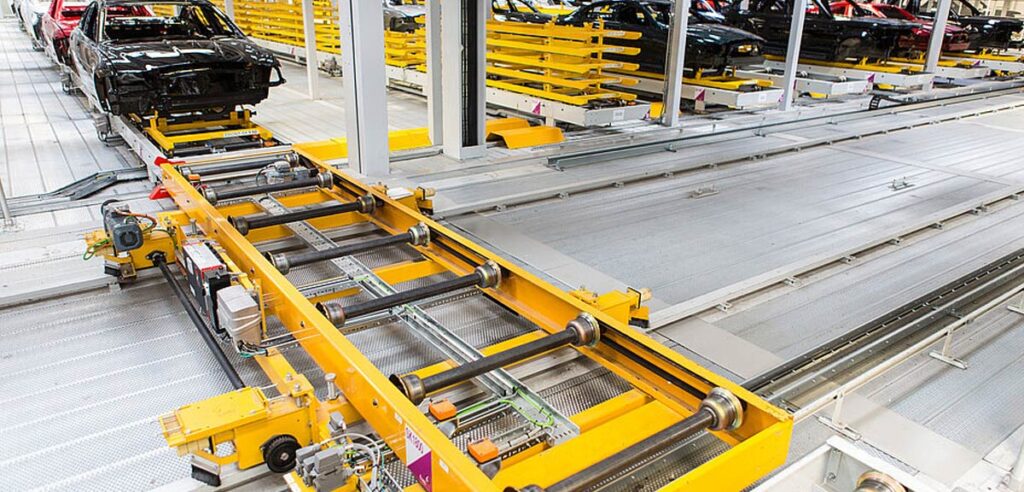
Pallet conveyor systems are widely used in automotive assembly lines where components must be transported, positioned, and processed with high repeatability. Unlike conventional conveyors that simply move products from one station to another, a pallet conveyor system can combine transportation, fixture support, precision positioning, buffering, and production tracking within a single material handling system.
For automotive manufacturers, this makes pallet conveyors particularly suitable for engine assembly, transmission assembly, powertrain production, EV component assembly, and other automated manufacturing applications.
A properly designed pallet conveyor system provides a stable interface between the product and the production line. It allows assembly stations, robots, tightening systems, inspection equipment, testing systems, and operators to work around a controlled and repeatable product position.
What Is a Pallet Conveyor System?
A pallet conveyor system uses reusable pallets or carrier fixtures to transport workpieces through different production stations. The product is normally mounted directly onto the pallet or secured through a dedicated fixture.
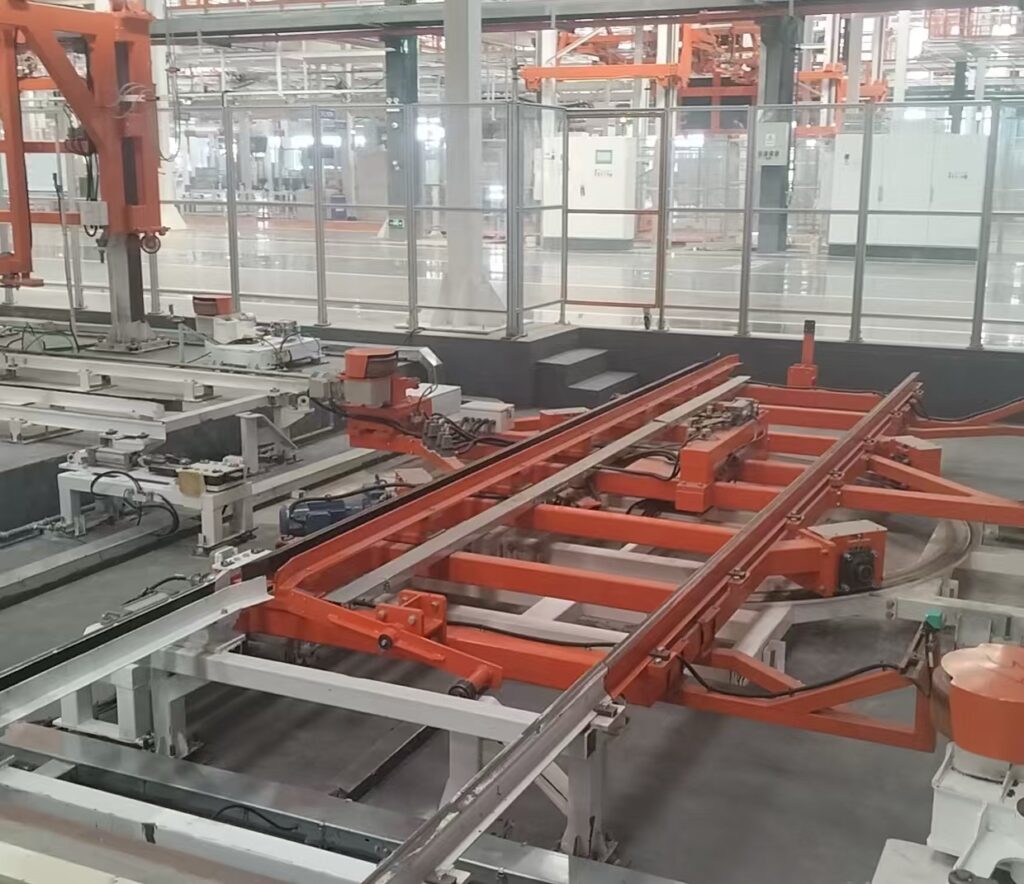
The pallet then moves through the production line while maintaining the relationship between the workpiece and its manufacturing fixture.
Depending on the application, the system may use roller conveyors, chain conveyors, belt-driven mechanisms, transfer units, lifting mechanisms, or combinations of these technologies.
A typical automotive pallet conveyor line may include:
- Conveyor sections
- Product pallets
- Dedicated fixtures
- Stop and release mechanisms
- Lift-and-locate units
- Transfer devices
- Sensors
- RFID or barcode tracking
- PLC control system
- Safety devices
- Operator workstations
- Robot interfaces
The pallet therefore becomes more than a transport carrier. It acts as an important part of the overall production system.
Why Automotive Assembly Lines Use Pallet Conveyors
Automotive assembly involves products with different dimensions, weights, configurations, and processing requirements. A conventional conveyor may not provide sufficient positioning accuracy or flexibility for these applications.
A pallet conveyor provides a controlled platform for the workpiece.
For example, during an engine assembly process, an engine block or partially assembled engine can remain on the same pallet while moving through multiple stations. At each station, the pallet can be stopped and precisely positioned before the assembly operation begins.
This approach offers several advantages.
Consistent Product Positioning
Precision positioning is critical when automated equipment needs to interact with a product.
Robots, tightening tools, pressing machines, inspection cameras, and testing equipment all require the workpiece to be located within a defined tolerance.
A pallet with a dedicated fixture provides a repeatable reference position.
Better Production Control
The pallet can carry information about the product being manufactured.
RFID tags, barcodes, or other identification methods can associate a pallet with a specific production order, product model, or serial number.
The PLC and MES system can then determine which operations should be performed at each station.
Flexible Product Handling
Automotive factories increasingly need to manufacture multiple product variants on the same production line.
A pallet conveyor system can be designed to accommodate different workpiece sizes and configurations through interchangeable fixtures or adjustable locating mechanisms.
This makes the system suitable for mixed-model production.
Main Components of an Automotive Pallet Conveyor
The configuration of a pallet conveyor depends on the product and manufacturing process. However, several components are commonly found in automotive applications.
Conveyor Structure
The conveyor structure provides the mechanical foundation of the system.
It must support the pallets, workpieces, fixtures, motors, sensors, and other equipment while maintaining sufficient structural rigidity.
For heavy automotive components, the frame and support structure must be designed according to the actual payload and dynamic loads.
Pallets and Carrier Fixtures
The pallet is one of the most important components of the system.
Its design directly affects transportation stability, positioning accuracy, product protection, and production flexibility.
A pallet may incorporate:
- Locating pins
- Clamping mechanisms
- Adjustable supports
- Product-specific fixtures
- RFID tags
- Barcode labels
- Electrical interfaces
- Pneumatic interfaces
The fixture should hold the product securely while allowing operators and automated equipment sufficient access to the required assembly areas.
Drive System
The drive system provides the force required to move the pallet.
Depending on the application, manufacturers may use:
- Roller drives
- Chain drives
- Belt drives
- Motorized rollers
- Servo-driven transfer mechanisms
The appropriate drive method depends on pallet weight, conveyor length, cycle time, positioning requirements, and environmental conditions.
Stopper and Positioning Mechanism
A stopper controls pallet movement and establishes the correct location for processing.
However, stopping the pallet is not always sufficient for precision assembly.
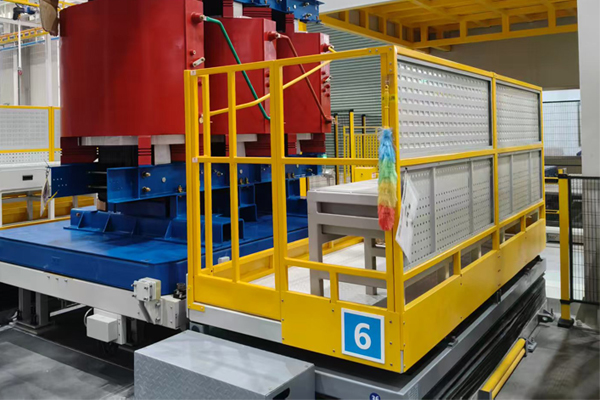
For applications involving automated tightening, pressing, inspection, or machining, a lift-and-locate mechanism can raise the pallet slightly from the conveyor and position it against precision locating elements.
This separates the positioning function from the transportation function.
Lift-and-Locate Positioning
Lift-and-locate technology is particularly important in automated automotive assembly.
The conveyor transports the pallet to the workstation. Once the pallet reaches the required position, a stopper first controls its movement.
A locating mechanism then raises or engages the pallet and establishes a precise reference position.
This process provides a stable platform for the production operation.
For example, a torque tightening station may require the component to remain within a specified positional tolerance. If the pallet continues to rest on the moving conveyor, small mechanical variations may affect the tightening operation.
With a lift-and-locate unit, the pallet can be mechanically isolated from the conveyor during processing.
This improves repeatability and provides a more reliable interface for automated equipment.
Pallet Conveyor Applications in Automotive Manufacturing
Pallet conveyor systems can be used across many automotive production processes.
Engine Assembly
Engine assembly lines commonly require multiple assembly operations, including component installation, fastening, fluid-related operations, inspection, and testing.
An engine assembly pallet can support the engine throughout the process while allowing the workpiece to be positioned at different stations.
The pallet conveyor can be integrated with:
- Robotic assembly
- Torque tightening
- Press-fitting
- Vision inspection
- Leak testing
- Fluid filling
- End-of-line testing
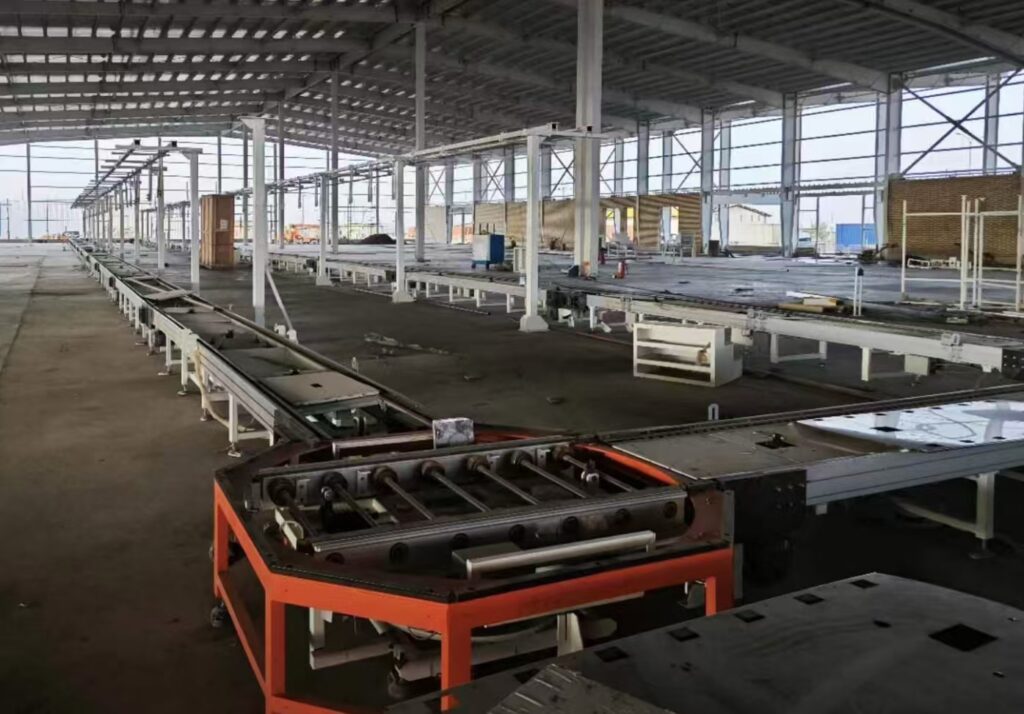
Transmission Assembly
Transmission components often require controlled handling and accurate positioning.
A pallet conveyor can transport the transmission housing or partially assembled transmission between stations while maintaining a defined fixture reference.
This is particularly useful for automated fastening, bearing installation, pressing, inspection, and testing processes.
Powertrain Assembly
Powertrain production often combines several different manufacturing operations within a relatively compact production area.
Pallet conveyor systems can provide the material handling infrastructure connecting individual stations.
The same pallet may travel through assembly, tightening, inspection, testing, and other processes while the production system records the processing history.
EV Component Assembly
Electric vehicle manufacturing has introduced new requirements for automated material handling.
Electric drive units, battery-related components, motors, reducers, and other EV assemblies can require controlled transportation and positioning.
Depending on the product, pallet conveyors can be designed for higher payloads, specialized fixtures, electrical interfaces, and automated identification.
Pallet Design for Automotive Applications
Pallet design should begin with the product rather than the conveyor.
The engineering team should first understand the dimensions, weight, center of gravity, locating surfaces, clamping requirements, and processing forces of the workpiece.
Important pallet design parameters include:
Payload
The pallet must support the complete product and fixture assembly.
The design should consider not only static weight but also acceleration, deceleration, transfer operations, lifting, and potential impact loads.
Product Dimensions
The pallet must provide adequate support for the product while maintaining compatibility with the conveyor width and workstation layout.
Center of Gravity
An improperly positioned center of gravity can affect pallet stability during transportation and lifting.
This is especially important for tall or asymmetric automotive components.
Locating Accuracy
The pallet should provide repeatable locating references for automated processes.
Precision locating pins, bushings, blocks, or other mechanical references may be used depending on the application.
Fixture Flexibility
For multi-model production, the fixture may need adjustable or interchangeable locating elements.
This allows different product variants to share the same conveyor infrastructure.
Pallet Tracking and Production Traceability
Modern pallet conveyor systems can be integrated with production tracking systems.
An RFID tag or barcode can provide a unique identification number for each pallet.
When the pallet enters a workstation, the control system can identify the product and retrieve its production information.
For example, the system may determine:
- Product model
- Product serial number
- Production order
- Current process
- Required tightening parameters
- Inspection results
- Previous process status
- Testing results
This creates a connection between physical material flow and digital production management.
When integrated with PLC and MES systems, the pallet conveyor becomes part of the factory’s overall traceability architecture rather than simply a mechanical transport system.
Multi-Model Production with Pallet Conveyors
Automotive manufacturers increasingly need to produce different product variants on the same production line.
A pallet conveyor can support this requirement through product identification and flexible fixtures.
For example, one production line may process several engine variants.
The pallet identification system determines which engine is being processed, while the PLC or MES system provides the corresponding process parameters to the workstation.
A tightening station may therefore automatically select different torque programs according to the product model.
This reduces manual intervention and helps prevent incorrect process parameters from being applied to the wrong product.
Integration with Robots and Assembly Equipment
One of the major advantages of a pallet conveyor is its ability to provide a standardized interface between material handling and production equipment.
A typical automated workstation may include:
Pallet Conveyor → Positioning Unit → Robot → Assembly Tool → Inspection System → Release
The conveyor brings the product to the workstation.
The positioning mechanism establishes the reference position.
The robot or automated machine performs the required operation.
Inspection equipment verifies the process or product condition.
Once the operation is completed, the pallet is released to the next station.
This modular architecture allows individual workstations to be designed and modified without completely redesigning the material handling system.
Pallet Conveyor Control System
The control architecture normally includes a PLC, sensors, motor control components, safety devices, and communication interfaces.
Typical sensors may detect:
- Pallet presence
- Pallet position
- Product presence
- Stopper position
- Lift unit position
- Fixture status
- Safety conditions
The PLC coordinates conveyor movement and workstation operations.
For a more advanced system, the PLC can communicate with robots, torque controllers, vision systems, leak testers, MES platforms, and other production equipment.
This allows the conveyor system to become part of an integrated automated production line.
Conveyor Buffer and Line Balancing
Pallet conveyors can also provide temporary product buffering between workstations.
If one workstation has a longer cycle time than another, a buffer zone can help prevent the entire production line from stopping immediately.
However, buffer capacity should be designed carefully.
Too little buffer capacity may not absorb normal cycle-time variation, while excessive buffering can increase equipment footprint and work-in-process inventory.
Line balancing should therefore be considered together with conveyor layout, station cycle time, takt time, and production volume.
Safety Considerations
Automotive pallet conveyor systems often operate around operators, robots, and automated machinery.
Safety design should therefore be incorporated into the system from the beginning.
Depending on the application, safety measures may include:
- Emergency stop devices
- Safety light curtains
- Safety doors
- Safety scanners
- Guarding
- Safety PLCs
- Mechanical anti-drop mechanisms
- Safe lifting mechanisms
- Controlled restart procedures
The specific safety architecture should be designed according to the machine configuration, operating environment, applicable standards, and customer requirements.
Maintenance of Pallet Conveyor Systems
Reliable pallet conveyor operation depends on both mechanical and electrical maintenance.
Important maintenance items include:
- Conveyor drive components
- Chains or belts
- Rollers
- Bearings
- Stoppers
- Positioning mechanisms
- Sensors
- Pallet fixtures
- Locating pins
- Fasteners
- Motor and gearbox components
Pallet fixtures require particular attention because wear or deformation can gradually reduce positioning accuracy.
A preventive maintenance program should define inspection intervals, lubrication requirements, wear limits, and replacement procedures.
How to Select a Pallet Conveyor System
Selecting the correct pallet conveyor requires more than choosing a conveyor width and motor size.
The complete production process should be considered.
Important questions include:
- What is the product weight?
- What are the product dimensions?
- What is the required takt time?
- How many product variants will be produced?
- What positioning accuracy is required?
- Will robots operate at the workstation?
- Will torque tightening or pressing be required?
- Is product traceability required?
- Will RFID or barcode identification be used?
- What level of PLC and MES integration is required?
- How much buffering is necessary?
- What are the required safety functions?
These parameters determine the mechanical configuration, pallet design, drive system, positioning method, control architecture, and overall conveyor layout.
Custom Pallet Conveyor Systems for Automotive Production
There is no single pallet conveyor configuration suitable for every automotive production application.
An engine assembly line may require heavy-duty pallets and high positioning accuracy.
A smaller automotive component assembly line may prioritize compact dimensions and high-speed transfer.
An EV component line may require specialized fixtures, higher payload capacity, or additional traceability functions.
For this reason, the conveyor should be engineered around the product and process requirements.
A custom pallet conveyor system may include:
- Product-specific pallets
- Dedicated fixtures
- Lift-and-locate stations
- Automatic transfer units
- Pallet identification
- RFID tracking
- Robotic workstation interfaces
- Torque tool integration
- Press-fitting equipment
- Vision inspection
- Leak testing
- PLC control
- MES communication
The objective is not simply to move products. The objective is to create a reliable material handling platform for the complete manufacturing process.
Hongbo Pallet Conveyor Solutions
Hongbo Automation designs and integrates conveyor equipment for automotive production applications, including pallet conveyor systems used for automated assembly and material handling.
The system can be engineered according to the customer’s product, production capacity, workstation layout, and automation requirements.
Hongbo’s conveyor solutions can be integrated with robotic systems, assembly equipment, testing equipment, PLC control, and production traceability systems.
For automotive manufacturers and component suppliers, this approach allows the pallet conveyor to be developed as part of the complete production line rather than as an isolated material handling machine.
The final system can be configured around specific requirements such as pallet dimensions, payload, takt time, positioning accuracy, product variants, workstation configuration, and factory layout.
Conclusion
A pallet conveyor system is an important material handling solution for modern automotive assembly lines.
Its value extends beyond product transportation. By combining pallets, fixtures, positioning mechanisms, identification systems, automation controls, and workstation interfaces, the system provides a controlled platform for automated manufacturing.
For applications such as engine assembly, transmission assembly, powertrain production, and EV component manufacturing, the right pallet conveyor design can improve positioning accuracy, production flexibility, traceability, and integration with automated equipment.
The most effective solution is therefore one designed around the product and manufacturing process from the beginning.
Frequently Asked Questions
What is a pallet conveyor system?
A pallet conveyor system transports products using reusable pallets or carrier fixtures. It is commonly used when products require controlled transportation, repeatable positioning, and integration with automated assembly equipment.
Why are pallet conveyors used in automotive assembly?
Pallet conveyors provide stable product support, accurate positioning, flexible product handling, and easier integration with robots, tightening systems, inspection equipment, and production tracking systems.
Can one pallet conveyor handle multiple automotive products?
Yes. With appropriately designed fixtures, product identification, and control logic, one pallet conveyor line can support multiple product variants.
What is a lift-and-locate unit?
A lift-and-locate unit temporarily separates the pallet from the conveyor and positions it against precision locating elements. This provides a stable and repeatable reference for automated assembly operations.
Can pallet conveyors be connected to MES?
Yes. With appropriate PLC and communication architecture, pallet identification and workstation process information can be exchanged with an MES system to support production traceability.
Can Hongbo customize pallet conveyor systems?
Yes. Pallet dimensions, fixtures, conveyor layout, positioning mechanisms, transfer units, controls, tracking systems, and workstation interfaces can be designed according to specific automotive production requirements.