Automotive Conveyor System Design: Types, Integration, and Engineering Considerations
Introduction to Automotive Conveyor Systems
In modern automotive manufacturing, the Conveyor Systems is not merely a transportation mechanism but a fundamental component of the entire production architecture. An automotive conveyor system connects individual assembly stations, establishes continuous production flow, and directly influences line efficiency, product quality, and manufacturing traceability. For vehicle manufacturers and component suppliers, the selection and design of conveyor technology must be aligned with production takt time, product characteristics, and the overall automation strategy.
This article provides a technical overview of automotive conveyor systems, examining equipment types, system architecture, integration with assembly and testing processes, and the engineering factors that determine successful implementation.
What Is an Automotive Conveyor System?
An automotive conveyor system is a material handling solution designed to transport vehicles, components, assemblies, pallets, or production carriers between manufacturing processes. In an automotive production environment, these systems serve as the physical backbone that links assembly stations, inspection points, testing equipment, and buffer areas into a coordinated manufacturing sequence.
The appropriate conveyor technology depends on multiple factors, including product type, load requirements, production process, factory layout, takt time, positioning accuracy, and the automation architecture of the facility. A conveyor system may be engineered as part of a complete Automotive Assembly Line or as an independent material handling solution supporting specific production operations.
Main Types of Conveyor Systems in Automotive Manufacturing
Automotive manufacturing facilities utilize several conveyor technologies depending on the application. Each system type offers distinct characteristics suited to particular production requirements.
Pallet Conveyor Systems
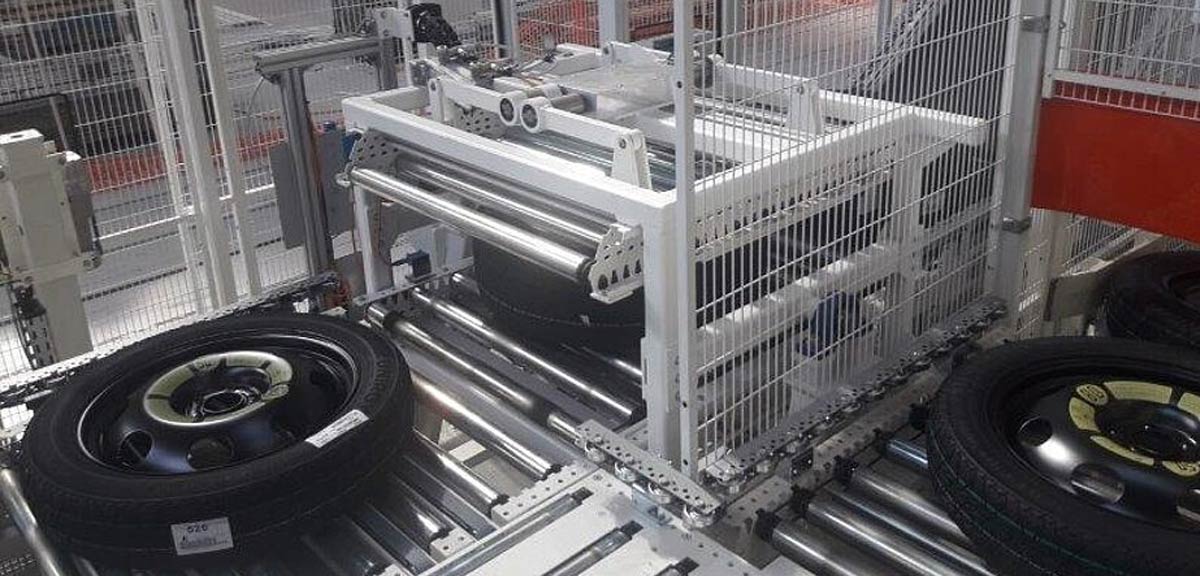
Pallet conveyor systems transport products using dedicated pallets or production carriers. These systems provide controlled product positioning, repeatable transportation, fixture integration, and station-to-station movement. Pallet-based systems are particularly suitable for assembly processes where products must be accurately positioned at multiple workstations. The pallet maintains product orientation throughout the production sequence and can support product identification and traceability functions.
Chain and Roller Conveyors
Chain conveyors use chains to transport products, pallets, or heavy components. They are commonly applied in automotive assembly operations, pallet transportation, and material handling where robust load-carrying capacity is required. Chain conveyor design must consider product weight, pallet structure, conveyor layout, required transportation rate, and drive system configuration.
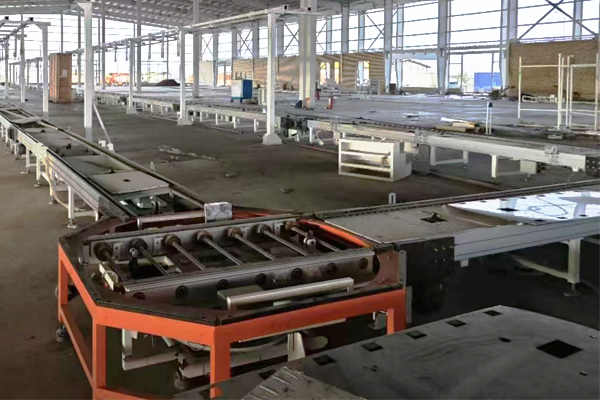
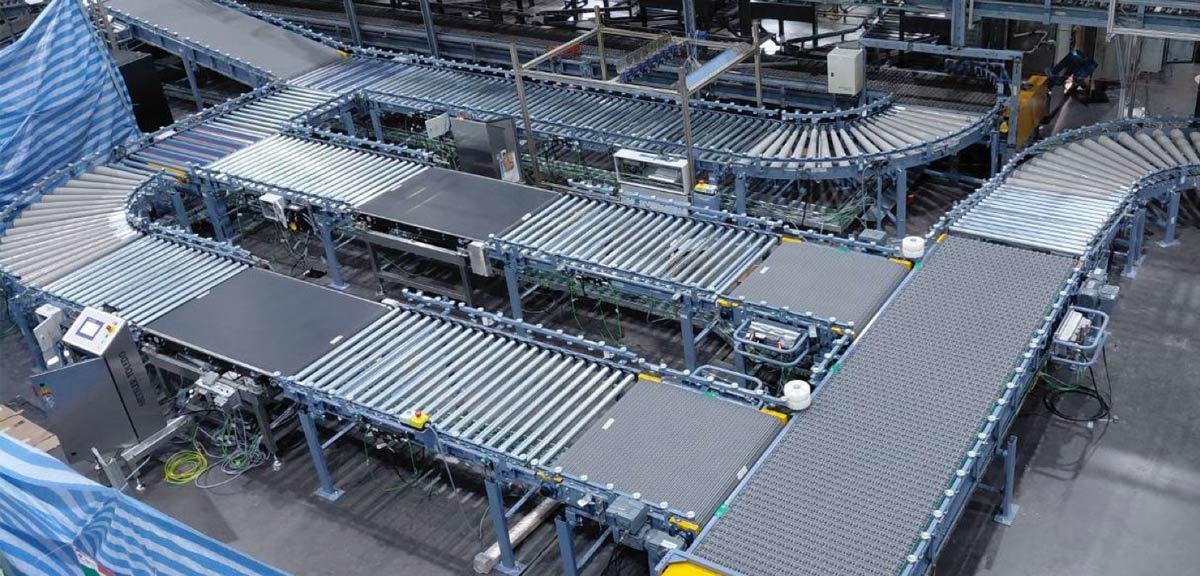
Roller conveyors use rotating rollers to transport products or carriers and are frequently used for pallet transportation, component transfer, buffer areas, and production logistics. The configuration of roller conveyors can be adapted to the product dimensions and factory layout requirements.
Slat Conveyors and Transfer Systems
Slat conveyors use a continuous chain-driven slat surface to transport products, making them suitable for vehicle body transportation, automotive assembly, and component handling. Selection of a slat conveyor should account for product dimensions, weight, surface requirements, transportation direction, and the production environment.
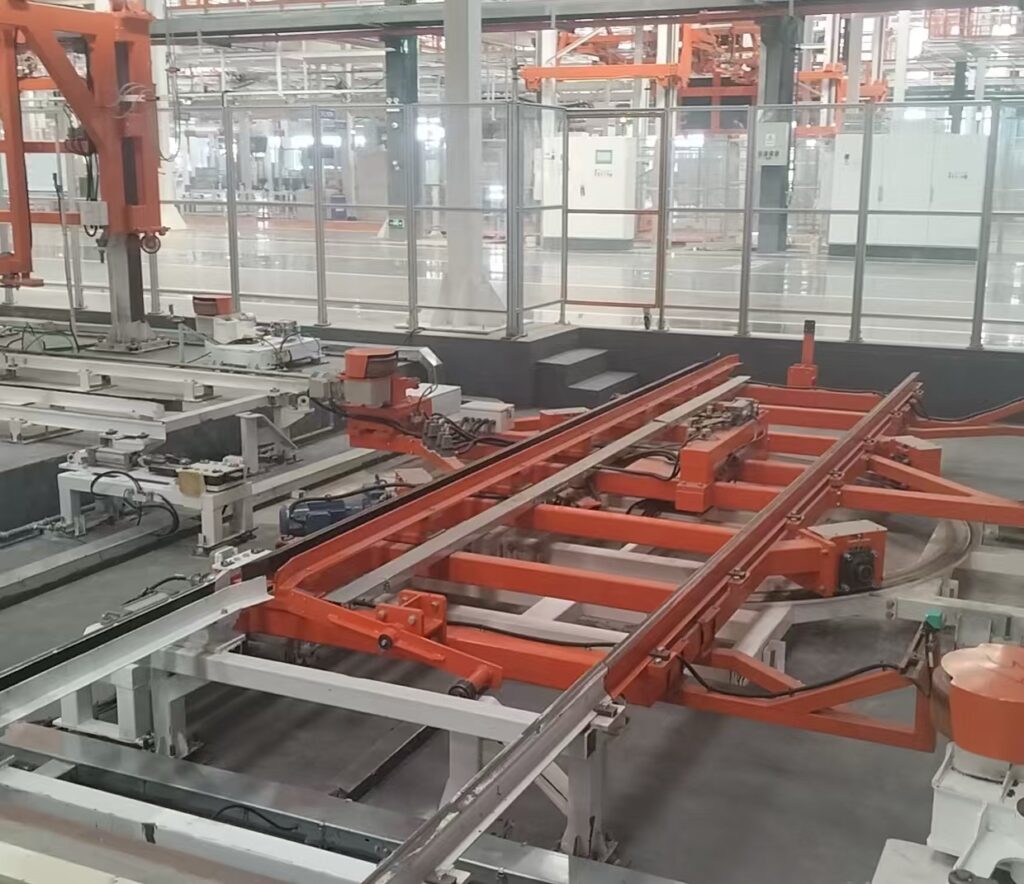
Transfer machines and cross transfer systems move products between different conveyor paths or production positions. These systems enable cross-line transfer, station transfer, parallel line transfer, and product routing. Transfer equipment must be coordinated with conveyor control systems and station sequences to ensure synchronized production flow.
Vertical Conveyors and Lifting Platforms
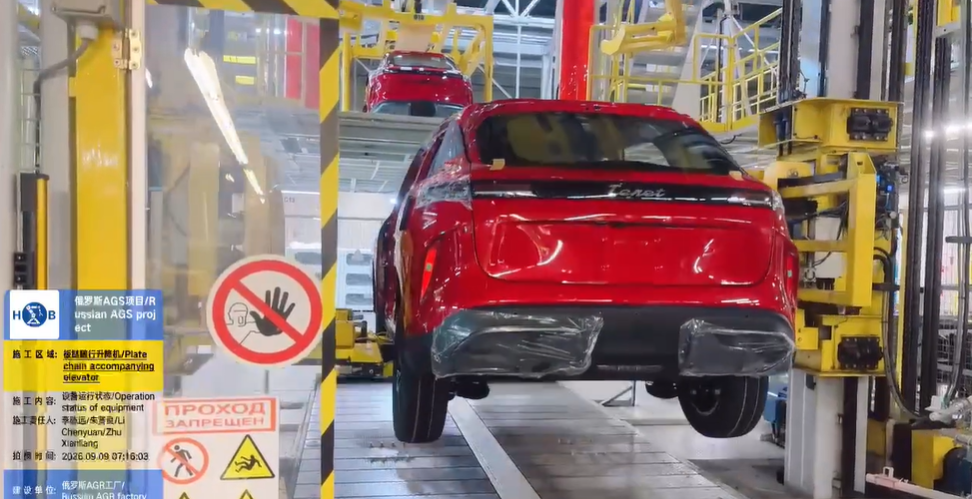
Vertical conveyors move products between different floor levels, supporting multi-level production, material storage, and factory logistics. Design considerations include product dimensions, load, vertical travel distance, safety requirements, and integration with horizontal conveyor systems.
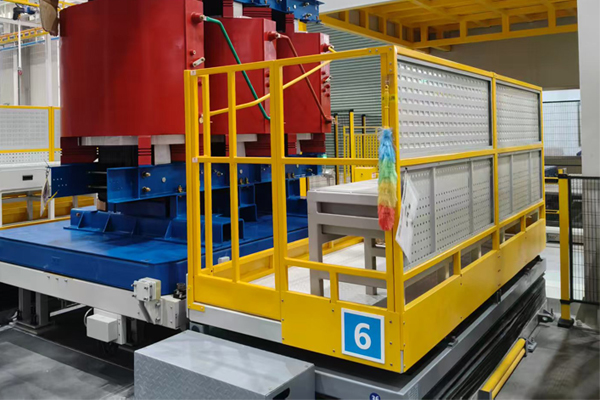
Lifting platforms provide vertical product movement, operator access, and assembly positioning. They must be designed according to product load, travel requirements, safety standards, and the specific production process.
Conveyor System Architecture and Control
A complete automotive conveyor system comprises mechanical equipment, drive units, motors, gearboxes, sensors, positioning devices, pallets, fixtures, transfer systems, lifting equipment, and safety devices. The control architecture typically includes PLC control, HMI interfaces, production identification systems, and MES integration.
PLC Control and Sensor Integration
PLC control is the standard approach for managing automated conveyor systems. PLC functions include conveyor start and stop operations, product detection, pallet detection, position control, transfer sequencing, station communication, safety interlocks, fault monitoring, and production routing. The control architecture should be designed according to the complete production line rather than individual conveyor sections.
Sensors provide critical information about conveyor and production status. Common sensor applications include product presence detection, pallet detection, position verification, transfer position confirmation, safety detection, and equipment status monitoring. Sensor selection should consider the production environment and specific detection requirements.
Product Positioning and Pallet Integration
Positioning accuracy is essential when products must be assembled at fixed workstations. Positioning systems may include mechanical stops, locating pins, clamping mechanisms, pallet positioning devices, and sensor-based position detection. The positioning method is selected according to the assembly process and required accuracy.
Production pallets transport products while maintaining orientation and position. Fixtures can be mounted on or integrated with pallets to support product positioning, assembly operations, inspection, testing, and product identification. Pallet design must account for product geometry, weight, center of gravity, fixture requirements, and handling methods.
Engineering Considerations for Conveyor System Design
Successful conveyor system implementation requires careful evaluation of production requirements and engineering constraints. The conveyor system should not be designed independently from the assembly stations it serves.
Takt Time, Cycle Time, and Line Balancing
Production takt time represents the required production rate needed to meet customer demand. Conveyor systems must support the required production flow by considering product transfer time, station cycle time, conveyor accumulation, buffer capacity, and loading or unloading time. Conveyor design should avoid creating bottlenecks between assembly stations.
Cycle time is the actual time required to complete a manufacturing operation. The conveyor system must coordinate with workstation cycle times; if conveyor transfer time becomes longer than the available production interval, overall line performance can be affected. Therefore, conveyor movement and station cycle time should be evaluated together during line design.
Conveyor systems support production flow but cannot compensate for fundamentally unbalanced processes. Line balancing should consider station cycle time, conveyor transfer time, material supply, inspection time, testing time, operator workload, and equipment availability.
Buffer Systems and Factory Layout
Buffers temporarily store work-in-process products or pallets between production stations. They help manage cycle time differences, reduce the impact of temporary equipment downtime, support production flow, and separate production processes. Buffer design should consider available space and production requirements.
Factory layout considerations include available floor space, column positions, ceiling height, operator access, maintenance access, material supply routes, safety zones, and future expansion capability. Conveyor routing should minimize unnecessary material movement while maintaining safe and efficient production flow.
Safety and Maintenance Requirements
Safety is a fundamental consideration in conveyor system design. Potential safety components include emergency stop devices, safety switches, safety light curtains, guarding, safety interlocks, and access control. Safety design should follow applicable factory safety requirements and customer standards.
Conveyor systems require planned maintenance to support stable production. Maintenance considerations include drive system inspection, chain and roller inspection, lubrication, sensor inspection, fastener inspection, safety device inspection, electrical system inspection, and wear component replacement. Preventive maintenance programs help reduce unexpected equipment downtime.
Conveyor System Integration with Production Processes
An automotive conveyor system must integrate seamlessly with assembly stations, testing equipment, and higher-level manufacturing systems to support complete production operations.
Assembly Station and Testing Integration
The production line layout should consider station position, product orientation, operator access, robot reach, tool access, material supply, inspection requirements, maintenance access, and safety zones. The conveyor system should provide stable and repeatable product movement between manufacturing operations.
Conveyor systems can connect assembly stations with testing equipment such as leak testing, vision inspection, functional testing, torque verification, and end-of-line testing. The conveyor must provide appropriate product positioning and transfer timing for each testing process.
MES Integration and Production Traceability
MES integration connects production logistics with manufacturing data. Potential functions include pallet identification, product identification, station tracking, production routing, process status monitoring, and production traceability. The conveyor control system provides production movement information to higher-level manufacturing systems.
Production traceability is supported when product identification is integrated into the conveyor system. Traceability data may include product ID, pallet ID, production station, process status, inspection results, test results, and production timestamps. The traceability architecture should be designed during the production system planning stage.
Applications in Automotive Manufacturing
Automotive conveyor systems are applied across multiple manufacturing operations, each with specific material handling requirements.
Powertrain, Engine, and Transmission Assembly
Powertrain Assembly requires controlled transportation and positioning of heavy and complex assemblies. Conveyor solutions may include pallet conveyors, chain conveyors, roller conveyors, transfer systems, and lifting platforms. The conveyor system connects component loading, assembly stations, torque tightening, leak testing, inspection, and end-of-line testing.
Engine Assembly Line typically use pallet-based material handling to transport engine assemblies between production stations. The conveyor and pallet system must provide stable product positioning throughout the assembly sequence, including engine block handling, component assembly, fastening, inspection, leak testing, and end-of-line testing.
Transmission Assembly Line requires controlled movement of housings, shafts, gears, and completed transmission assemblies. Conveyor design must account for product weight, fixture configuration, and required assembly orientation.
Battery Pack Assembly and EV Production
Battery pack production requires controlled transportation of battery modules, enclosures, and assembled battery packs. Potential systems include pallet conveyor systems, roller conveyors, transfer equipment, lifting platforms, automated material handling, and AGV logistics systems. Battery pack conveyor design should consider product dimensions, weight, safety requirements, positioning, and production flow.
Supplier Selection for Automotive Conveyor Systems
Procurement managers evaluating an automotive conveyor system supplier should consider engineering capability, production process understanding, material flow planning, mechanical design, electrical control, PLC integration, safety systems, and pallet and fixture design. Additional factors include assembly station integration, testing station integration, MES integration, installation and commissioning capability, maintenance support, and future expansion capability.
Before launching a conveyor project, manufacturers should define the products to be transported, product dimensions and weight, required production takt time, cycle time, positioning requirements, pallet and fixture requirements, transfer directions, vertical movement needs, buffering requirements, material supply routes, PLC architecture, MES integration, safety requirements, and maintenance access. Future product variants should also be considered to ensure the system can adapt to changing production demands.
Hongbo Automation Capability in Conveyor Systems
Hongbo Automation specializes in automotive intelligent manufacturing equipment and turnkey production line solutions. The company provides design, manufacturing, installation, commissioning, and integration services for automotive manufacturers and auto parts suppliers.
Relevant conveyor and material handling capabilities include automotive assembly line design, pallet conveyor systems, chain conveyors, roller conveyors, transfer machines, lifting platforms, AGV logistics systems, and automated material handling. Hongbo supports PLC control, MES integration, production data management, mechanical engineering, equipment installation, and equipment commissioning.
The engineering scope covers production line design, mechanical equipment manufacturing, electrical control development, installation, and commissioning. Hongbo provides integrated solutions that combine conveyor systems with automated assembly stations, torque tightening systems, Leak Testing Equipment, and production line integration for automotive manufacturing applications.
Conclusion
An automotive conveyor system is a critical element of modern vehicle and component manufacturing, connecting assembly processes, supporting production flow, and enabling the integration of automation, quality control, and production traceability. The selection of conveyor technology must be based on product characteristics, production requirements, factory layout, and the overall manufacturing architecture rather than treated as an isolated transportation decision.
Successful conveyor implementation requires coordinated engineering of mechanical equipment, control systems, positioning devices, safety systems, and higher-level manufacturing integration. Manufacturers should evaluate suppliers based on engineering depth, process understanding, system integration capability, and project delivery experience.
For automotive manufacturers and component suppliers seeking customized conveyor and material handling solutions, Hongbo Automation provides engineering expertise, equipment manufacturing, and turnkey production line integration. Contact Hongbo Automation to discuss your automotive conveyor system requirements and production line automation needs.
Frequently Asked Questions
What are the main types of automotive conveyor systems used in assembly plants?
Common types include power-and-free conveyors, inverted monorails, skid conveyors, and floor-mounted chain conveyors. Each serves distinct stages, from body-in-white to final assembly. Power-and-free systems allow accumulation and routing flexibility, while inverted conveyors provide stable ergonomic positioning. Selection depends on load capacity, cycle time, and floor space constraints.
How do automotive conveyor systems improve production efficiency?
They enable continuous, synchronized material flow, reducing manual handling and downtime. Automated indexing and buffering minimize work-in-process inventory, while variable speed controls align with takt time. Integration with PLC and MES systems allows real-time tracking and predictive maintenance, leading to higher throughput and consistent quality in high-volume vehicle production.
What is the typical load capacity of an automotive conveyor system?
Load capacity varies by design and application. Skid conveyors are typically designed for heavy vehicle body transportation, while power-and-free systems support similar ranges depending on trolley configuration. Inverted monorails can be engineered for substantial load requirements. Engineers must verify dynamic loads, including acceleration forces and multi-point lifting, to ensure safe operation.
What maintenance is required for automotive conveyor systems?
Routine maintenance includes lubrication of chains, bearings, and drives; inspection of wear strips and sprockets; and verification of tension and alignment. Sensors and limit switches require periodic calibration. Predictive techniques, such as vibration analysis and thermal imaging, help detect component degradation before failure, minimizing unplanned downtime and extending system lifespan.
How do you choose between a roller conveyor and a chain conveyor for automotive assembly?
Roller conveyors are suitable for lighter components and non-precision positioning, while chain conveyors offer higher load capacity and positive drive for heavy vehicle bodies. Chain systems provide better indexing accuracy and are preferred for processes requiring welding or painting. Evaluate product weight, required positional tolerance, and environmental factors like temperature and contaminants.