Door Conveyor Line for Automotive Assembly: Design, Types, and Applications
In automotive manufacturing, vehicle doors are often removed from the body during certain final assembly operations to provide better access to the interior and improve workstation efficiency. After these operations are completed, the doors need to be transported, processed, and returned to the appropriate vehicle for reinstallation.
A door conveyor line is an important material handling system used to transport automotive doors between different production stations. It helps organize door movement, maintain the correct production sequence, and coordinate door handling with the vehicle assembly line.
Depending on the factory layout and production process, a door conveyor system may include overhead conveyors, floor conveyors, dedicated door carriers, lifting devices, transfer units, and automated control systems.
This article explains how automotive door conveyor lines work, the main conveyor types, key design considerations, and their applications in vehicle manufacturing.
What Is a Door Conveyor Line?
A door conveyor line is an automated or semi-automated material handling system designed to transport automotive doors between designated workstations.
In many vehicle assembly plants, doors are temporarily removed from the vehicle body before interior installation and other assembly operations. The removed doors are transferred to a separate processing or storage area, where they can undergo operations such as trim installation, inspection, and component assembly.
After processing, the doors are transported back to the vehicle assembly line for reinstallation.
A typical door conveyor system may include:
- Dedicated door carriers or fixtures
- Overhead or floor-mounted conveyor equipment
- Loading and unloading stations
- Accumulation and buffering sections
- Transfer and lifting mechanisms
- Positioning and identification devices
- Electrical control and safety systems
The exact configuration depends on door dimensions, vehicle models, production capacity, factory layout, and process requirements.
Why Is a Dedicated Automotive Door Conveyor System Important?
Automotive doors are relatively large components with painted exterior surfaces, glass, trim panels, and various installed parts. Their transportation requires suitable support and protection.
A dedicated door conveyor line provides several benefits for automotive manufacturing.
1. Organized Door Transportation
A dedicated conveyor system establishes a defined transportation route between door removal, processing, storage, and reinstallation areas.
This helps reduce unnecessary manual handling and provides a more organized material flow.
2. Protection of Painted Surfaces
Automotive doors may have finished painted surfaces that are vulnerable to scratches, impacts, and contamination.
Dedicated carriers and fixtures can be designed to support doors at appropriate locations while minimizing contact with sensitive surfaces.
Protective materials and suitable locating structures can further reduce the risk of damage during transportation.
3. Production Sequence Management
Doors must be returned to the correct vehicle, particularly when the production line handles multiple vehicle models or configurations.
A door conveyor system can incorporate identification and tracking methods to coordinate door transportation with vehicle production information.
This helps reduce the risk of incorrect door-to-vehicle matching.
4. Improved Production Flexibility
A conveyor system can include accumulation areas and transfer mechanisms to accommodate different processing times between workstations.
This allows door processing operations to be organized separately from the main vehicle assembly line while maintaining coordinated material flow.
5. Better Integration with Assembly Operations
Door transportation is closely connected with vehicle body assembly and final assembly processes.
A properly designed conveyor system can be integrated with door removal equipment, door processing stations, inspection equipment, and door installation workstations.
Main Types of Automotive Door Conveyor Systems
Different conveyor technologies can be used for automotive door transportation. The appropriate choice depends on the production process, available space, door orientation, and required handling capacity.
1. Overhead Conveyor Systems
Overhead conveyors transport doors using carriers suspended from an elevated track structure.
Doors can be supported by dedicated hanging fixtures and moved through different processing stations. This arrangement keeps the floor area relatively clear and can be suitable for production layouts with long transportation routes.
Overhead conveyors may be used for door transfer, accumulation, and connections between processing areas.
Important design considerations include carrier stability, suspension structure, door clearance, and loading and unloading arrangements.
2. Floor-Mounted Conveyor Systems
Floor-mounted conveyors transport doors on carriers or dedicated fixtures positioned on a ground-level conveying system.
Depending on the design, the system may use roller conveyors, chain conveyors, or other suitable conveying mechanisms.
Floor-mounted systems can provide convenient access for loading, unloading, inspection, and maintenance. However, the layout must account for operator access, vehicle traffic, and available floor space.
3. Skid or Carrier-Based Conveyor Systems
Carrier-based systems use dedicated fixtures to support automotive doors during transportation.
The carrier can be designed according to the door geometry, support points, and required transportation orientation.
Carriers may be moved by roller conveyors, chain conveyors, or transfer equipment. They can also be equipped with locating and identification features to support stable transportation and production sequence management.
4. Power-and-Free Conveyor Systems
Power-and-free conveyors use a powered drive system and independently movable carriers.
This arrangement can provide accumulation and routing flexibility, allowing carriers to stop or move independently according to production requirements.
For automotive door applications, the carrier and suspension design must be carefully evaluated to ensure suitable support and stable movement.
5. Transfer and Lifting Systems
Transfer and lifting equipment is used when doors need to move between different conveyor levels, directions, or processing stations.
Lift-and-transfer mechanisms can connect separate conveyor sections, while lifting platforms can adjust the working height for loading, unloading, or operator access.
These systems are particularly useful when the factory layout includes multiple production levels or limited installation space.
How Does an Automotive Door Conveyor Line Work?
The operating process varies depending on the vehicle model and factory layout. A typical door handling process in automotive final assembly may include the following stages.
Step 1: Door Removal
At a designated workstation, vehicle doors are removed from the body using the specified manual or automated handling process.
The removal operation is coordinated with the vehicle assembly sequence.
Step 2: Loading onto Dedicated Carriers
The removed doors are placed onto dedicated carriers or fixtures. The support points and clamping arrangements are designed to keep the doors stable during transportation.
Step 3: Conveyor Transportation
The loaded carriers are transferred to the door processing area through an overhead or floor-mounted conveyor system.
The conveyor route connects the relevant workstations and may include transfer devices or accumulation sections.
Step 4: Door Processing and Inspection
Depending on the production process, doors may undergo interior trim installation, component assembly, inspection, or other operations.
The conveyor system provides transportation between these stations.
Step 5: Buffering and Sequence Coordination
Doors may be temporarily accumulated before returning to the main assembly line.
Identification and tracking systems can be used to help match each door with the correct vehicle.
Step 6: Door Reinstallation
The processed doors are transported to the vehicle assembly area and returned to the corresponding vehicle body.
A suitable handling and positioning arrangement supports the reinstallation operation.
Key Design Considerations for Door Conveyor Lines
A door conveyor line must be designed around the characteristics of the doors and the requirements of the complete assembly process.
1. Door Dimensions and Weight
Different vehicle models have different door dimensions, weights, and structural configurations.
The carrier design, conveyor clearance, support structure, and handling equipment should accommodate the specified range of doors.
For multi-model production, the system should also consider dimensional variations and different carrier configurations.
2. Surface Protection and Fixture Design
Painted door surfaces require careful protection during transportation.
Fixtures should support the door at suitable structural locations and avoid unnecessary contact with finished surfaces.
The carrier design should also consider vibration, movement, stopping, and transfer conditions.
3. Conveyor Layout and Available Space
The factory layout determines whether overhead, floor-mounted, or combined conveyor arrangements are more appropriate.
Engineers should consider transportation distance, working height, turning radius, access routes, maintenance space, and connections with other production equipment.
4. Production Takt Time and Buffer Capacity
The door conveyor system should match the production requirements of the main vehicle assembly line.
Buffering capacity should be evaluated according to the processing time at each station, the number of vehicle models, and the required production sequence.
Insufficient buffering may cause interruptions, while excessive accumulation can occupy valuable factory space.
5. Door Identification and Traceability
When multiple vehicle models are produced on the same line, correct door-to-vehicle matching is essential.
Barcode, RFID, or other identification technologies can be integrated according to the project’s traceability requirements.
The control system can use identification information to coordinate carrier movement and door return operations.
6. Safety and Maintenance
The conveyor system should include appropriate guarding, emergency stop devices, safety interlocks, and access protection.
The design should also provide sufficient space for routine inspection, maintenance, and replacement of mechanical and electrical components.
Door Conveyor Line Applications in Automotive Manufacturing
Automotive door conveyor systems can support several stages of vehicle production.
Door Removal and Reinstallation in Final Assembly
In vehicle final assembly, doors may be removed temporarily to improve access to the vehicle interior.
A dedicated conveyor system transports the removed doors to processing areas and returns them for reinstallation.
Door Subassembly and Component Installation
Door processing areas may include operations such as window regulator installation, wiring harness assembly, speaker installation, trim panel installation, and inspection.
The conveyor system connects these workstations and supports organized component movement.
Multi-Model Automotive Production
Automotive factories often manufacture several vehicle models on the same production line.
A flexible door conveyor system can use dedicated carriers and identification methods to accommodate different door configurations and maintain production sequence.
Door Buffering and Storage
Temporary buffering may be required when door processing times differ from the cycle time of the main vehicle assembly line.
Accumulation sections and designated storage positions can help balance production flow.
How to Choose an Automotive Door Conveyor Line Supplier
Selecting the right automation supplier is important for achieving stable door transportation and effective integration with the vehicle assembly process.
Manufacturers should evaluate the following factors:
- Automotive assembly experience: The supplier should understand vehicle final assembly processes and door handling requirements.
- Conveyor engineering capability: Experience with overhead conveyors, floor conveyors, pallet systems, and transfer equipment is valuable.
- Fixture design capability: Dedicated door carriers should be designed to match door geometry and protect finished surfaces.
- Production line integration: The supplier should understand how the door conveyor connects with removal, processing, inspection, and reinstallation stations.
- Control and traceability: The system should support the required carrier control, identification, and production sequence management.
- Installation and commissioning: The supplier should provide appropriate engineering support during equipment installation, commissioning, and production ramp-up.
The evaluation should cover the complete material handling process rather than focusing only on individual conveyor components.
Hongbo Automation: Automotive Conveyor System Solutions
Hubei Hongbo Automation is an automotive automation equipment manufacturer and system integrator specializing in the design, manufacturing, installation, and commissioning of automotive production lines.
The company provides automotive final assembly and material handling solutions for different vehicle components and production processes.
Depending on project requirements, conveyor solutions can include roller conveyors, chain conveyors, pallet conveyor systems, transfer equipment, lifting platforms, and customized handling fixtures.
For automotive door handling applications, the conveyor route, carrier structure, transfer method, and workstation connections can be evaluated according to the customer’s vehicle models, factory layout, and production requirements.
By coordinating conveyor equipment with the overall assembly process, manufacturers can establish a more organized and flexible door transportation system.
Frequently Asked Questions
What is the main purpose of a door conveyor line?
A door conveyor line transports automotive doors between removal, processing, buffering, and reinstallation stations. It helps organize material flow and coordinate door handling with vehicle production.
Which conveyor type is suitable for automotive door transportation?
Overhead conveyors, floor-mounted conveyors, and carrier-based systems can all be used. The appropriate solution depends on door dimensions, transportation route, available space, production capacity, and handling requirements.
How can a door conveyor system prevent paint damage?
Dedicated carriers and fixtures can support doors at suitable structural points. Protective contact materials, stable transportation, and controlled stopping and transfer operations help reduce the risk of surface damage.
Can a door conveyor line handle different vehicle models?
Yes. A system can be designed for multi-model production using suitable carrier configurations, adjustable fixtures, and identification systems. The design must account for differences in door dimensions and support points.
Can a door conveyor line be integrated with RFID?
Yes. RFID can be incorporated when production sequence tracking or door-to-vehicle matching is required. The identification method and control logic should be determined according to the customer’s traceability requirements.
Conclusion
A door conveyor line is an important material handling solution for automotive manufacturing, particularly in production processes where vehicle doors are temporarily removed for separate assembly operations.
By combining suitable conveyor technology, dedicated carriers, buffering sections, transfer equipment, and identification systems, automotive manufacturers can establish an organized door handling process that supports efficient vehicle assembly.
The most suitable system depends on door characteristics, factory layout, production takt time, and integration requirements. Working with an experienced automotive automation supplier helps ensure that the conveyor system is designed to meet the needs of the complete production line.
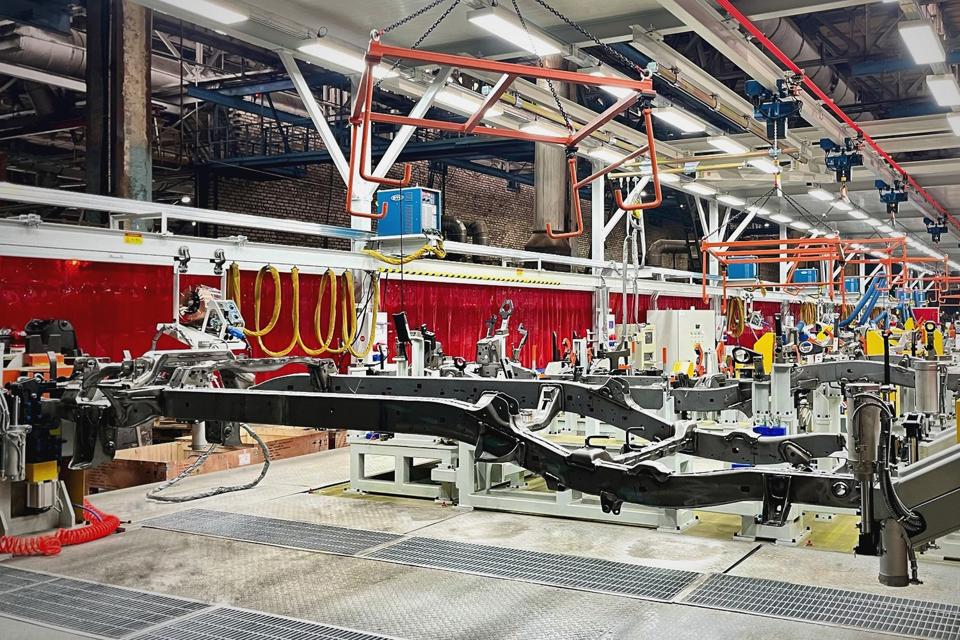
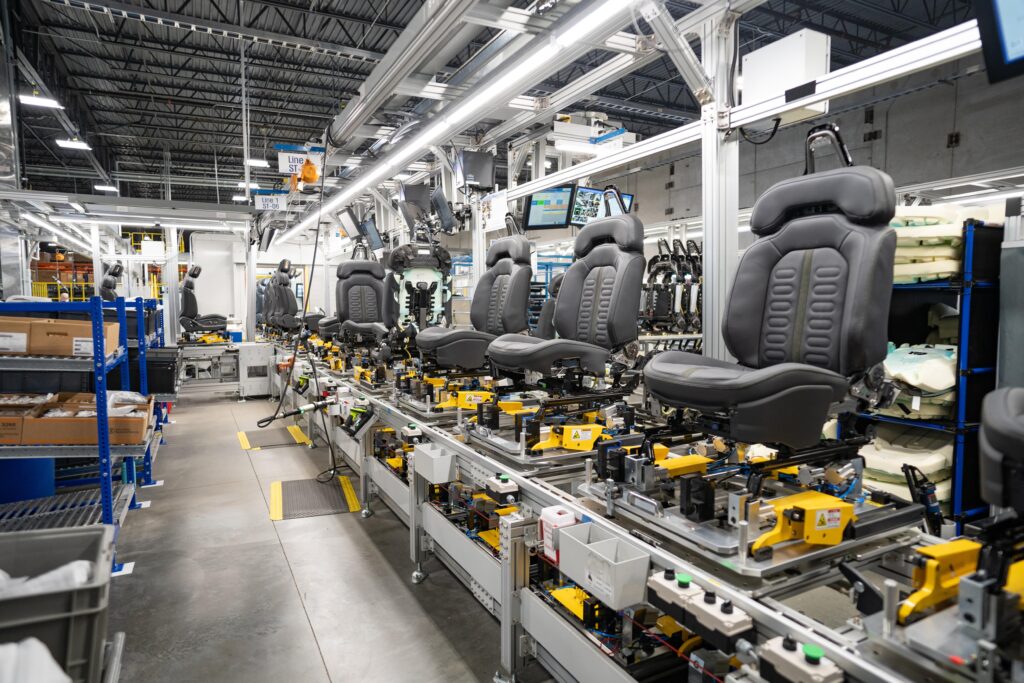
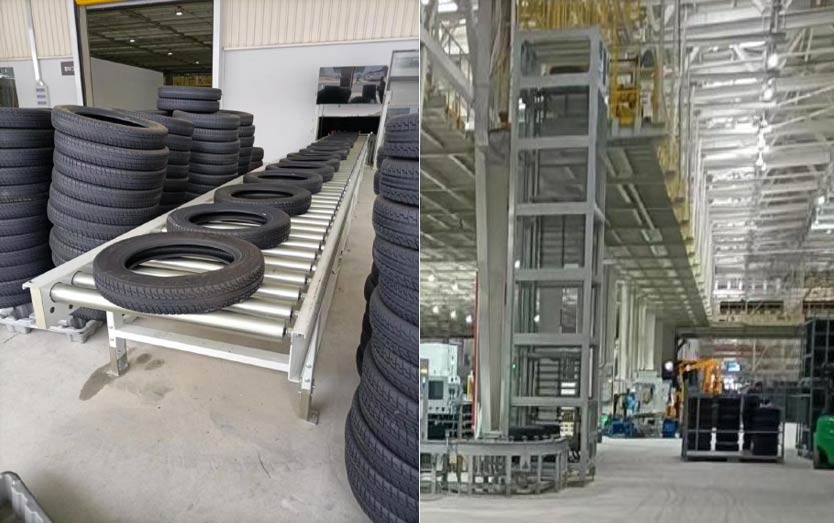
Hongbo Door conveyor line is runing in the plant: