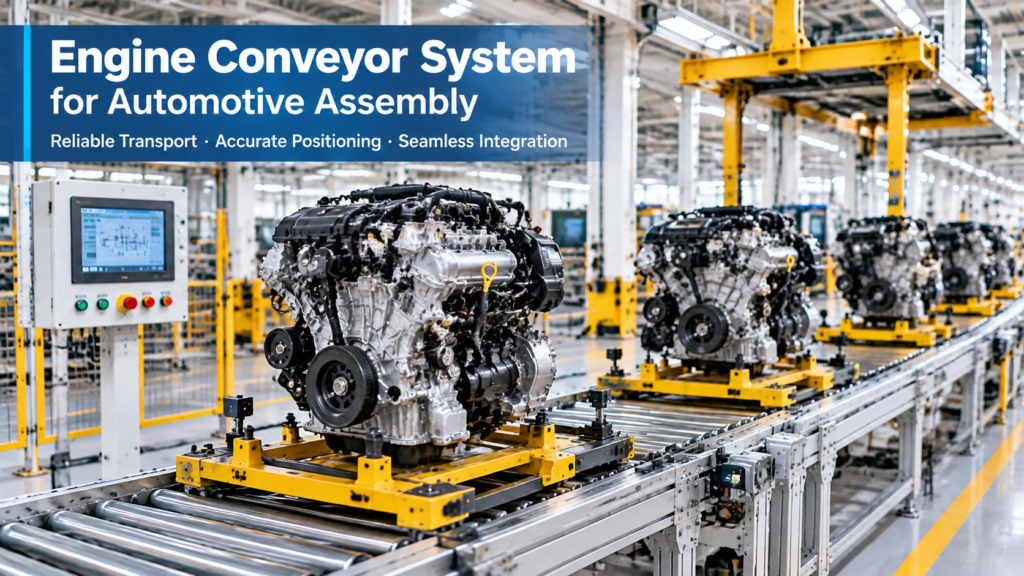
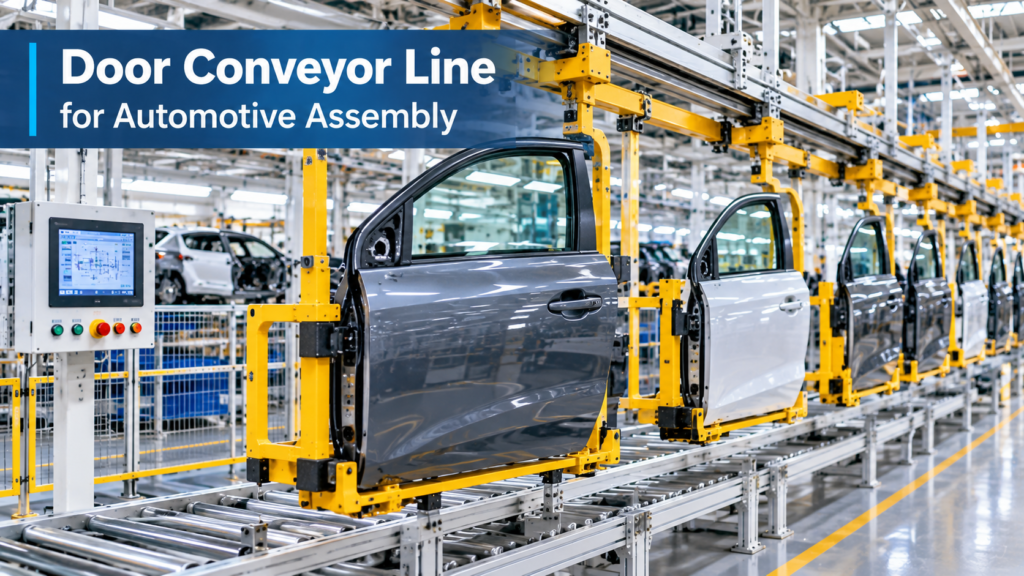
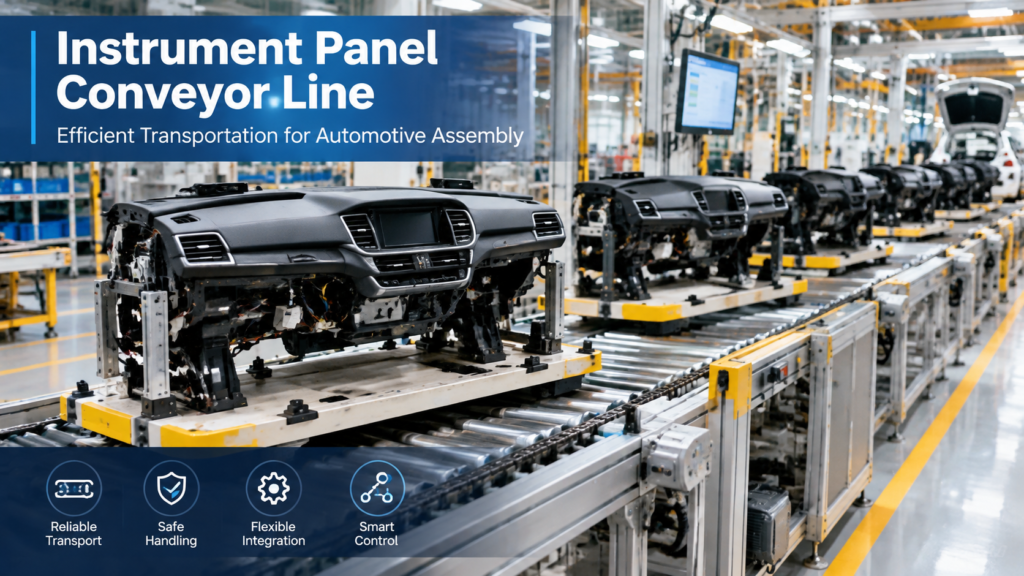
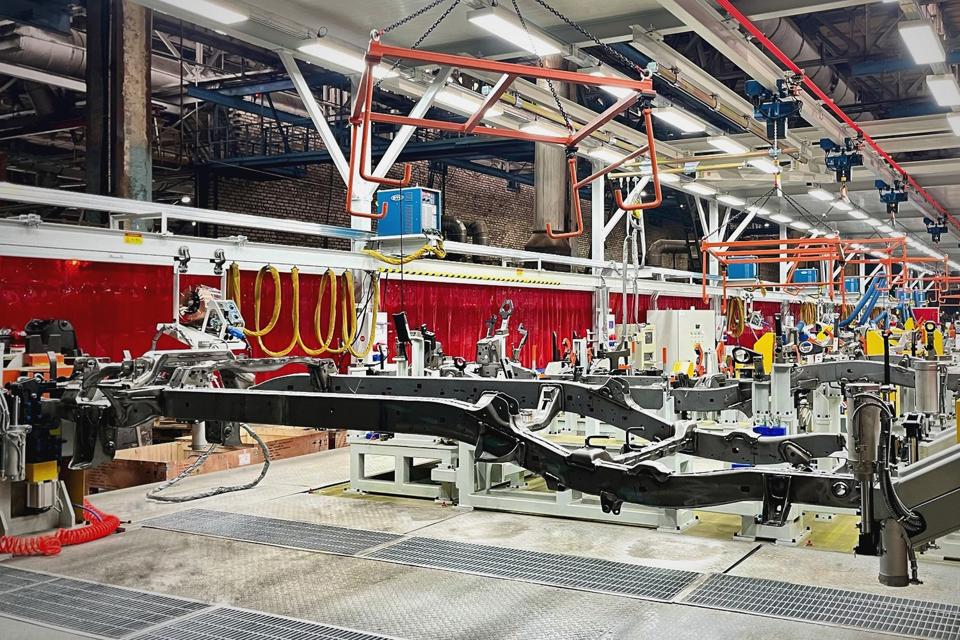
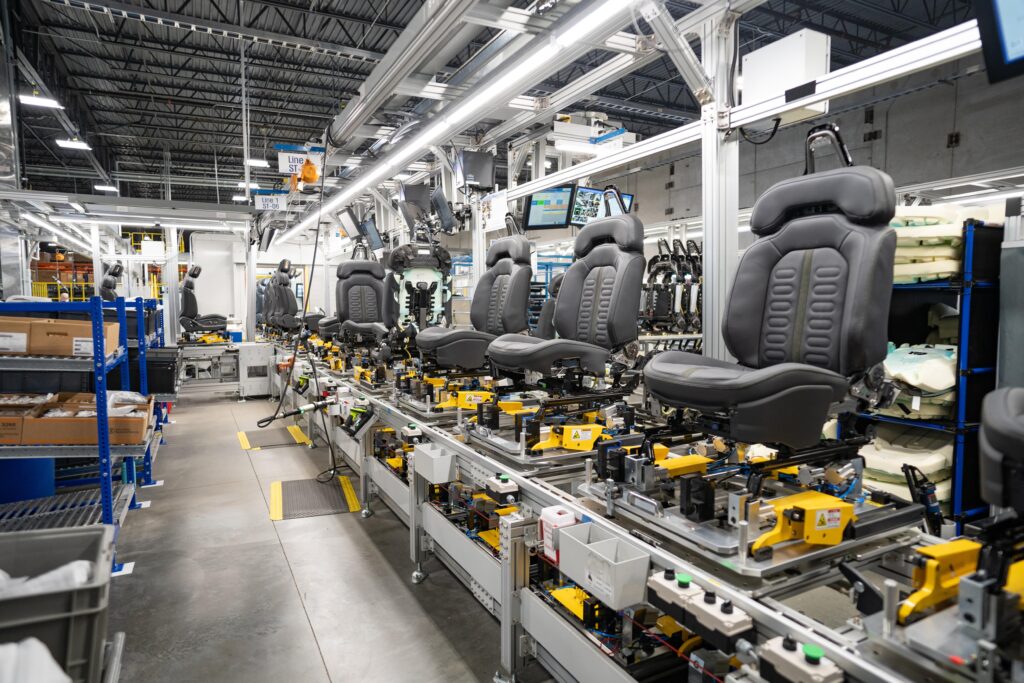
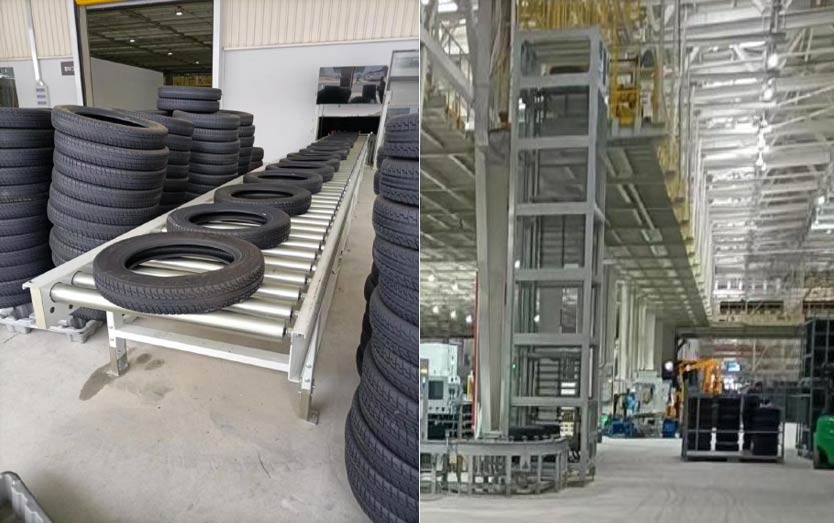
As electric vehicle production continues to expand, battery pack handling has become an important part of automotive final assembly. The battery pack is one of the largest and heaviest components installed during vehicle assembly, requiring reliable transportation, accurate positioning, and coordinated handling throughout the production process.
A battery pack conveyor system is designed to transport battery packs between designated workstations and support operations such as temporary storage, lifting, positioning, and battery installation. Integrated into an automotive assembly line, it helps coordinate material flow between battery supply areas and vehicle assembly stations.
This article explains the main types, operating principles, design considerations, and applications of battery pack conveyor systems in automotive manufacturing.
What Is a Battery Pack Conveyor System?
A battery pack conveyor system is a material handling solution used to move electric vehicle battery packs through designated production and assembly areas.
In automotive final assembly, battery packs typically need to be transferred from a supply or preparation area to the station where they are installed onto the vehicle body or chassis. Depending on the production layout, the system may include roller conveyors, chain conveyors, pallet conveyors, lifting platforms, transfer units, and positioning mechanisms.
Unlike conventional light-duty conveyor applications, battery pack handling requires careful consideration of load capacity, structural stability, positioning accuracy, and operational safety.
The system can be configured according to battery dimensions, vehicle models, production takt time, factory layout, and installation requirements.
Why Is a Dedicated Battery Pack Conveyor System Important?
Battery packs have different dimensions, weights, and structural configurations depending on the vehicle platform. Their handling requirements are therefore different from those of smaller automotive components.
A dedicated conveyor system offers several important benefits.
1. Reliable Transportation of Heavy Battery Packs
Battery packs require suitable load-bearing equipment throughout the transportation process. A properly designed conveyor structure helps support the load and maintain stable movement between workstations.
The conveyor type, pallet structure, drive mechanism, and supporting frame should all be selected according to the actual battery specifications.
2. Accurate Positioning for Battery Installation
During vehicle assembly, the battery pack must be aligned with the designated mounting points on the vehicle body or chassis.
A conveyor system can be integrated with lifting and positioning mechanisms to support the required installation height and alignment. This helps create a more controlled process for subsequent fastening and assembly operations.
3. Improved Material Flow
A well-planned battery pack conveyor system connects battery preparation, temporary storage, transfer, and installation stations.
It reduces unnecessary manual transportation and helps maintain a continuous supply of battery packs to the final assembly process.
4. Integration with Automated Assembly Equipment
Battery pack transportation is often part of a larger automated assembly solution. The conveyor system can be coordinated with lifting devices, fastening equipment, industrial robots, and production control systems.
This integration helps synchronize material handling with vehicle assembly operations.
Main Types of Battery Pack Conveyor Systems
Different conveyor technologies can be used depending on the battery pack configuration, load requirements, and production layout.
1. Roller Conveyor Systems
Roller conveyors are commonly used for horizontal transportation of battery packs mounted on suitable pallets or carriers.
Driven rollers move the carriers between workstations, while sensors and control devices can be used to manage stopping, accumulation, and transfer operations.
Roller conveyors are suitable for applications requiring straight-line transportation and connections between adjacent workstations.
2. Chain Conveyor Systems
Chain conveyors use driven chains to transport heavy-duty pallets or dedicated carriers.
They can be considered when the application requires a robust conveying structure and stable transportation of relatively heavy loads.
The chain arrangement, pallet design, drive capacity, and support structure should be determined based on the battery pack load and operating conditions.
3. Pallet Conveyor Systems
Pallet conveyor systems transport battery packs on dedicated pallets designed to match their dimensions and support requirements.
The pallets provide a consistent transportation interface and can be equipped with locating features to help maintain the battery pack’s position.
Depending on the production layout, pallet conveyors can be combined with roller conveyors, chain conveyors, lift-and-transfer units, and pallet handling equipment.
4. Lift-and-Transfer Systems
Lift-and-transfer equipment is used when battery packs need to move between different conveyor levels or transfer positions.
The system typically lifts a carrier or pallet, transfers it to another conveyor section, and lowers it into the required position.
This arrangement is useful for production lines with multiple conveyor directions, different working heights, or limited floor space.
5. Lifting and Positioning Platforms
In battery installation stations, lifting platforms can raise the battery pack to the required installation height.
The lifting system may work together with mechanical locating devices and other positioning mechanisms to support accurate alignment with the vehicle body or chassis.
The design should consider lifting capacity, stroke, stability, positioning requirements, and the interface with downstream assembly equipment.
How Does a Battery Pack Conveyor System Work?
The operating sequence varies by production line, but a typical battery pack handling process in automotive final assembly may include the following stages.
Step 1: Battery Pack Loading
The battery pack is placed onto a dedicated pallet or carrier in the preparation or supply area. The carrier provides a suitable support structure for subsequent transportation.
Step 2: Conveyor Transportation
The conveyor system transfers the loaded pallet to the next workstation. Depending on the layout, the transportation route may include roller conveyors, chain conveyors, or transfer equipment.
Step 3: Positioning and Buffering
The battery pack may be temporarily stopped or accumulated at a designated station. Positioning devices and sensors help ensure that the carrier reaches the required location.
Step 4: Transfer to the Installation Station
The battery pack is transferred to the vehicle assembly area. A lifting platform or other handling equipment may be used to raise it toward the installation position.
Step 5: Battery Pack Installation
The battery pack is aligned with the vehicle body or chassis and secured using the specified assembly process. Depending on the project, this operation may involve manual tools, automated fastening systems, or robotic equipment.
Step 6: Carrier Return
After the battery pack has been removed, the empty pallet or carrier can be transferred to a return conveyor for reuse.
Key Design Considerations for Battery Pack Conveyor Systems
Designing a battery pack conveyor system requires more than selecting a conveyor type. The complete solution must match the battery characteristics, assembly process, and factory environment.
1. Battery Pack Dimensions and Weight
Battery pack dimensions and weight directly influence the conveyor structure, pallet design, drive mechanism, and lifting equipment.
Engineers should confirm the maximum load, center of gravity, support points, and dimensional variations before finalizing the system design.
2. Load Capacity and Structural Strength
The conveyor frame, rollers, chains, pallets, and supporting structures must be designed for the specified operating loads.
The design should also account for load distribution, repeated operation, and the forces generated during starting, stopping, lifting, and transferring.
3. Positioning Accuracy
Battery installation requires the battery pack to reach a defined position relative to the vehicle body or chassis.
The required positioning accuracy should be established according to the installation process. Mechanical locating devices, sensors, and positioning platforms can be incorporated where necessary.
4. Production Takt Time
The conveyor system should be designed to match the production takt time and the cycle requirements of connected workstations.
Buffering capacity, transfer time, lifting cycles, and carrier return operations should be considered together to avoid unnecessary waiting or interruptions.
5. Safety and Operational Protection
Battery pack handling involves heavy components and potentially hazardous operating conditions. The system design should include appropriate mechanical protection, emergency stop devices, safety interlocks, and access protection.
Where required by the project, electrical safety, battery condition monitoring, fire protection provisions, and emergency response arrangements should also be coordinated with the customer’s plant safety requirements and relevant standards.
6. Factory Layout and System Integration
The available installation space, conveyor elevation, transportation direction, and connections with adjacent equipment all influence the final design.
The battery pack conveyor system should be coordinated with the vehicle assembly line, battery supply process, lifting equipment, and production control system.
Battery Pack Conveyor Systems for Different EV Assembly Applications
Battery pack conveyor systems can be configured for different electric vehicle production environments.
Passenger Vehicle Assembly
Passenger vehicle battery packs are commonly installed in the underbody area. The conveyor system may transport battery packs to an underbody installation station, where lifting and positioning equipment supports the installation process.
Commercial Vehicle Assembly
Electric buses, trucks, and other commercial vehicles may use battery packs with different dimensions, weights, and installation arrangements.
The conveyor and handling equipment should be designed around the specific vehicle platform and battery configuration.
Flexible Multi-Model Production Lines
When an assembly line handles multiple vehicle models, the battery pack conveyor system may need to accommodate different pallet configurations, dimensions, and installation requirements.
Flexible carrier designs, adjustable positioning mechanisms, and suitable control strategies can help support production of different models on the same line.
How to Select a Battery Pack Conveyor System Supplier
Choosing an experienced automotive automation supplier is important when planning a battery pack handling project.
Before selecting a supplier, manufacturers should evaluate several factors:
- Automotive assembly experience: The supplier should understand automotive final assembly processes and material handling requirements.
- Heavy-load conveyor design: Experience with pallet conveyors, chain conveyors, lifting platforms, and transfer equipment is valuable.
- System integration capability: The supplier should be able to coordinate conveyors with positioning equipment, fastening systems, and production controls.
- Customized engineering: The solution should be designed according to battery dimensions, vehicle models, factory layout, and production requirements.
- Installation and commissioning: Engineering support during installation, commissioning, and production ramp-up is important for project delivery.
A complete solution should be evaluated not only by individual equipment specifications but also by its compatibility with the entire assembly process.
Hongbo Automation: Automotive Conveyor and Assembly Line Solutions
Hubei Hongbo Automation is an automotive automation equipment manufacturer and system integrator specializing in the design, manufacturing, installation, and commissioning of automotive production lines.
For automotive final assembly projects, Hongbo Automation provides conveyor and material handling solutions covering different vehicle components and assembly processes.
Depending on project requirements, these solutions can include pallet conveyor systems, roller conveyors, chain conveyors, lifting platforms, transfer equipment, and other customized material handling systems.
For electric vehicle assembly applications, battery pack transportation and installation processes can be evaluated together with the overall production line layout. The conveyor configuration, carrier design, transfer method, and positioning equipment can then be developed according to the customer’s technical requirements.
By integrating material handling equipment with the assembly process, manufacturers can establish a more coordinated production flow for electric vehicle manufacturing.
Frequently Asked Questions
What type of conveyor is suitable for battery pack transportation?
Roller conveyors, chain conveyors, and pallet conveyor systems can all be used, depending on battery pack weight, dimensions, transportation distance, and production layout. Heavy-duty pallet conveyors are often considered when dedicated carriers are required.
Can a battery pack conveyor system be integrated with an automatic lifting system?
Yes. A conveyor system can be integrated with lifting and positioning platforms to transfer battery packs to the required installation height. The configuration depends on the vehicle assembly process and positioning requirements.
How is battery pack positioning controlled during installation?
Positioning can be supported by mechanical locating devices, sensors, dedicated pallets, and lifting platforms. The specific arrangement depends on the required installation accuracy and the design of the vehicle assembly station.
Can one conveyor system handle different battery pack models?
It is possible to design a flexible system for multiple battery pack models. However, the pallet structure, support points, dimensions, load capacity, and positioning method must be evaluated for each model.
What information is needed to design a battery pack conveyor system?
Key information includes battery pack dimensions and weight, center of gravity, support points, vehicle models, production takt time, conveyor route, installation height, factory layout, and automation requirements.
Conclusion
A battery pack conveyor system plays an important role in electric vehicle final assembly by supporting the transportation, buffering, positioning, and installation of battery packs.
The right solution depends on the battery specifications, vehicle platform, production requirements, and factory layout. By combining suitable conveyor equipment with lifting, positioning, and control systems, automotive manufacturers can establish an efficient and reliable battery pack handling process.
For automotive OEMs and production line integrators planning EV assembly projects, selecting a conveyor system designed around the complete assembly process is essential for achieving stable production and effective system integration.