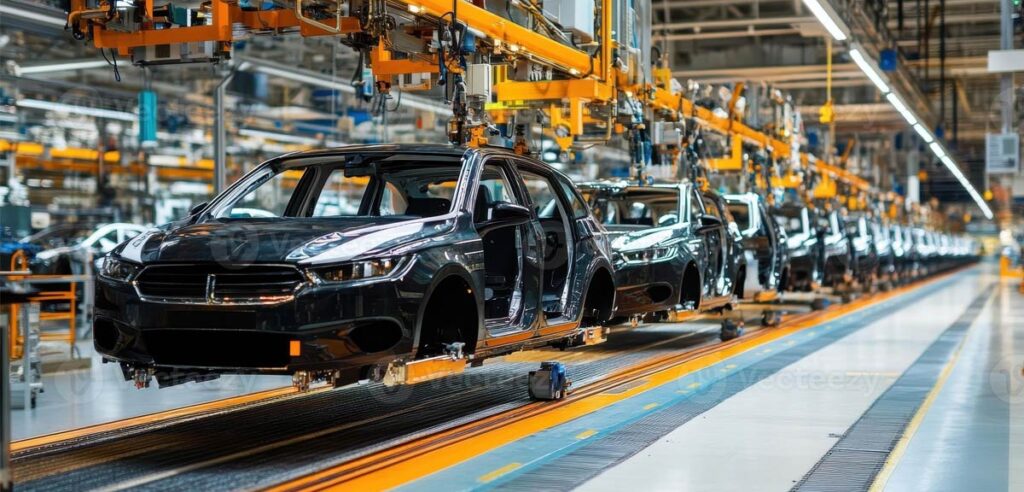
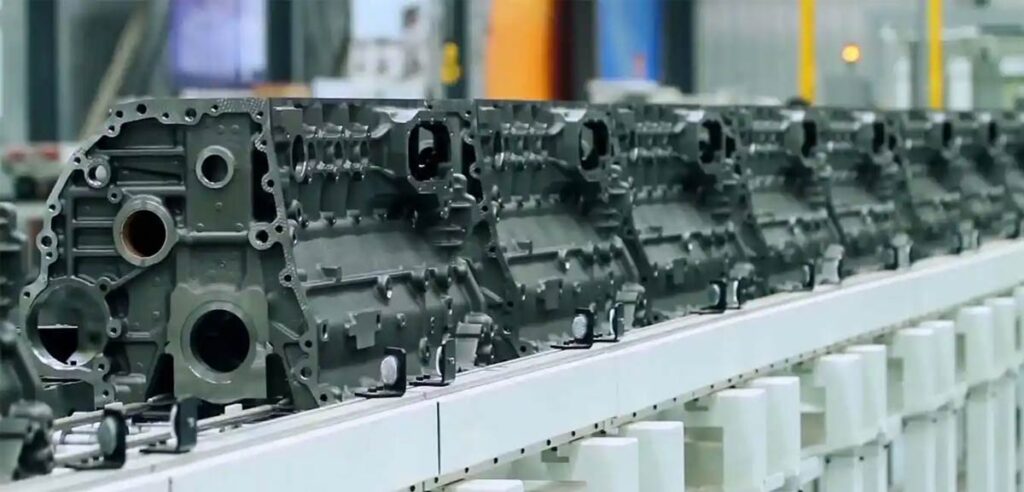
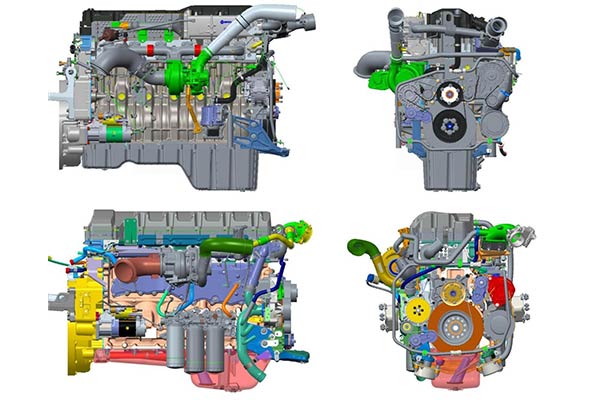
Automotive components must meet strict requirements for dimensional accuracy, reliability, safety, and manufacturing consistency. As vehicle production becomes increasingly automated, automotive manufacturers and component suppliers are investing in advanced assembly systems to improve production efficiency and quality.
An automotive component assembly line is a production system designed to assemble individual components into finished or semi-finished automotive products through a sequence of controlled manufacturing processes.
Depending on the product, an assembly line may include:
- Component feeding
- Part positioning
- Press fitting
- Fastening
- Welding
- Adhesive dispensing
- Lubrication
- Inspection
- Leak testing
- Functional testing
- Product identification
- Data traceability
Modern automotive component assembly lines combine mechanical equipment, industrial robots, conveyors, intelligent fastening systems, machine vision, PLC control, and MES integration.
For automotive OEMs and Tier 1 and Tier 2 suppliers, the objective is not simply to automate individual operations. The entire production system must be designed to provide stable cycle time, consistent quality, efficient material flow, and reliable production traceability.
What Is an Automotive Component Assembly Line?
An automotive component assembly line is an integrated manufacturing system used to assemble multiple parts into a complete automotive component or subassembly.
For example, a component assembly line may be designed for:
- Engine components
- Transmission components
- Chassis systems
- Steering systems
- Brake assemblies
- Suspension systems
- Electric motor components
- Battery systems
- Thermal management components
- Interior and exterior modules
The equipment and production processes vary according to the product structure.
A simple component may require only several manual and automated assembly stations, while a complex powertrain component may require dozens of interconnected processes.
A complete automotive component assembly line typically includes:
- Production workstations
- Assembly fixtures
- Conveyor systems
- Automatic feeding systems
- Press-fitting equipment
- Torque tightening systems
- Industrial robots
- Vision inspection systems
- Leak testing equipment
- Functional test equipment
- PLC control systems
- MES production traceability
Automotive Component Assembly Process
The assembly process depends on the product and manufacturing requirements.
However, most automotive component assembly projects follow a similar basic structure.
Component Feeding and Identification
The first step is supplying the correct components to the assembly line.
Components may be supplied manually or through automated material handling systems.
Common solutions include:
- Parts feeders
- Pallet systems
- Conveyors
- Automatic storage systems
- AGVs
- Industrial robots
Product identification is also important.
Barcode and RFID systems can be used to identify:
- Product model
- Component number
- Production order
- Serial number
This prevents incorrect components from entering the assembly process.
Part Positioning and Fixturing
Accurate positioning is essential for automotive component assembly.
Fixtures are designed to hold components in the correct position during assembly operations.
A production fixture may provide:
- Product positioning
- Component alignment
- Clamping
- Orientation control
- Assembly reference points
For automated production, fixture accuracy directly affects assembly quality.
Fixtures should also allow efficient product loading and unloading without unnecessarily increasing cycle time.
Press-Fitting Operations
Press fitting is widely used in automotive component assembly.
Typical applications include:
- Bearing installation
- Bush installation
- Shaft insertion
- Pin installation
- Gear assembly
- Sleeve installation
Modern servo press systems provide accurate control of force and displacement.
During the pressing process, the system can monitor the relationship between force and position.
If the measured curve falls outside the predefined tolerance range, the system can identify a potential assembly problem.
This provides a higher level of process control than simple mechanical pressing.
Automated Fastening and Torque Control
Fastening is one of the most important operations in automotive component assembly.
Critical fasteners require controlled torque to achieve the specified clamping force.
Typical applications include:
- Engine components
- Transmission housings
- Chassis components
- Brake systems
- Suspension assemblies
- Battery packs
- Electric motor assemblies
Modern tightening systems can control both torque and angle.
The system can also determine whether the tightening result meets the predefined process limits.
For quality-critical applications, tightening data can be stored together with the product serial number.
This creates a complete digital record of the fastening process.
Related Articles:
Torque Tightening Systems in Automotive Assembly Lines
Industrial Robot Applications
Industrial robots are widely used in modern automotive component assembly lines.
Robots are particularly useful for operations involving:
- Heavy components
- Repetitive movements
- High production volumes
- Difficult working positions
- High repeatability requirements
Typical applications include:
- Part loading
- Component transfer
- Assembly
- Machine tending
- Dispensing
- Pallet handling
- Product unloading
Robots can also communicate with other production equipment through the line control system.
For example, a robot may receive a signal from the PLC indicating that a fixture is ready, perform the assembly operation, and then return a completion signal to the control system.
Related Articles:
Industrial Robots in Automotive Manufacturing
Automated Dispensing Systems
Many automotive components require adhesives, sealants, lubricants, or thermal materials during assembly.
Automated dispensing equipment provides precise material application.
Common applications include:
- Sealant dispensing
- Adhesive application
- Lubrication
- Thermal interface material application
- Gasket sealing
The dispensing process must control:
- Material volume
- Application speed
- Bead width
- Application path
- Application position
Consistent dispensing is particularly important for sealing and thermal management applications.
Machine Vision Inspection
Automated vision inspection is becoming increasingly important in automotive component assembly.
A machine vision system can inspect components without requiring manual visual inspection at every station.
Typical inspection tasks include:
- Component presence verification
- Component orientation
- Assembly position
- Fastener presence
- Surface inspection
- Barcode reading
- Label verification
- Adhesive inspection
Vision systems can also provide production data to the central control system.
This allows manufacturers to identify defective products before they reach subsequent production stages.
Related Articles:
Vision Inspection Systems in Automotive Manufacturing
Leak Testing
Leak testing is essential for components that contain fluids, gases, or sealed internal cavities.
Typical applications include:
- Transmission housings
- Engine components
- Cooling components
- Fuel system components
- Brake components
- Battery enclosures
- Thermal management systems
Depending on the product requirements, manufacturers may use:
- Pressure decay testing
- Vacuum testing
- Differential pressure testing
- Flow testing
- Helium leak testing
The testing method should be selected according to the required leakage specification and production cycle time.
Related Articles:
Leak Testing Equipment in Automotive Manufacturing
Functional Testing
After assembly, some automotive components require functional verification.
Functional testing may simulate the actual operating conditions of the component.
Depending on the product, tests may include:
- Rotation testing
- Electrical testing
- Pressure testing
- Hydraulic testing
- Communication testing
- Noise testing
- Vibration testing
End-of-line testing provides the final opportunity to verify product performance before shipment.
Conveyor Systems for Component Assembly
The conveyor system connects individual workstations and creates a continuous production flow.
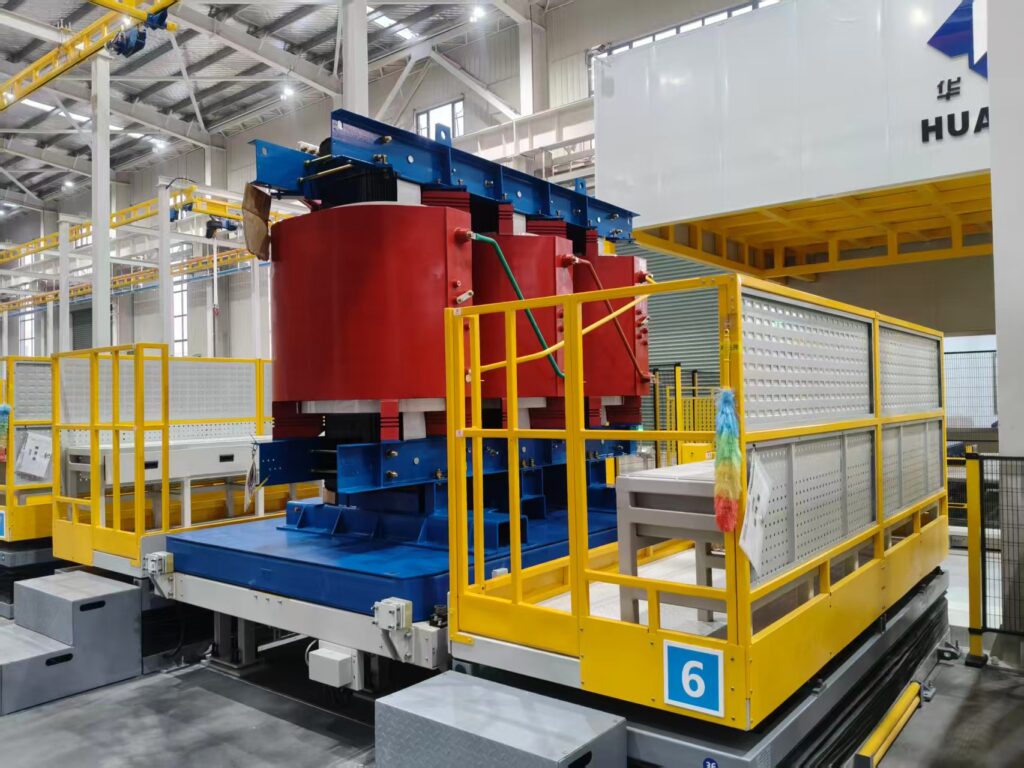
Common conveyor solutions include:
- Pallet conveyors
- Chain conveyors
- Roller conveyors
- Belt conveyors
- Slat conveyors
- Lift tables
- Transfer machines
- Vertical conveyors
For automotive component assembly, palletized conveyor systems are particularly useful because each product can remain on a dedicated pallet throughout the production process.
The pallet can carry:
- Product information
- Fixture information
- Process status
This allows the production system to coordinate material movement and process execution.
Related linkes:
Automotive Conveyor Systems: Types, Design & Applications
PLC Control System
PLC technology is the foundation of many automotive assembly automation systems.
The PLC coordinates:
- Conveyor movement
- Sensor signals
- Robot operation
- Assembly equipment
- Safety systems
- Inspection equipment
- Production sequences
A properly designed control system allows individual machines to operate as one integrated production system.
For example, the PLC can prevent a fastening station from operating until the vision system confirms that the correct component has been installed.
This type of process interlocking helps prevent assembly errors.
MES Integration and Production Traceability
Modern automotive manufacturers require detailed production records.
MES integration allows production data from different stations to be connected with each individual product.
Typical information includes:
- Product serial number
- Component identification
- Torque results
- Press-fitting data
- Vision inspection results
- Leak test results
- Functional test results
- Production time
- Equipment information
This information can be used for:
- Quality management
- Process analysis
- Production traceability
- Warranty investigation
- Continuous improvement
For Tier 1 suppliers producing safety-critical components, complete traceability can be particularly important.
Internal Link:
PLC & MES Integration in Automotive Manufacturing
Designing an Automotive Component Assembly Line
A successful automotive component assembly line begins with detailed process engineering.
The supplier should understand the product before selecting automation equipment.
Product and Process Analysis
Engineers first analyze:
- Product structure
- Assembly sequence
- Critical characteristics
- Required tolerances
- Component variation
- Quality requirements
The objective is to determine which operations should be manual, semi-automated, or fully automated.
Cycle Time and Takt Time
Production capacity determines the required cycle time.
For example, if the customer requires a specific number of components per hour, the assembly line must be designed so that each workstation can meet the required takt time.
Engineers analyze:
- Individual workstation cycle time
- Equipment utilization
- Material transfer time
- Operator activity
- Buffer requirements
Proper line balancing prevents individual stations from becoming production bottlenecks.
Automation Level
Not every process needs to be fully automated.
The appropriate automation level depends on:
- Production volume
- Product complexity
- Labor costs
- Quality requirements
- Investment budget
- Future production plans
A low-volume production line may use more manual or semi-automated stations, while high-volume production often justifies extensive automation.
Flexible Manufacturing
Automotive manufacturers frequently need to produce multiple product variants.
A flexible assembly line can support different products through:
- Modular fixtures
- Automatic parameter selection
- Programmable robots
- Tool change systems
- Barcode or RFID identification
When a different product enters the line, the control system can automatically identify the product and select the corresponding production parameters.
Quality Control Strategy
Quality control should be integrated into the production process.
Instead of relying only on final inspection, modern assembly lines verify critical characteristics during manufacturing.
Examples include:
- Force monitoring
- Torque monitoring
- Vision inspection
- Leak testing
- Functional testing
This approach allows manufacturers to detect problems earlier and reduce the risk of defective products reaching the customer.
Smart Manufacturing and Industry 4.0
The development of Industry 4.0 is transforming traditional automotive component assembly.
Connected production equipment can provide real-time information about:
- Production status
- Equipment performance
- Quality results
- Cycle time
- Downtime
This information can be analyzed to improve production efficiency.
Predictive Maintenance
Automation equipment generates operational data that can be used to identify potential equipment problems.
Predictive maintenance systems can monitor:
- Motor conditions
- Servo performance
- Robot operating status
- Conveyor operation
- Press force trends
By identifying abnormal trends before equipment failure, manufacturers can reduce unexpected downtime.
Digital Production Management
Modern factories increasingly connect assembly equipment with MES, ERP, and quality management systems.
This allows production managers to monitor:
- Production output
- Equipment status
- Quality performance
- Material consumption
- Production efficiency
The result is a more transparent and data-driven manufacturing environment.
How Hongbo Supports Automotive Component Assembly Projects
Hongbo Automation provides automotive manufacturing automation and assembly line solutions for OEMs and automotive component manufacturers.
Our capabilities cover:
- Automotive component assembly lines
- Engine assembly lines
- Transmission assembly lines
- Powertrain assembly systems
- EV battery assembly lines
- Conveyor systems
- Automated assembly equipment
- Inspection and testing systems
A complete project can include process analysis, production line design, equipment manufacturing, automation integration, installation, commissioning, and technical support.
By integrating mechanical equipment, automation controls, material handling, and quality inspection, Hongbo can develop complete production systems according to the customer’s product and manufacturing requirements.
How to Choose an Automotive Component Assembly Line Supplier
Selecting an experienced production line supplier is an important decision for automotive manufacturers.
Several factors should be evaluated.
Automotive Manufacturing Experience
The supplier should have practical experience with automotive production processes and understand the quality requirements of the industry.
Relevant experience may include:
- Powertrain assembly
- Engine assembly
- Transmission assembly
- Automotive component assembly
- EV manufacturing
Engineering Capability
The supplier should have engineering capabilities covering:
- Mechanical design
- Electrical engineering
- PLC programming
- Robotics
- Fixture design
- Production process engineering
Complete Project Capability
For complex production lines, it is beneficial to work with a supplier capable of managing the complete project.
This can include:
- Process planning
- Equipment design
- Manufacturing
- Factory acceptance testing
- Installation
- Commissioning
- Operator training
Overseas Project Support
For international customers, communication and technical support are especially important.
A suitable supplier should be able to provide:
- English technical documentation
- Remote technical support
- Installation support
- Commissioning assistance
- Operator training
- After-sales service
Conclusion
An automotive component assembly line is more than a series of individual machines. It is an integrated manufacturing system in which material handling, assembly equipment, robots, inspection systems, testing equipment, and production software work together.
A properly designed system can help automotive manufacturers achieve:
- Higher production efficiency
- Consistent assembly quality
- Improved traceability
- Lower manual workload
- Greater production flexibility
- Better long-term manufacturing performance
As automotive manufacturing continues to develop toward electrification, automation, and Industry 4.0, flexible and intelligent component assembly systems will become increasingly important.
For automotive OEMs and Tier 1 and Tier 2 suppliers planning a new production project, an experienced automotive automation partner can help transform product requirements into a reliable and scalable manufacturing system.
Frequently Asked Questions
What is an automotive component assembly line?
An automotive component assembly line is an integrated production system used to assemble individual components into finished or semi-finished automotive products.
What equipment is used in an automotive component assembly line?
Typical equipment includes conveyors, assembly fixtures, servo presses, torque tightening systems, industrial robots, dispensing systems, vision inspection equipment, leak testers, and functional test equipment.
Can an automotive component assembly line produce multiple product models?
Yes. Flexible fixtures, programmable automation, barcode identification, and automatic parameter selection can allow one production line to support multiple product variants.
Why is torque control important in automotive assembly?
Controlled torque ensures that fasteners achieve the required clamping force. Intelligent tightening systems can also record torque and angle data for quality traceability.
What is the role of machine vision in component assembly?
Machine vision can automatically verify component presence, orientation, assembly position, fastener status, labels, and other quality characteristics.
How does MES improve an assembly line?
MES connects production equipment and manufacturing data, allowing manufacturers to track individual products and record critical process information throughout production.
Can Hongbo design a complete automotive component assembly line?
Hongbo Automation focuses on automotive assembly and manufacturing automation solutions, including production line design, equipment manufacturing, automation integration, installation, and commissioning.