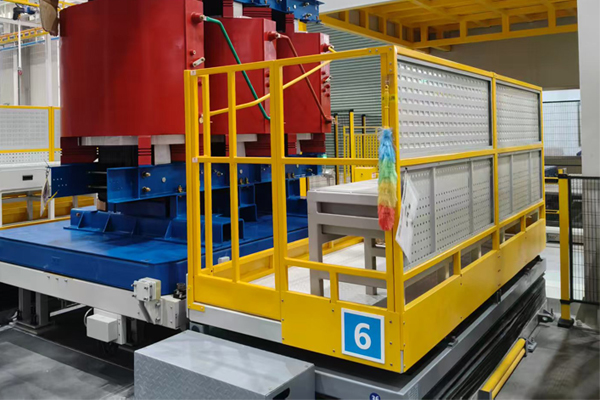
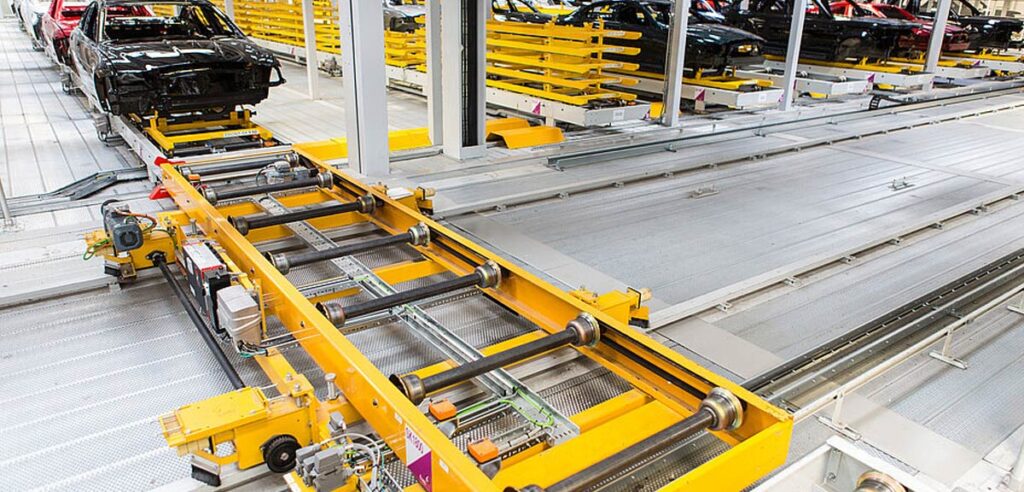
Lift-and-locate systems are widely used in automated automotive assembly lines where products must be positioned accurately before assembly, fastening, inspection, or testing operations.
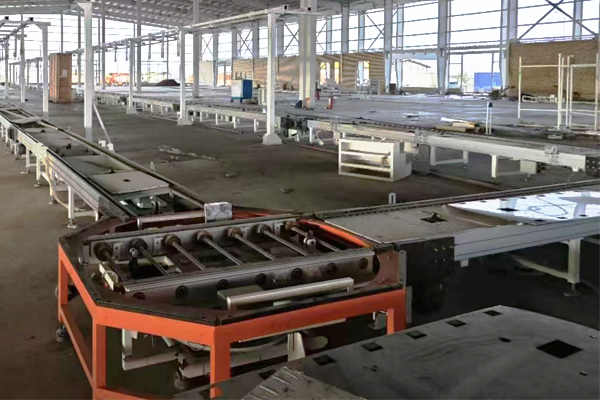
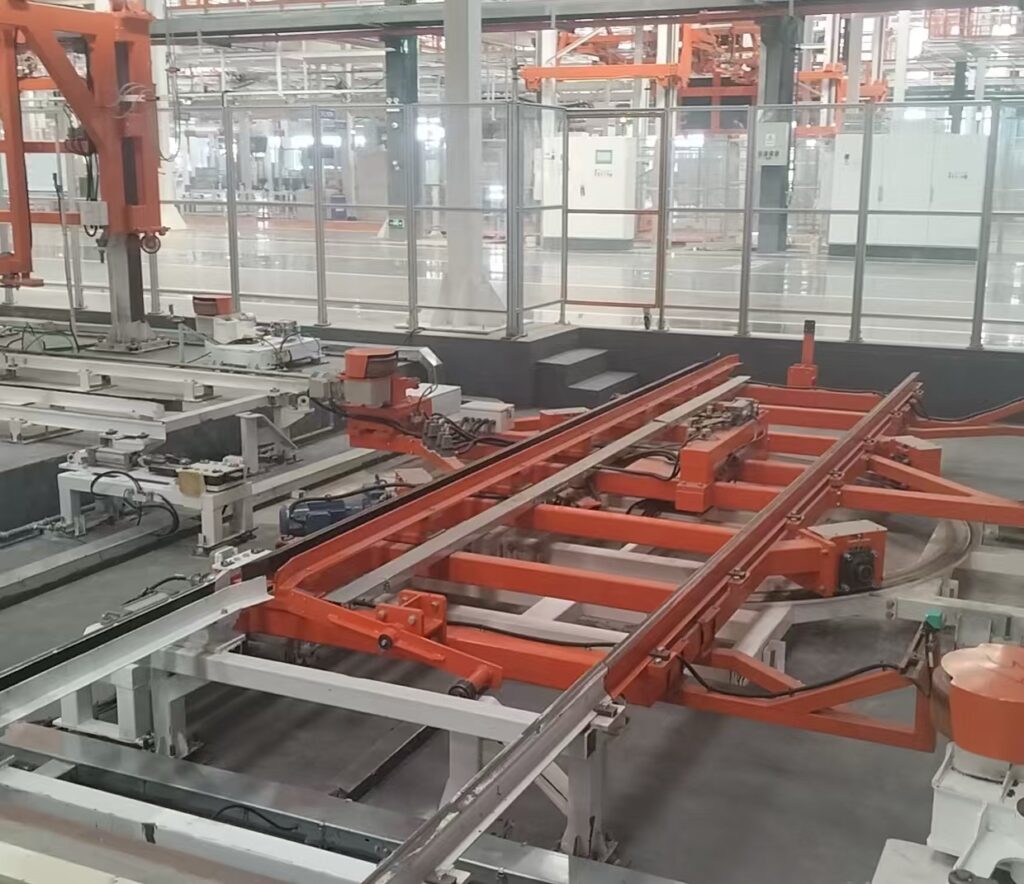
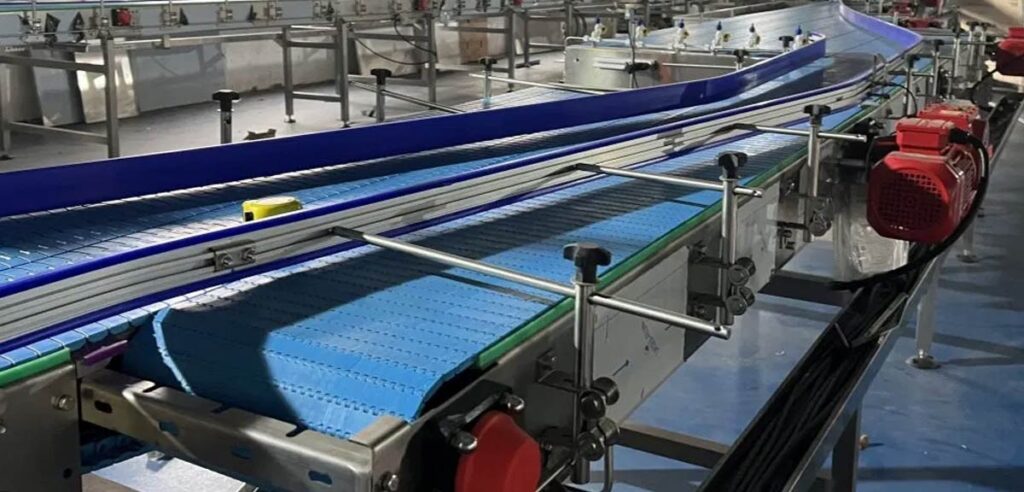
In a pallet conveyor system, the conveyor is responsible for transporting the product between workstations. However, the conveyor itself is generally not the best reference for precision manufacturing operations. Mechanical tolerances, pallet movement, roller or chain clearance, and conveyor vibration can affect the final product position.
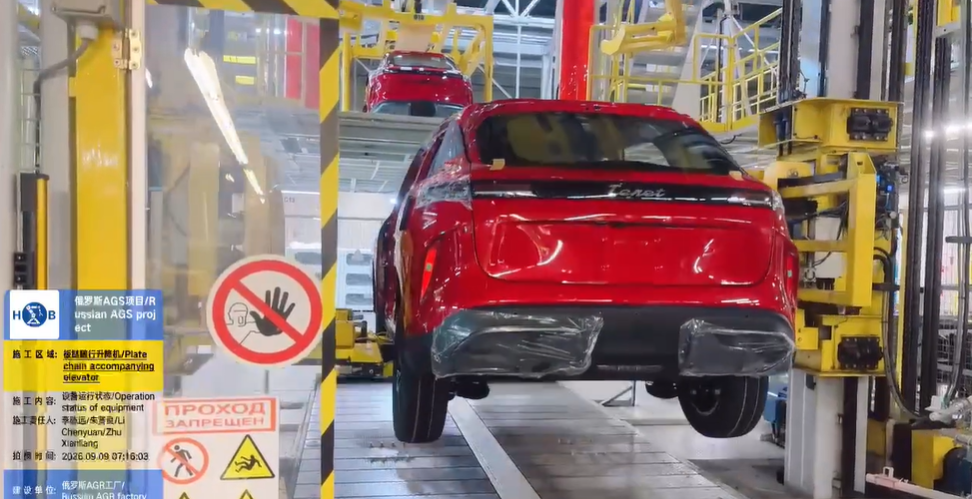
A lift-and-locate system solves this problem by temporarily lifting the pallet from the conveyor and locating it against a defined mechanical reference. The result is a stable and repeatable working position for robots, assembly machines, tightening tools, inspection systems, and other automated equipment.
For automotive manufacturers, this positioning technology is an important part of high-precision production line design.
What Is a Lift-and-Locate System?
A lift-and-locate system is a positioning mechanism installed at an assembly workstation.
When a pallet arrives at the workstation, the conveyor first brings it into the required area. A stopper or control mechanism then controls the pallet position.
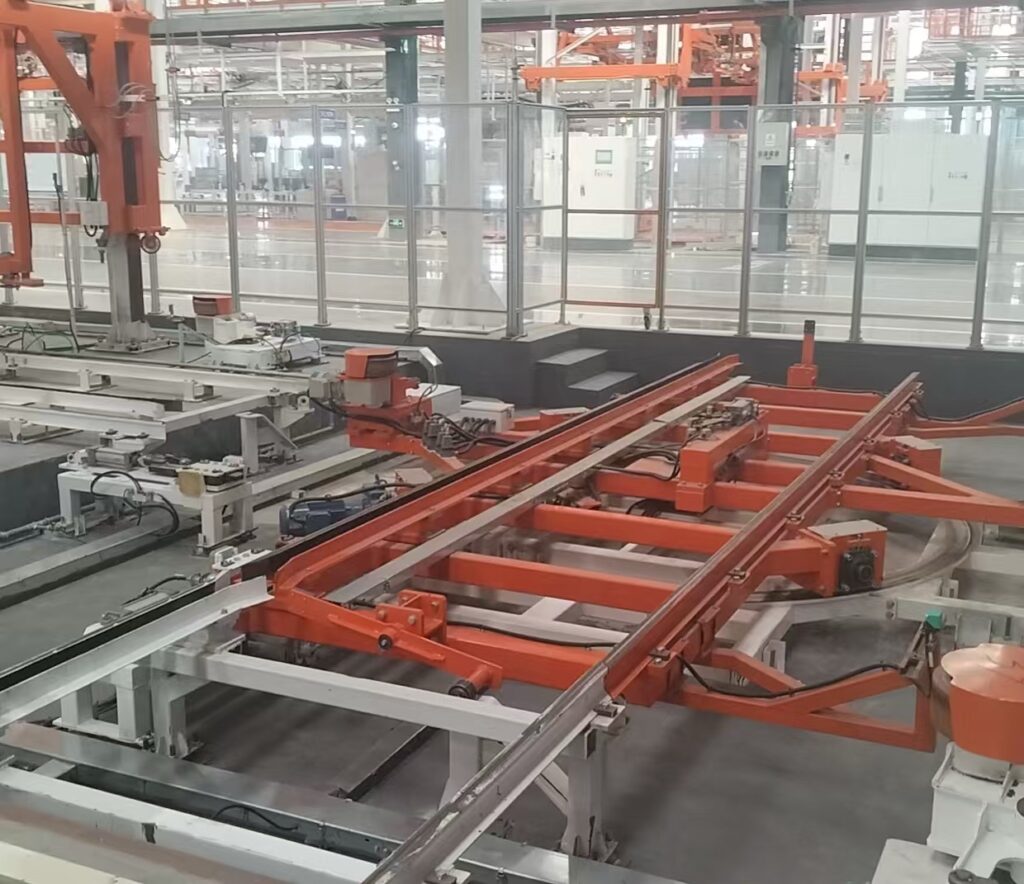
The lift unit raises the pallet from the conveyor, while locating elements establish the final processing position.
Once the assembly operation is completed, the lift unit lowers the pallet back onto the conveyor and the pallet continues to the next station.
A typical sequence is:
Pallet Conveying → Pallet Stop → Lift → Precision Locating → Assembly Operation → Release → Conveyor Transfer
The system therefore separates two different functions:
- Conveying: moving the product through the production line
- Positioning: establishing the precise reference required for manufacturing
This separation is especially important for automated automotive assembly.
Why Precision Positioning Matters in Automotive Assembly
Automotive production processes often involve components that must be assembled within defined dimensional and positional tolerances.
A robot may need to insert a component into a specific location.
A tightening tool may need to align with a threaded hole.
A press-fitting machine may require the workpiece to remain within a specific positional tolerance.
A vision inspection system may need a consistent camera-to-product relationship.
If the product position changes from one cycle to another, the automated process may become less reliable.
A lift-and-locate system provides a repeatable mechanical reference so that the product arrives at the workstation in substantially the same position during each production cycle.
This improves the interface between the material handling system and the manufacturing equipment.
Main Components of a Lift-and-Locate Unit
The exact configuration depends on the product and application, but an automotive lift-and-locate unit commonly includes several key components.
Lifting Mechanism
The lifting mechanism raises the pallet from the conveyor.
Depending on the load and required motion, the system may use pneumatic cylinders, hydraulic cylinders, electric actuators, servo-driven mechanisms, or other engineered lifting solutions.
The lifting system must be selected according to pallet weight, product weight, center of gravity, lifting stroke, cycle time, and required positioning accuracy.
Locating Pins and Bushings
Locating elements establish the final reference position.
Precision locating pins and corresponding bushings or locating holes can constrain the pallet in the required direction.
The locating arrangement should be designed according to the required degrees of freedom and the product’s fixture structure.
Pallet Support
After lifting, the pallet needs to be supported securely during the production operation.
The support structure should withstand the forces generated by the assembly process without excessive deformation.
This becomes particularly important when the workstation performs pressing, tightening, bearing installation, or other operations that generate significant mechanical loads.
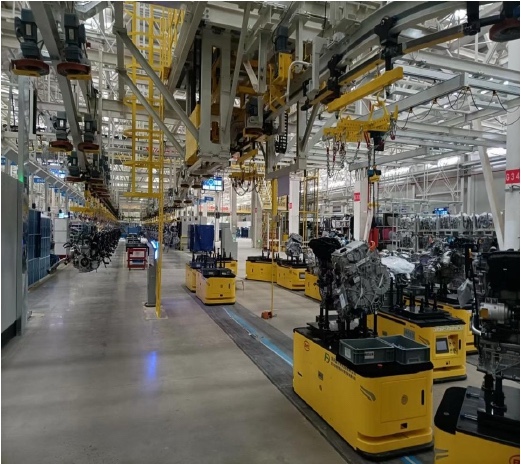
Stopper
The stopper controls the incoming pallet before the lift-and-locate mechanism engages.
It helps establish a controlled starting position for the lifting and locating sequence.
Sensors
Sensors monitor the operating condition of the system.
Typical detection points include:
- Pallet arrival
- Pallet presence
- Lift-up position
- Lift-down position
- Locating status
- Stopper position
- Product presence
- Fixture status
These signals are normally connected to the PLC control system.
How a Lift-and-Locate System Works
The operating cycle can be divided into several stages.
Stage 1: Pallet Arrival
The pallet travels along the conveyor toward the workstation.
A sensor detects the approaching pallet and sends a signal to the control system.
Stage 2: Pallet Stop
The conveyor continues until the pallet reaches the designated position.
A stopper prevents the pallet from moving farther.
Stage 3: Pallet Lifting
The lift mechanism raises the pallet from the conveyor.
At this point, the pallet is no longer relying on the conveyor rollers or chains as its primary positioning reference.
Stage 4: Precision Locating
Locating pins, blocks, or other mechanical elements establish the final position.
The system verifies that the required position has been reached before allowing the production operation to start.
Stage 5: Automated Operation
The robot, assembly machine, tightening system, inspection equipment, or other workstation equipment performs the required operation.
Because the pallet is securely located, the workpiece has a stable reference throughout the process.
Stage 6: Pallet Release
After the operation is completed, the equipment confirms the process status.
The lift mechanism lowers the pallet back onto the conveyor.
The stopper releases the pallet, allowing it to move toward the next workstation.
Lift-and-Locate vs. Conveyor Stopping
A common question in conveyor design is why a separate positioning system is required when the conveyor can simply stop the pallet.
The difference is positioning accuracy.
A stopper can control the general location of the pallet, but it does not necessarily provide the precision and rigidity required for an automated assembly process.
For example, a pallet resting on conveyor rollers may still have small amounts of lateral or longitudinal movement.
For transportation, this may not matter.
For a robotic assembly or precision tightening operation, it may matter significantly.
A lift-and-locate system removes the pallet from the normal conveying surface and establishes a controlled mechanical reference.
Therefore:
Conveyor stopping controls movement.
Lift-and-locate positioning controls the manufacturing reference.
The two functions are complementary rather than interchangeable.
Applications in Automotive Assembly Lines
Lift-and-locate systems are suitable for many automotive manufacturing processes.
Engine Assembly
Engine assembly is one of the typical applications.
An engine or engine block can be transported on a dedicated pallet through multiple assembly stations.
At stations requiring precision positioning, the pallet can be lifted and located before the automated operation begins.
Typical operations include:
- Component installation
- Bearing installation
- Press-fitting
- Bolt tightening
- Torque-controlled fastening
- Vision inspection
- Leak testing
- Measurement
Transmission Assembly
Transmission assembly often involves multiple precision operations.
A lift-and-locate system can provide a stable reference for component installation, fastening, pressing, inspection, and testing.
The positioning system can be integrated directly into a pallet conveyor line.
Powertrain Assembly
Powertrain production combines multiple assembly and inspection processes.
A pallet may carry the workpiece through a sequence of automated stations.
Lift-and-locate units at selected workstations provide precise positioning only where it is required.
This allows the overall conveyor system to remain relatively simple while providing higher accuracy at critical operations.
Automotive Component Assembly
Lift-and-locate systems are also suitable for smaller components.
Applications can include:
- Steering systems
- Brake components
- Suspension components
- Axle assemblies
- Electric drive units
- Motor assemblies
- Reducers
- Other automotive components
The mechanism can be scaled according to the product size and production requirements.
Lift-and-Locate for Robotic Assembly
Robots require a reliable relationship between the robot coordinate system and the workpiece.
If the product position changes significantly between cycles, robot programming becomes more difficult and process reliability may decrease.
A precision pallet positioning system establishes a repeatable product location.
The robot can therefore approach the workpiece using a predictable coordinate relationship.
This is particularly useful for:
- Robotic component insertion
- Robotic fastening
- Robotic dispensing
- Robotic welding
- Automated inspection
- Automated assembly
The positioning accuracy required depends on the actual robot process and end-effector design.
Integration with Torque Tightening Systems
Torque-controlled tightening is another important application.
A tightening tool must align correctly with the fastener before the operation starts.
If the product position is inconsistent, the tool may experience alignment problems or fail to engage correctly.
A lift-and-locate unit provides a stable reference during tightening.
The system can also communicate with the torque controller and PLC.
For example, the PLC can confirm:
- Pallet has arrived.
- Pallet has been lifted.
- Pallet is correctly located.
- Product is present.
- Safety conditions are satisfied.
- Tightening operation is enabled.
- Tightening result is received.
- Pallet is released.
This creates a controlled relationship between material handling and process execution.
Integration with Press-Fitting Equipment
Press-fitting operations generally generate higher mechanical forces than simple assembly or inspection processes.
The pallet positioning system therefore needs sufficient rigidity and load-bearing capacity.
The locating structure should prevent unwanted pallet movement during pressing.
In some applications, the product may require additional fixture support directly around the pressing area.
The lift-and-locate mechanism and fixture should therefore be engineered together rather than treated as completely independent components.
Integration with Vision Inspection
Vision inspection systems benefit from repeatable product positioning.
If a camera inspects the same feature on every product, variations in product location can affect the camera’s field of view and inspection algorithm.
A lift-and-locate mechanism can establish a consistent inspection position.
This can improve:
- Image consistency
- Inspection repeatability
- Camera calibration stability
- Part recognition
- Measurement accuracy
For complex applications, the positioning system can be combined with product identification so that the vision system automatically loads the appropriate inspection parameters.
Lift-and-Locate in Multi-Model Production
Modern automotive plants often produce multiple product variants on a common production line.
A lift-and-locate system can support this manufacturing strategy when combined with flexible pallets and fixtures.
For example, different engine variants may have different dimensions or locating requirements.
The pallet can contain a common carrier structure while the fixture accommodates product-specific locating points.
The control system can identify the product model through RFID or barcode information and select the corresponding process parameters.
This allows one production line to handle multiple models without requiring completely separate material handling systems.
Positioning Accuracy and Repeatability
The required positioning accuracy depends on the process.
A general material handling station may only require relatively coarse positioning.
A robotic assembly or inspection station may require significantly higher repeatability.
When designing the system, engineers should consider:
- Conveyor tolerance
- Pallet manufacturing tolerance
- Fixture tolerance
- Locating pin clearance
- Mechanical deformation
- Product dimensional variation
- Lifting mechanism rigidity
- Workstation loads
- Sensor repeatability
The required accuracy should be determined from the actual manufacturing operation rather than selected arbitrarily.
Choosing the Right Lifting Method
Different lifting technologies may be appropriate for different applications.
Pneumatic Lift
Pneumatic lifting is commonly used for relatively simple and fast positioning applications.
Advantages can include simple construction, fast operation, and straightforward control.
Hydraulic Lift
Hydraulic systems can provide high lifting force and may be suitable for heavier automotive products.
They can be considered where payload and mechanical load requirements are significant.
Electric or Servo Lift
Electric and servo-driven systems can provide precise motion control and programmable positioning.
They may be useful when the application requires controlled acceleration, variable positions, or more sophisticated motion profiles.
The final selection should consider payload, stroke, cycle time, accuracy, environment, maintenance, and total system cost.
PLC Control and Interlocking
The lift-and-locate unit should normally be controlled as part of the complete workstation rather than operating independently.
PLC logic can coordinate the conveyor, stopper, lift mechanism, sensors, robot, and assembly equipment.
Typical interlocking conditions may include:
- Pallet detected
- Stopper extended
- Lift at upper position
- Locating mechanism engaged
- Product detected
- Robot ready
- Tool ready
- Safety circuit healthy
The production operation should only be enabled when the required conditions are satisfied.
This prevents automated equipment from operating on a pallet that has not been correctly positioned.
Safety Design
Because the mechanism moves heavy pallets and automotive components, safety must be considered during the design stage.
Potential hazards include:
- Crushing points
- Shearing points
- Unexpected pallet movement
- Falling loads
- Pneumatic or hydraulic energy
- Robot interaction
- Operator access to moving mechanisms
Depending on the application, safety functions may include mechanical guarding, safety sensors, emergency stops, safety interlocks, anti-drop mechanisms, and controlled restart logic.
The complete machine safety design should be based on the actual equipment configuration and applicable customer requirements.
Maintenance Requirements
A lift-and-locate system contains moving mechanical components that require regular inspection.
Maintenance items may include:
- Lifting cylinders or actuators
- Guide mechanisms
- Locating pins
- Bushings
- Bearings
- Stopper mechanisms
- Sensors
- Fasteners
- Pneumatic or hydraulic components
- Electrical connections
Locating components are particularly important.
Wear on locating pins or bushings can gradually affect positioning accuracy.
Maintenance personnel should therefore monitor wear and replace precision components according to defined maintenance criteria.
How to Design a Lift-and-Locate System
A reliable design should start with the production process.
The engineering team should first identify the required operation and determine how accurately the product needs to be positioned.
The following parameters should then be evaluated:
- Product weight
- Pallet weight
- Product dimensions
- Center of gravity
- Conveyor type
- Lifting stroke
- Positioning accuracy
- Cycle time
- Workstation load
- Fixture configuration
- Robot requirements
- Tool requirements
- Safety requirements
- Available installation space
The lifting mechanism, locating structure, pallet, and fixture should then be designed as a coordinated system.
This approach avoids a common problem in automation projects: selecting a standard lifting mechanism first and attempting to adapt it to the production process afterward.
Custom Lift-and-Locate Solutions for Automotive Production
Automotive production applications often require customized positioning solutions.
A standard lift table may be sufficient for simple material handling, but precision assembly stations may require a more integrated mechanism.
A customized lift-and-locate system can combine:
- Pallet conveyor
- Lift mechanism
- Precision locating system
- Product fixture
- Stopper
- Sensors
- PLC control
- Robot interface
- Tightening equipment interface
- Inspection equipment interface
- MES communication
The complete system can be engineered according to the product, workstation layout, cycle time, payload, and required positioning accuracy.
Hongbo Lift-and-Locate Solutions
Hongbo Automation develops customized conveyor and positioning equipment for automotive manufacturing applications.
Lift-and-locate mechanisms can be integrated with pallet conveyors, assembly workstations, robotic systems, tightening equipment, inspection systems, and other production equipment.
The engineering process can consider the complete production requirement, including pallet design, product positioning, payload, takt time, workstation configuration, control logic, and factory layout.
For automotive OEMs and automotive component manufacturers, this integrated approach helps ensure that material handling and production processes work together as one automated system.
To learn more about our automotive production conveyor lines, you can follow our YouTube channel and watch our videos. HB Automotive Production Lines – YouTube
Conclusion
Lift-and-locate systems provide an important positioning function in automated automotive assembly.
A conveyor is designed primarily to transport the product, while a lift-and-locate mechanism establishes the stable and repeatable reference required for manufacturing operations.
By combining precise positioning with pallets, fixtures, PLC control, robots, tightening systems, inspection equipment, and production traceability, manufacturers can build more reliable and flexible automated assembly lines.
For engine, transmission, powertrain, EV, and automotive component production, the correct lift-and-locate design should always be based on the actual product and manufacturing process.
Frequently Asked Questions
What is a lift-and-locate system?
A lift-and-locate system temporarily lifts a pallet from a conveyor and positions it against precision locating elements so that automated manufacturing operations can be performed from a repeatable reference.
What is the difference between a stopper and a lift-and-locate unit?
A stopper primarily controls pallet movement. A lift-and-locate unit provides a more precise and rigid positioning reference for assembly, tightening, inspection, or other production operations.
Can a lift-and-locate system be used with pallet conveyors?
Yes. Lift-and-locate mechanisms are commonly integrated into pallet conveyor systems at workstations where precise product positioning is required.
Can lift-and-locate systems support heavy automotive components?
Yes. The lifting mechanism and support structure can be engineered according to the combined weight of the pallet, fixture, and product.
Can lift-and-locate systems work with robots?
Yes. A precision positioning system can provide a repeatable workpiece reference for robotic assembly, fastening, dispensing, inspection, and other automated operations.
Can Hongbo customize lift-and-locate equipment?
Yes. Hongbo can design lift-and-locate mechanisms according to product dimensions, payload, pallet configuration, positioning requirements, cycle time, workstation layout, and automation requirements.