Introduction
In today’s highly competitive automotive industry, manufacturers are under constant pressure to increase production efficiency, maintain consistent product quality, and reduce operational costs. As vehicle complexity continues to grow—especially with the rapid expansion of electric vehicles (EVs) and intelligent manufacturing technologies—the role of the automotive assembly line has become more critical than ever.
Modern automotive assembly lines are no longer simple conveyor-based production systems. They have evolved into highly integrated manufacturing environments that combine automation, intelligent logistics, digital quality control, and real-time production management. These advancements enable manufacturers to achieve higher productivity while maintaining flexibility and precision throughout the production process.
This article explores how automotive assembly lines improve manufacturing efficiency and why they remain a fundamental component of modern vehicle production.
The Role of Automotive Assembly Lines in Modern Manufacturing
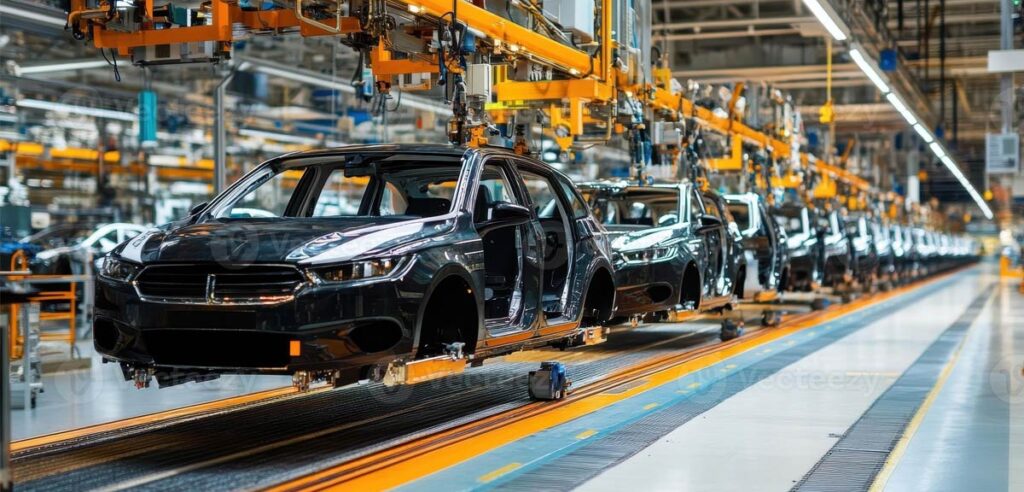
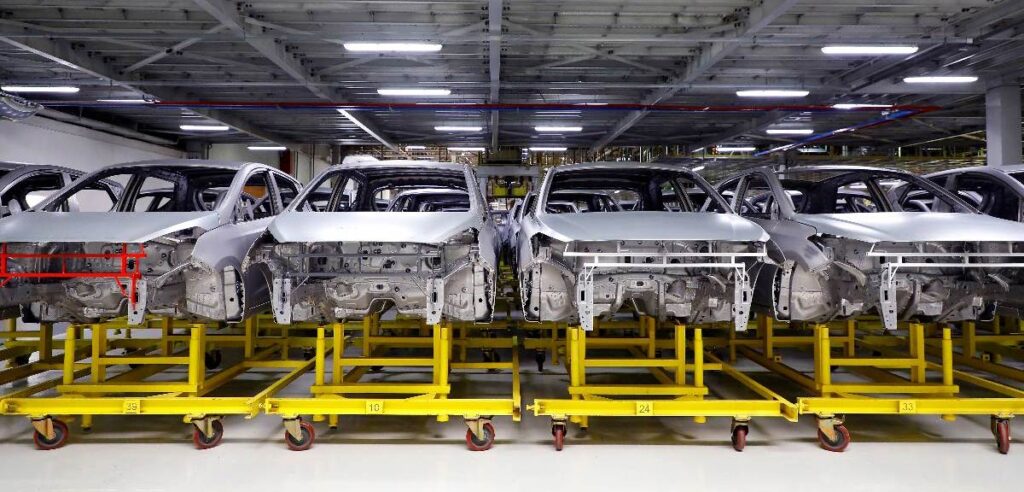
An automotive assembly line is a structured production system in which vehicles are assembled through a sequence of standardized workstations. Each station performs a specific operation, allowing the manufacturing process to be divided into manageable and repeatable tasks.
Typical assembly processes include:
- Body transfer and conveying
- Chassis marriage operations
- Powertrain installation
- Interior assembly
- Fluid filling
- Wheel installation
- Electrical testing
- End-of-line inspection
By organizing production into standardized processes, manufacturers can significantly improve throughput while reducing variability and production errors.
Standardization Improves Production Efficiency
One of the primary advantages of an automotive assembly line is process standardization.
Without a structured assembly system, production activities often depend heavily on individual operators, resulting in inconsistent cycle times and varying quality levels. A well-designed assembly line establishes standardized workflows, defined work content, and optimized station layouts.
Key benefits include:
- Reduced process variation
- Improved labor utilization
- Consistent takt time achievement
- Better production planning and scheduling
Standardized operations enable manufacturers to maintain predictable output levels while improving overall equipment effectiveness (OEE).
Assembly line automation plays a significant role in improving manufacturing efficiency.
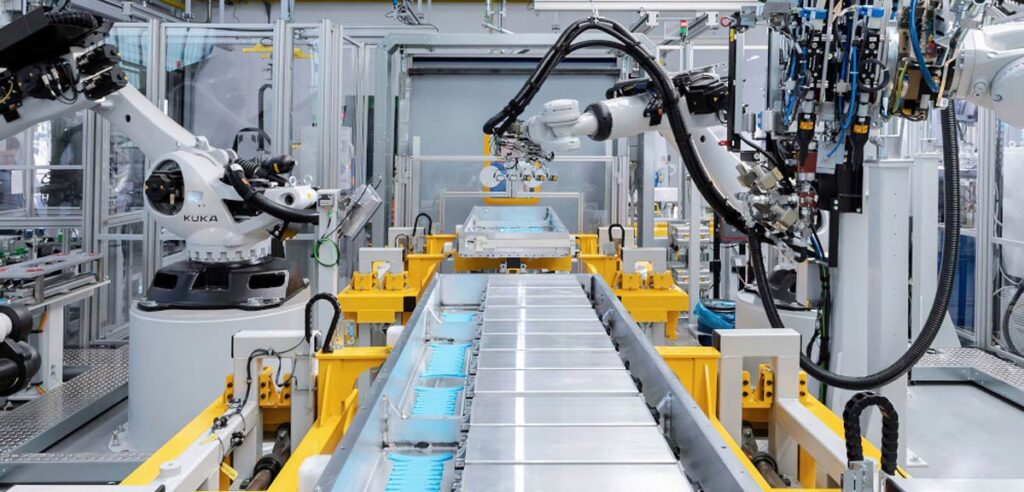
Modern automotive production lines integrate various automated systems, including:
- Robotic assembly stations
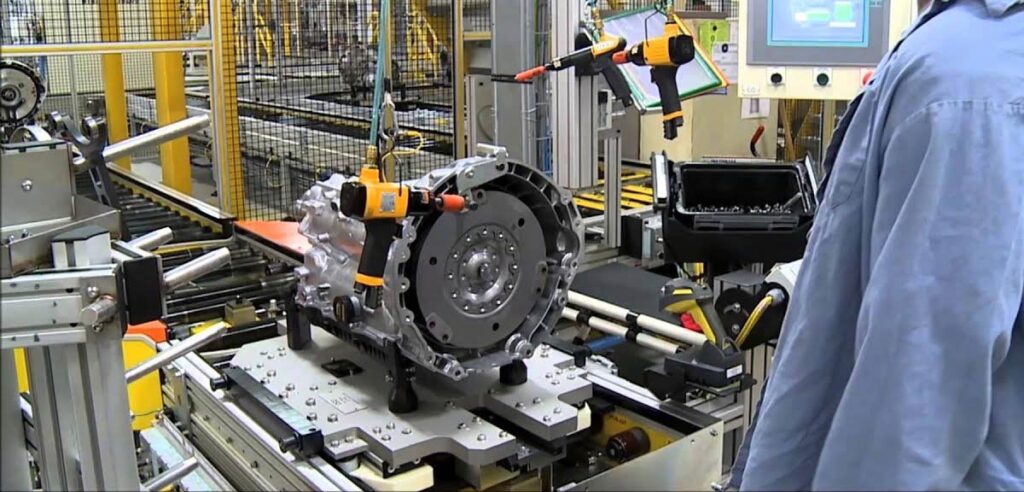
- Automatic fastening systems
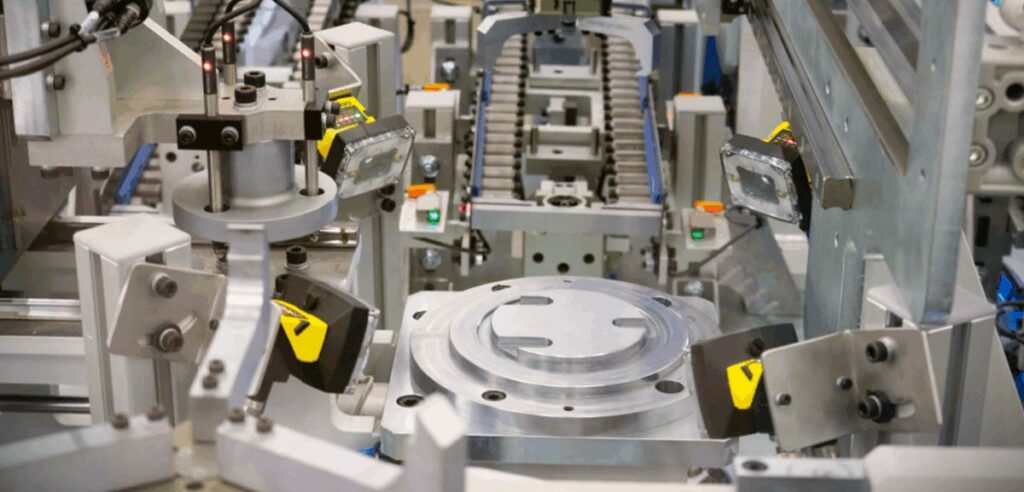
- Vision inspection systems
- AGV (Automated Guided Vehicle) logistics solutions
- Intelligent conveyor systems
Automation minimizes repetitive manual tasks, reduces operator fatigue, and improves process repeatability.
For example, automated torque control systems ensure that critical fasteners are tightened within specified parameters, eliminating human variability and reducing rework rates.
As a result, manufacturers achieve higher production consistency and improved product quality.
Intelligent Material Flow Enhances Productivity
Efficient material handling is essential for maintaining production continuity.
Traditional manufacturing environments often suffer from material shortages, inefficient transportation routes, and excessive inventory movement. Modern automotive assembly lines address these challenges through intelligent logistics systems.
Technologies such as:
- AGV transportation systems
- Automated storage systems
- Just-In-Time (JIT) material delivery
- Smart conveyor networks
allow materials and components to arrive at the correct workstation precisely when needed.
Benefits include:
- Reduced material handling time
- Lower work-in-process inventory
- Improved production flow
- Enhanced line balance
Efficient material flow directly contributes to higher manufacturing efficiency and reduced operational costs.
Improved Quality Through Integrated Inspection Systems
Quality issues can significantly impact production efficiency by increasing rework, warranty claims, and production downtime.
Modern vehicle assembly lines integrate quality control throughout the manufacturing process rather than relying solely on final inspections.
Examples include:
- Vision-based inspection systems
- Leak testing equipment
- Torque traceability systems
- Functional testing stations
- End-of-line quality verification
By identifying defects at the source, manufacturers can prevent issues from propagating through the production process.
This proactive approach improves First Pass Yield (FPY) and reduces costly corrective actions.
Data-Driven Manufacturing Improves Decision Making
The integration of Industry 4.0 technologies has transformed the traditional automotive assembly line into a connected manufacturing ecosystem.
Production systems can now collect and analyze real-time data from:
- Equipment sensors
- PLC control systems
- MES platforms
- Quality inspection devices
- Production monitoring software
This information provides valuable insights into:
- Equipment performance
- Production bottlenecks
- Quality trends
- Maintenance requirements
- Resource utilization
Data-driven decision making enables manufacturers to continuously optimize production processes and improve manufacturing efficiency.
Flexible Manufacturing Supports Product Diversity
Today’s automotive market demands greater product customization and shorter development cycles.
Manufacturers often need to produce multiple vehicle models on the same production line. Modern assembly lines are designed with flexibility in mind, allowing rapid changeovers and mixed-model production.
Flexible manufacturing systems help companies:
- Reduce capital investment
- Increase production adaptability
- Shorten launch timelines
- Respond quickly to market demand
This capability is particularly important for electric vehicle production, where product variants and technology updates occur frequently.
Enhancing Safety and Ergonomics
Manufacturing efficiency is closely linked to workplace safety and operator ergonomics.
Advanced assembly lines incorporate:
- Ergonomic workstations
- Lift assist devices
- Automated handling equipment
- Safety interlock systems
- Collaborative robot technologies
These solutions reduce operator strain, minimize workplace injuries, and improve overall productivity.
A safer work environment contributes directly to stable production performance and long-term operational excellence.
Conclusion
Automotive assembly lines play a critical role in improving manufacturing efficiency by combining standardized processes, automation technologies, intelligent logistics, integrated quality control, and data-driven production management.
As automotive manufacturers continue to pursue higher productivity, greater flexibility, and improved product quality, investment in advanced assembly line solutions becomes increasingly important.
Whether for conventional vehicles, commercial vehicles, or new energy vehicles, modern automotive assembly lines provide the foundation for efficient, reliable, and scalable manufacturing operations.
Organizations that embrace intelligent assembly technologies and smart manufacturing principles will be better positioned to meet the challenges of the rapidly evolving automotive industry.