Introduction
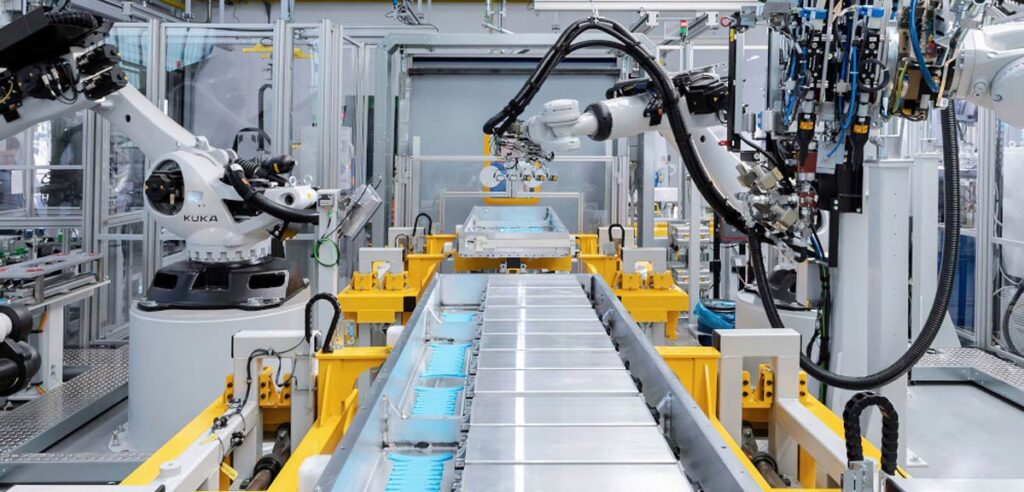
As automotive manufacturing continues to evolve toward greater automation, flexibility, and digitalization, efficient material flow has become a critical factor in production performance. Traditional material handling methods, including forklifts and fixed conveyor systems, often struggle to meet the demands of modern vehicle production environments where multiple models, shorter production cycles, and flexible manufacturing strategies are becoming the norm.
Automated Guided Vehicles (AGVs) have emerged as a key technology in smart automotive factories, enabling intelligent material transportation, production line synchronization, and real-time logistics management. Today, AGV systems are widely deployed across vehicle assembly plants, powertrain manufacturing facilities, battery production lines, and automotive component factories.
This article explores the applications, benefits, and future trends of AGV technology in automotive manufacturing.
What Are AGVs?
An Automated Guided Vehicle (AGV) is a self-guided mobile transport system designed to move materials, components, tools, and finished products within a manufacturing facility without direct human intervention.
Modern AGVs typically utilize:
- Laser navigation systems
- SLAM (Simultaneous Localization and Mapping)
- QR code navigation
- Magnetic guidance
- RFID positioning
- Intelligent traffic management software
Integrated with Manufacturing Execution Systems (MES), Warehouse Management Systems (WMS), and production scheduling platforms, AGVs can dynamically respond to changing production requirements in real time.
Why Automotive Manufacturers Are Adopting AGVs
Automotive production involves thousands of components moving between storage areas, sub-assembly stations, and final assembly lines. Traditional logistics methods often create challenges such as:
- Material shortages
- Traffic congestion
- Inefficient transportation routes
- Excessive labor dependency
- Safety risks associated with forklift operations
AGV systems address these issues by providing automated, predictable, and traceable material flow throughout the factory.
Key drivers for AGV adoption include:
- Flexible manufacturing requirements
- Labor cost reduction
- Increased production efficiency
- Enhanced safety performance
- Smart factory initiatives
- Industry 4.0 implementation
AGV Applications in Vehicle Assembly Lines
Material Delivery to Assembly Stations
One of the most common AGV applications in automotive assembly lines is the transportation of components directly to production workstations.
AGVs can deliver:
- Instrument panels
- Seats
- Wheels and tires
- Bumpers
- Interior trim components
- Electrical assemblies
By supporting Just-In-Time (JIT) and Just-In-Sequence (JIS) logistics strategies, AGVs ensure that materials arrive precisely when required, minimizing inventory accumulation on the shop floor.
Benefits include:
- Reduced line-side inventory
- Improved production flow
- Better workstation organization
- Lower logistics labor requirements
Chassis and Vehicle Body Transportation
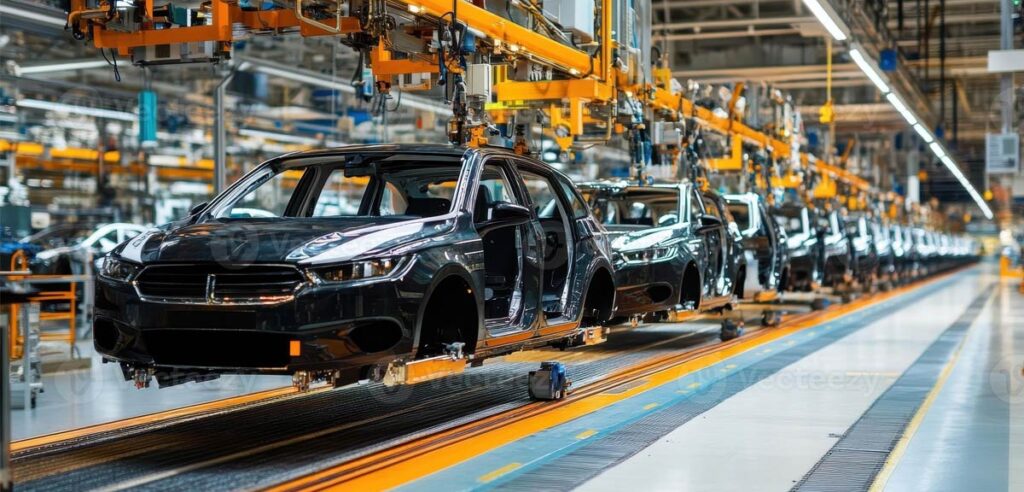
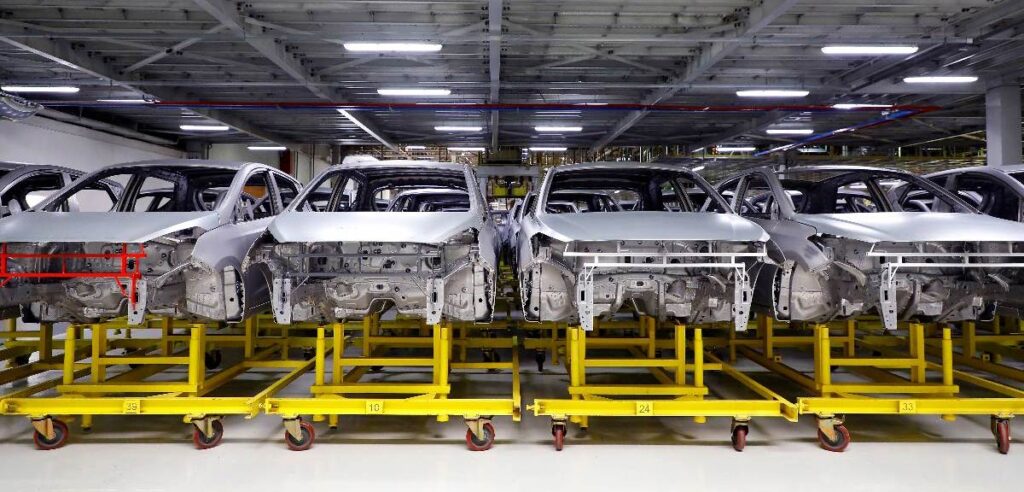
Heavy-duty AGVs are increasingly used to transport vehicle bodies and chassis assemblies between production processes.
Applications include:
- Body-in-White transfer
- Chassis transportation
- Marriage station positioning
- Final assembly conveyance
Compared with traditional fixed conveyor systems, AGVs provide greater flexibility for future production modifications and plant expansion projects.
AGV Applications in Powertrain Manufacturing
Powertrain production requires precise handling of engines, transmissions, and electric drive systems.
AGVs are commonly used to transport:
- Engine blocks
- Cylinder heads
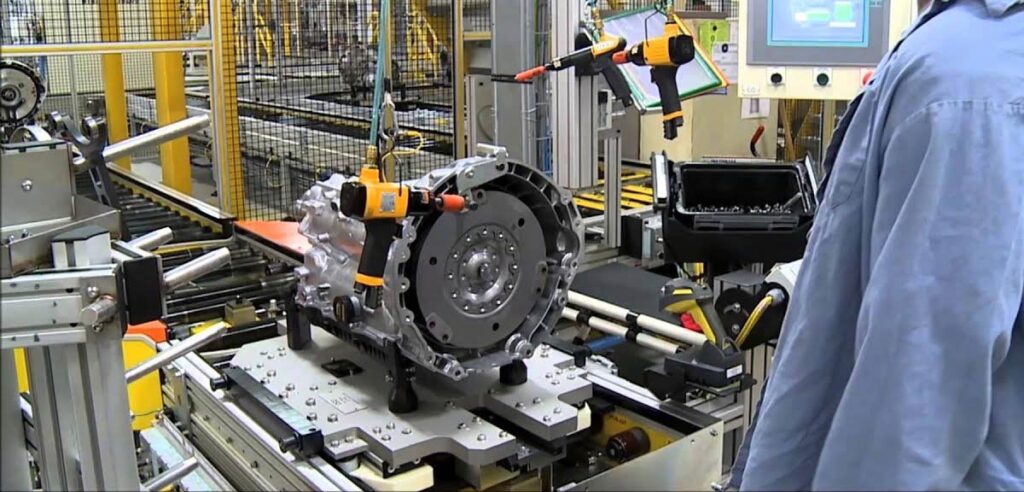
- Transmission assemblies
- Electric motors
- Drive units
In modern powertrain plants, AGV systems often interact directly with robotic assembly stations and automated storage systems to create highly efficient production environments.
Advantages include:
- Improved production synchronization
- Reduced manual handling
- Enhanced product protection
- Increased process traceability
AGV Applications in EV Battery Manufacturing
The rapid growth of electric vehicle production has significantly expanded AGV deployment within battery manufacturing facilities.
Battery pack assembly involves handling heavy and high-value components that require strict safety and quality control measures.
AGV applications include:
- Battery module transportation
- Battery pack assembly logistics
- Automated warehouse integration
- Finished battery handling
- Testing station transfer
Because battery components are highly sensitive, AGVs help reduce damage risks associated with manual transportation while improving process consistency.
AGV Applications in Automotive Component Manufacturing
Automotive component suppliers are also adopting AGV technology to improve internal logistics efficiency.
Typical applications include:
- Axle assembly lines
- Steering system production
- Suspension assembly
- Brake system manufacturing
- Seating production lines
For example, in heavy-duty vehicle manufacturing, AGVs can transport axle assemblies between workstations while automatically coordinating production schedules and workstation availability.
This approach significantly improves line balancing and production flexibility.
Enhancing Manufacturing Efficiency Through AGV Systems
Reduced Non-Value-Added Activities
Manual material transportation often creates significant non-value-added labor.
AGVs eliminate repetitive transportation tasks, allowing operators to focus on value-added production activities.
Improved Production Continuity
AGVs operate continuously according to predefined schedules and production demands, reducing the risk of material shortages and line stoppages.
Better Production Traceability
Modern AGV systems record transportation data in real time, including:
- Delivery locations
- Transportation routes
- Material identification
- Production timestamps
This data supports quality management and production analysis initiatives.
Optimized Factory Space Utilization
AGVs typically require less dedicated infrastructure than traditional conveyor systems, allowing manufacturers to utilize production space more efficiently.
AGVs and Smart Manufacturing Integration
AGVs play an essential role in Industry 4.0 and smart manufacturing environments.
When integrated with digital factory systems, AGVs can:
- Receive automatic delivery instructions
- Respond to production schedule changes
- Coordinate with robotic workstations
- Communicate with warehouse systems
- Generate real-time logistics data
This level of connectivity enables manufacturers to create highly responsive and data-driven production operations.
Future Trends of AGVs in Automotive Manufacturing
As automotive factories continue their digital transformation journey, AGV technology is expected to become even more intelligent.
Emerging trends include:
- AI-based fleet optimization
- Autonomous Mobile Robots (AMRs)
- Digital twin integration
- Predictive traffic management
- Cloud-connected logistics systems
- Fully autonomous production logistics
Future AGV systems will not only transport materials but also actively participate in production planning and operational decision-making.
Conclusion
Automated Guided Vehicles have become a fundamental component of modern automotive manufacturing. From vehicle assembly lines and powertrain production to battery manufacturing and component assembly, AGV systems enable flexible, efficient, and intelligent material handling throughout the production process.
By improving logistics efficiency, enhancing traceability, reducing labor dependency, and supporting smart manufacturing initiatives, AGVs help automotive manufacturers achieve higher productivity and greater operational flexibility.
As Industry 4.0 technologies continue to advance, AGVs will remain a key enabler of the next generation of intelligent automotive factories.